
Last updated September 5, 2026. By Andrew M. Tan.
So, you want to paint models fast? Speed painting a miniature takes skill, but most of all it’s about cutting corners. When I want to finish a project fast, I speed paint miniatures with a different mindset. I know from experience that I can speed paint a single 28–35mm-scale miniature to a tabletop standard in about 30–60 minutes. A display-quality paint job for the same model could take me more than 2 hours with almost no upper time limit.
To speed paint a miniature, I look for the largest shapes, use a limited palette, build strong light-and-dark contrast, and stop at a tabletop standard before details eat up the clock.
Here, I break down the philosophy and decisions behind how I speed paint one miniature. I’ve fallen back on this method many times to get projects done fast, and pretty darn good-looking as well.
Here, “speed painting” means the overall method of painting miniatures quickly. The Army Painter Speedpaint and Citadel Contrast ranges can help with this method. The same approach also works with ordinary acrylic paints.

Read on for my thoughts and tips for speed painting miniatures.

The Key to Speed Is Your “Eye”
The “eye” is a way of thinking.
Think big. See big.
In other words, the “eye” is my way of thinking about the miniature as many big shapes stuck together.
The real skill is deciding what deserves your attention and what can stay simple.
Kind of like a LEGO house. The many smaller pieces come together to form the whole structure.
The key is seeing the biggest pieces of the whole.
Again, when speed painting a miniature, I’m looking for big elements. For example, a Warhammer 40,000 Space Marine from Games Workshop has large shoulder pads. Or a Warmachine warjack has a large torso with small legs.
Once I find the big elements, I plan to paint all those parts the same color.
The Trick is Tricking Yourself

RELATED: WHAT IS THE DIFFERENCE: TABLETOP VS. DISPLAY QUALITY?
Use your “eye” to see what those big parts are in each model you want to paint fast.
Once you’re able to identify what defines a model’s shape, you will paint faster.
You’ll be surprised how good your model’s final results look, too!
An oil canvas painter once told me to “start with a big brush.” With a big brush, he said he could envision what he wanted to create better.
It did take me a few moments to figure out what this artist meant. But it dawned on me that he was saying this: if you want to think big, use big tools.
Bigger tools are better if you want to paint fast
Use the biggest brush you think can get the job done (here’s what I use). This point also makes sense in light of how common airbrushing is within our mini painting community.
Airbrushes are the biggest brush you can use on a miniature. But you don’t need one for speed painting. Just grab a large high-quality brush.
On the other hand, if you do use an airbrush, consider using an ultrasonic cleaner to speed up the cleaning process. They are affordable and easy to use.


RELATED: HOW TO SPEED PAINT MINIATURES USING ARMY PAINTER QUICKSHADE
How is speed painting different from “normal” painting?
When you paint a miniature at normal speed (or casually, as I like to call it), you’re looking at what each element is made of.
For example, the hair of a model should be one color, the skin might be another. When you paint a leather coat, it should look very different from the shoes or the belt buckle that holds up the denim jeans.
If you’re pulling out a magnifying visor for speed painting, you’re doing it wrong. Here are some magnifying visors I use for high-quality painting.
When speed painting a miniature, forget all this specific information.
You want to paint your miniatures with a small color palette. For speed painting, I aim to have no more than 5 colors. With just 5 colors, I can paint almost every model to a tabletop standard.
Make sure you shake up your paints thoroughly for reliable pigment coverage!
Check out these speedy model paint mixers.
What is SlapChop miniature painting?
SlapChop is a speed-painting method built on a dark primer, gray and white dry brushing, and transparent Contrast-style or Speedpaint colors. The dry brushing establishes the light and dark values before the color goes on.
The name is new. The basic idea comes from familiar underpainting and dry-brushing methods. It creates a fast foundation that can become the finished tabletop paint job or support more details and effects.

For a more in-depth look at SlapChop painting, check out this article.
SlapChop leaves the shadows and highlights visible beneath the transparent color. This helps a miniature read clearly without a long layering process.
With SlapChop, it’s possible to achieve good tabletop results in a fraction of the time traditional layering can take.
Read on to learn more about my approach to speed painting models (aka #slapchop).
Contrast means light and dark
Contrast is the most important thing you need to keep in mind when you speed paint.
Always remember contrast!
What is contrast?
Contrast is the difference between the bright and dark values on your model. The greater that difference, the more clearly the model reads.
When you choose your colors, make sure one is really dark, and one is really bright.
But follow this rule: avoid using pure black or pure white.
If you’re not sure whether the contrast is working, use my interactive miniature painting grayscale checker to remove the color and see whether the model still looks good.
Contrast Does All the Work, Color Takes the Credit
You want to limit pure black and pure white because they sit at the extremes of the brightness spectrum. Pure black and white paints tend to make a model look “boring” or “flat,” unless you paint them with a different eye than the one you use for speed painting.
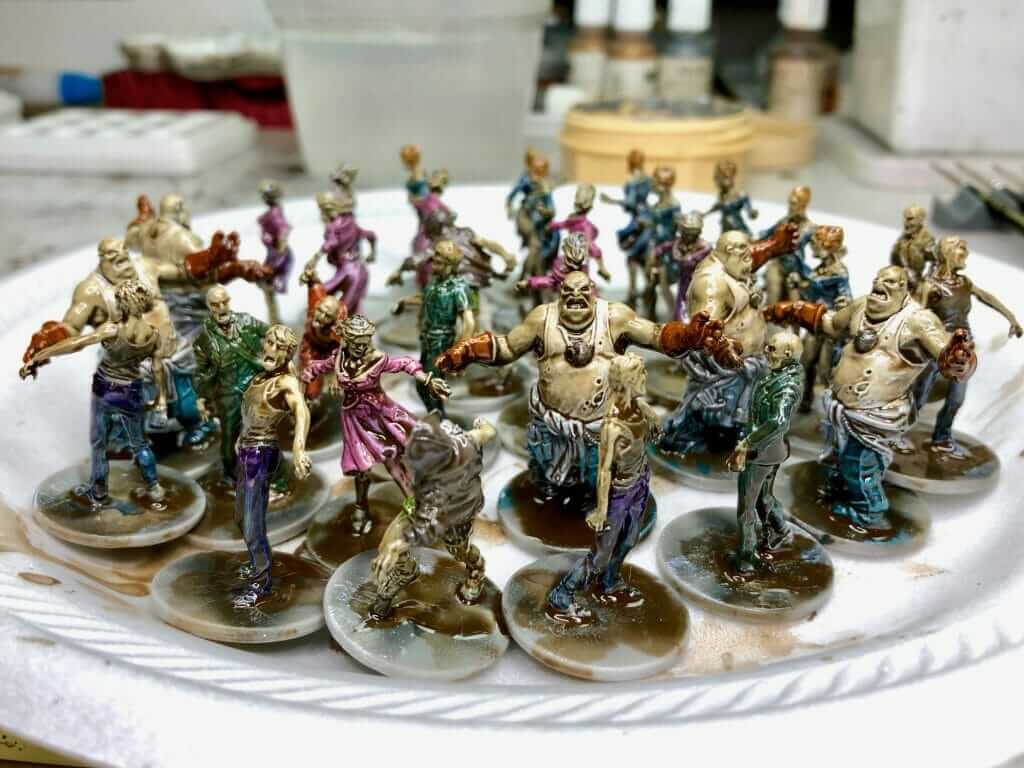
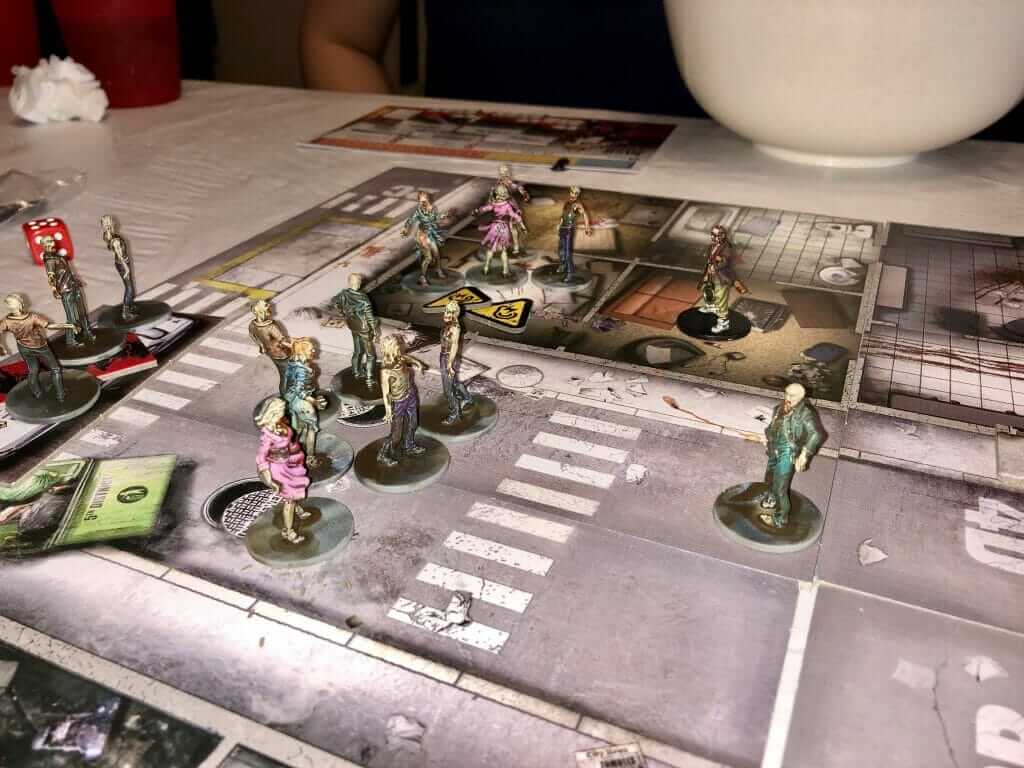
A quick way to add contrast after you basecoat a model is to apply a dark shade. Army Painter Quickshade Dip is the product I used for the examples below.
Another way to speed paint and maintain contrast is to use an oil wash to add dark values (you’ll need a dry palette for this). You can follow up with dry brushing to add highlights (see an example here where I combine these methods).
What determines a good-looking speed-painted model?
There are three things that contribute to the final outcome of a painted miniature.
- Time: More time gives an artist more opportunity to refine the miniature.
- Model size or complexity – The larger or more complex the model, the more skill and time you will need to finish the job well.
- Skill/experience – The more skill and experience an artist has, the more efficient they will be (e.g., faster and better painting).

To understand how to speed paint a miniature, look at how time is allocated to each phase of the paint job.
What do I mean by time allocation?
Miniature painting takes time.
Interestingly, the time it takes to paint a miniature can be subdivided into four phases (see Figures 1 and 2).
RELATED: SEE PAINTING OVERVIEW OF A GAMES WORKSHOP IMPERIAL KNIGHT MODEL
There’s a preparation phase where a model’s surface is cleaned, smoothed, and primed. The base coat phase is the first layer of color. For a display-quality miniature, the layering and highlighting phase takes the largest share of the overall time. Then, the final phase would include finishing the base or applying a varnish.
Of course, these “steps or phases” are very general. A painter may bounce between these phases as they prefer. For example, flocking a base or assembly of a model may occur later or earlier in the painting process.
In either case, the total time spent painting a model involves different steps.

Did you know you can break down mini painting into “phases”?
All creative projects have a workflow.

When I think about any creative project, I try to break it down into small bite-sized parts.
The time in each phase changes depending on your desired outcome.
Two important notes about painting phases
- The speed and time needed in each painting phase depend on the miniature painter’s technical skill.
- Basecoating generally requires less fine control than layering and highlighting.
If you want to paint fast, spend most of your time on the basecoat with an eye for a tabletop-standard paint job.

A miniature painter aiming for a tabletop standard finish may spend more time base coating than layering or highlighting. Layering and highlighting generally need color blending of some sort (Figure 1).

A miniature painter looking for a high-quality finish will spend more time preparing the surface. They will also invest most of their time in the technical layering and highlighting process (Figure 2).
In fact, base coating might be faster for the experienced painter. They will have the tools or knowledge to paint large surfaces efficiently. This allows a skilled painter to invest more in details with layering/highlights.
For speed painting, remember that you’re looking for big shapes. Let the details wait! Remember your “eye” (see above).
If you want to paint fast, paint to a tabletop standard

Summary
To speed paint a miniature, I recommend you try to follow these tips:
- Think Big: Develop your “eye” for large shapes. Paint as many big defining shapes in the same color as you can.
- Look for large parts, not details or materials.
- Big Brush: Use the biggest high-quality brush that will do the job.
- This can be an airbrush or a flat-bristled brush (see here for more details on brushes)
- Limit Your Palette: Try to paint with no more than 5 colors on your palette.
- Strong Contrast: Keep your lights and darks as far apart as possible.
- Use techniques like dipping and oil or ink washes to darken recesses (example here)
- Dry brush to add highlights (e.g., bright colors).
- Invest the Right Time: Aim for a tabletop standard in painting quality.
- Spend most of your time painting the basecoat.
- Decide that you are done when most of your model is covered in the basecoat paint layer.
Speed painting is a decision about where your attention goes. Paint the big shapes, keep the contrast strong, and stop when the miniature looks good across the table.
If you want to see the full process in practice, my step-by-step guide to speed painting board game miniatures shows how I use these ideas on a complete batch.
Until next time, happy miniature painting!
Find Your Base Color Scheme
Enjoying your visit? Join Tangible Day!
Leave a comment, or follow Tangible Day.


Tangible Day on YouTube (Miniatures and More!)

By Andrew M. Tan
Andrew is a commissioned miniature painter with more than 20 years of hands-on experience painting tabletop miniatures, photographing models, and testing hobby tools in real-world use. Read his full bio.
alert ( “Thanks!” )