

Last updated October 5, 2026. By Andrew M. Tan.
Finding the perfect primer for your miniatures can feel like an endless quest. I’ve stood there myself, surrounded by options, trying to figure out which one will make my painting project more enjoyable and successful. A good black primer provides a solid foundation for successful painting results, enhancing shadows and ensuring paint adheres effectively to the model.
I use black primer for everything from Warhammer 40K armies to D&D miniatures and historical figures. Once the model is cleaned and assembled, applying a good primer is always my first painting step. If you’re looking for a black primer that will do the job well, you’re in the right place.

My Top Two Black Primers for Painting Miniatures
- Vallejo Surface Primer (Black): A versatile primer that’s airbrush-ready and can also be applied with a brush.
- Vallejo Black Spray Primer: Designed for superior coverage and a smooth matte finish, it works efficiently across a variety of surfaces, making it ideal for miniature painting.
If you’re short on time, here’s my top recommendation: Vallejo Surface Primer (Black). I love this primer! It stands out for its versatility—it’s airbrush-ready and can also be applied with a brush. For those who prefer spray options, Vallejo Black Spray Primer is my recommendation. If you apply it under the right ambient conditions, e.g., humidity and temperature (see more about this below), Vallejo’s spray primer is reliable. It finishes in thin, even coats, protecting details and preparing the surface for paint.
Read on below to learn which black primer fits your project and why I always use a primer before painting miniatures.
Why Use a Primer for Miniature Painting?
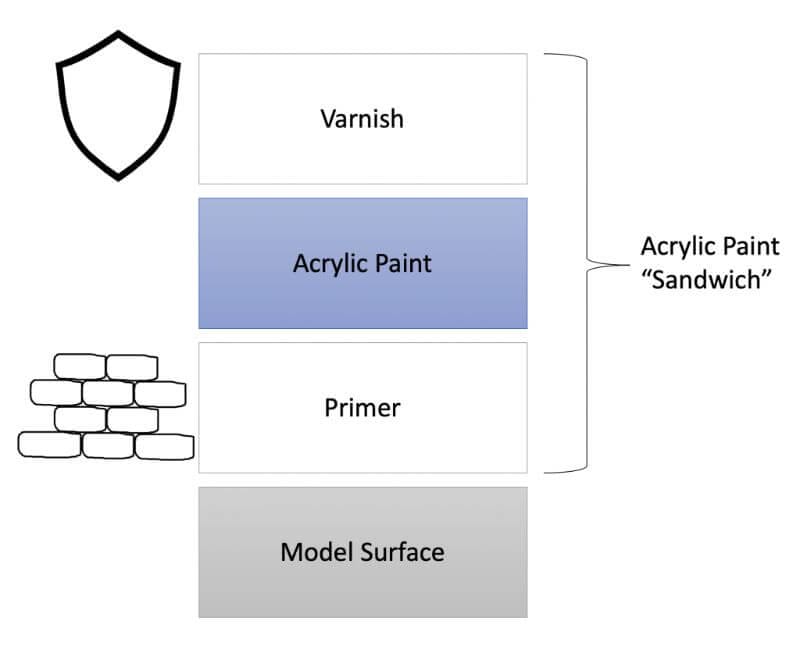
Priming miniatures is the foundation of a great paint job. A good primer helps paint adhere, improves durability, and prevents common issues like chipping or peeling. It creates a solid base that protects the paint during handling and gameplay.
Primer also creates an even surface that is easier to paint. Keep the coat thin. Scratches, seams, and print lines should be cleaned up before priming, because a heavy primer coat can bury the same details you want to paint.
Priming also improves visibility. Whether I’m painting a batch of gaming models or a single display piece, primer helps me see whether the models are ready for the technique I want to use, whether I’m going fast or taking my time. The final paint job will also last a lot longer without wearing or chipping, especially if you apply a good varnish.

Black primer is the best color choice when I want the most efficient—and fastest—way to paint miniatures or models. The black undercoat creates natural shadows, which means less work for me. I get more contrast in the finished miniature with less effort. For example, starting with a black primer allows me to use quick, speed-painting techniques like zenithal highlighting.
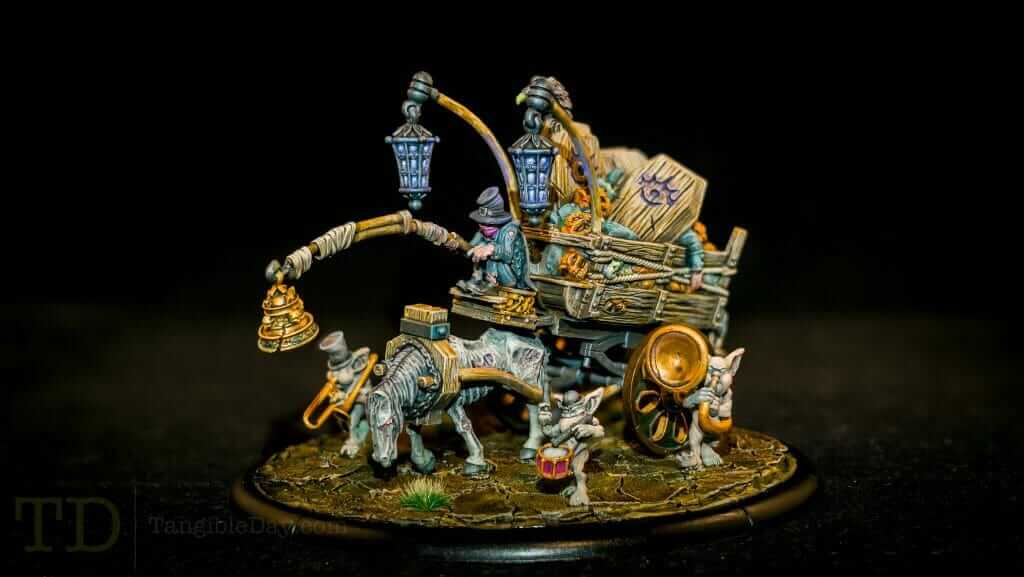
Now, there are challenges with starting a black primer. You’ll be limited when it comes to painting with bright colors like yellow or orange. It’ll take more effort to create even layers of color without streaks or splotches when painting over a black primer using a bright-tone, e.g., yellow paint. There are tricks around this, of course; but it will take more planning than if you started with a brighter primer color, like white or neutral gray.
RELATED: Do You Prime Your Miniatures? Here’s 3 Reasons Why You Should
What Makes a Good Primer for Miniatures?
Primers vary in quality, and choosing the wrong one can lead to challenges like poor adhesion or uneven coverage. Here’s what makes a primer worth your time:
- Adhesion: It must stick to plastic, resin, or metal securely. A primer that peels defeats the whole purpose.
- Even Coverage: You want thin, uniform coats that preserve every fine detail.
- Durability: A solid primer protects your paint job from wear and tear.
- Quick Drying Time: Nobody likes waiting around for paint to dry—quick-drying primers keep the workflow moving.
- Application Flexibility: Whether you’re using sprays, brushes, or airbrushes, the best primer works seamlessly with your tools.
- Color Options: Black primers are perfect for creating dramatic shadows and depth.
Best Black Primer for Painting Miniatures
1. Vallejo Surface Primer (Black)

This is my favorite primer for almost every miniature painting project. I use it for commissioned work and for those casual side projects where I’m trying out a new technique.
When versatility is what you need, Vallejo Surface Primer delivers. From my understanding, it isn’t a regular acrylic paint. It uses an acrylic-polyurethane formula that adheres well to properly cleaned plastic, resin, and metal. Whether applied with a brush or an airbrush (see how I use it), it flows evenly and keeps the details sharp.
I’ll repeat myself: I use this primer close to 95% of the time because it is easy to use indoors without an aerosol can. It has very little odor in my experience. I still use ventilation when airbrushing because airborne paint is still airborne paint. Apply with a brush or airbrush!
Key Reasons to Use This
- Compatible with airbrush and brush applications (it’s versatile).
- Durable adhesion across multiple materials.
- Water-based for easy cleanup.
2. Citadel Chaos Black Spray Primer

Citadel’s Chaos Black Spray Primer is a go-to for many miniature painters. But, it’s kind of expensive. That is the main downside. Its thin spray coats preserve details. Keep the nozzle about 6–12 inches from the model and sweep the spray from side to side to avoid pooling. Spray in bursts.
It dries quickly, letting you get to painting sooner. You’ll need to find a well-ventilated area to spray this primer. There are ways to spray indoors, but it takes extra precaution and planning. Make sure the humidity is reasonable, under 60% RH, and the ambient air isn’t too cold.
Key Reasons to Use This
- Designed specifically for miniatures.
- Provides deep shadows and excellent coverage.
- User-friendly spray application.
RELATED: Best Primers for Miniatures
3. The Army Painter Color Primer (Matt Black)

The Army Painter’s Matt Black Primer does double duty as a primer and a base coat, saving you time. I love using it for those large batch paint jobs. But, as an aerosol rattle-can primer, I only tend to pull it off the shelf when the weather is good to spray outside.
It’s a workhorse for gaming miniatures, providing a durable matte finish that holds up to frequent use. For best results, as above, make sure you’re spraying in a good environment with decent humidity levels that isn’t too hot or cold.
Key Reasons to Use This
- Combines primer and base coat in one product.
- Dries quickly and evenly.
- Ideal for batch painting projects.
READ MORE: Army Painter and Other Great Spray Primers Review
4. Rust-Oleum Painter’s Touch 2X Ultra Cover (Flat Black)

For larger projects or terrain pieces, Rust-Oleum 2X is my go-to. I don’t want to waste those more expensive spray primers designed for highly detailed miniatures. And, airbrush surface primers don’t cover large areas as well or as fast.
For those projects, I reach for the industrial primer stuff. Rust-Oleum Black Primer has amazing coverage. It sweeps over a surface with a beautiful matte undercoat of black. Deep black. Its strong adhesion and easy coverage make it an affordable option for bulk work.
Be forewarned: This isn’t designed for finely detailed miniatures. It will go on kind of thick. But, it is absolutely my top choice for creating a really, really durable surface on larger pieces like DIY terrain or vehicles with broad, open surfaces.
Key Reasons to Use This
- Affordable and accessible.
- Covers large surfaces effectively.
- Reliable adhesion for mixed materials.
RELATED: 5 Professional Miniature Priming Tips for Best Results
5. Stynylrez Black Primer

If you’re an airbrush enthusiast, Stynylrez by Badger is another great surface primer to work with. Similar to Vallejo’s Black Surface Primer above, Stynylrez is self-leveling and has excellent durability, which makes it great for retaining detail on models. From my experience, this primer is an especially good choice for airbrushing. Yes, you can use a regular brush with this, too.
It flows really well with almost no thinning required for an airbrush, and I don’t spend much time worrying about clogs or an uneven texture (here are more tips for airbrush priming). It’s my go-to when precision and ease of use are top priorities.
Key Reasons to Use This
- Airbrush-ready with almost no thinning required.
- Self-leveling for an ultra-smooth surface.
- Exceptional durability for handling.
6. Vallejo Black Spray Primer

Okay, so you want something efficient and easy to use? This is it. Vallejo Black Spray Primer has been a reliable black primer for many, including myself. Although I lean toward using the airbrush-able Vallejo surface primer because I can use it indoors, the aerosol version is much more convenient because I don’t have to deal with airbrush upkeep, cleaning, or the maintenance of a spray booth fume extractor.

Designed for miniatures, it offers consistent coverage and a smooth finish that enhances paint adhesion and durability. Whether you’re working with plastic, resin, or metal, this primer provides the perfect surface for detailed painting.
Key Reasons to Use This
- Matte, self-leveling finish designed to preserve miniature detail.
- Smooth, even coats with minimal overspray.
- Dries quickly, allowing you to start painting sooner.
- Suitable for a variety of miniature materials.
Tips for Using Black Primers Effectively
Environmental Considerations
Priming depends not only on the product but also on the environment. Ensuring proper ventilation and ideal conditions can significantly impact the quality of the finish. Work in a well-ventilated area to avoid fumes.

I aim for temperatures between 50°F and 75°F (10°C to 24°C) and try to stay below 55–60% relative humidity. These are the conditions that work for me. Check the instructions on the can and test the spray before committing an entire miniature or army. If you’re unsure about these conditions, consider how the space feels. When wearing a short-sleeved T-shirt, if it feels too hot, too cold, or the air seems heavy with moisture, it’s a sign that you might need to prime in a different environment.
What’s the Difference Between Hobby Paint and a Primer for Miniatures?
Here’s a quick comparison table to highlight the differences between primers and hobby paints. Primers and hobby paints are not the same, and usually not interchangeable. I think this will help you understand why each has a distinct role in miniature painting:
| Key Feature | Primer | Hobby Acrylic Paint |
|---|---|---|
| Primary Purpose | Creates a smooth, durable base for paint to adhere to. | Adds color, detail, and personality to the miniature. |
| Adhesion | Grips a properly cleaned surface and gives later paint layers a consistent foundation. | Struggles to stick to bare surfaces without primer. |
| Surface Preparation | Creates an even painting surface; scratches, seams, and print lines should be corrected before priming. | Can highlight surface flaws if used without primer. |
| Durability | Provides a strong foundation that resists wear and tear. | Less durable on its own, especially during handling or gameplay. |
| Color Options | Black, white, gray, and other tones to enhance shading and depth. | Available in a wide range of vibrant colors and finishes. |
| Usage Scenario | Essential for prepping miniatures, particularly those made of plastic, resin, or metal. | Best for adding artistic details and vibrant finishes after priming. |
| Key Limitation | Doesn’t replace the color and vibrancy that hobby paints bring. (Some colored primer, for example, may overcome this). | Can’t provide the adhesion and durability needed on unprimed surfaces. |
What Else Can You Do with Black? Painting Realistic Black on Miniatures
For readers looking to take their black miniature painting skills further, check out this YouTube video: Painting Realistic Black on Miniatures.

In the video, I show how I build depth and realism when painting black, carrying the dark foundation from the primer into the finished miniature. Here are three practical tips you can use:
- Layering for Depth: Use subtle layers of grays and near-black shades to add depth and avoid a flat appearance.
- Controlled Highlights: Apply sharp, focused highlights to edges to make details stand out without overwhelming the black.
- Matte vs. Gloss Finish: Experiment with finishes—use matte for stealthy, muted looks or gloss for sleek, polished styles.
My Go-To Black Primer and Why I Keep Coming Back
After all of this, I keep coming back to Vallejo Surface Primer. I use it close to 95% of the time because it works with a brush or airbrush, lets me work indoors without an aerosol can, and doesn’t ask me to think too hard about the tool. I can focus on the miniature.
For a spray can, Vallejo Black Spray Primer is still my recommendation. Citadel Chaos Black is excellent if cost isn’t the deciding factor. Army Painter is great for large batches, Rust-Oleum belongs with terrain and large vehicles, and Stynylrez is a strong airbrush alternative. Different tools, different jobs.
Priming usually feels like the part I want to rush. I’ve learned not to. A thin, clean undercoat makes every decision afterward easier to see—and easier to fix. That little bit of patience at the start is part of the practice.
If you want to take the next step, explore my Zenithal Highlighting Tutorial or watch Painting Realistic Black on Miniatures.
What’s your go-to black primer? I’d love to hear about it—drop a comment below!
Enjoying your visit? Join Tangible Day!
Leave a comment, or follow Tangible Day.


Tangible Day on YouTube (Miniatures and More!)

By Andrew M. Tan
Andrew is a commissioned miniature painter with more than 20 years of hands-on experience painting tabletop miniatures, photographing models, and testing hobby tools in real-world use. Read his full bio.
The Mr Hobby primer, called Mr Surfacer is absolutely wonderful. There are several different “grits”, from the thick, Mr Surfacer 500 to the super smooth Mr Surfacer 1500. Thinned with Mr Leveling thinner it’s the best primer I’ve ever encountered, and I have tried many.
This I will have to check out ! Thanks!!!
There are a lot of different versions. The one I prefere is the Mr Finishing Surfacer 1500. It gives a super smooth satin finish. But whenever there’s scratches that would benefit from a bit thicker primer, I use some of the coarser variants, usually Mr Surfacer 500. All of them can be had on bottle, and several on spray can. But the best is bottle and thinned with Mr Leveling Thinner.
this sounds like it would be especially good for 3D prints which have imperfections throughout. Also, definitely more interest at the moment for the non spray version since the weather isn’t great around here.
Pingback: How to Paint a Glowing Lightning Effect (OSL Practice Drill for Miniatures) - Tangible Day