
Last updated October 5, 2026. By Andrew M. Tan.
After years of commissioned miniature painting, Vallejo Surface Primer remains my best overall primer for most plastic, resin, and metal models. It lays down a thin, detail-preserving coat by brush or airbrush, lasts through hundreds of projects, and gives acrylic paint a dependable surface to grip. If you prefer an aerosol, Citadel Chaos Black and Tamiya Fine Surface Primer are my strongest spray options. The careful part is matching the primer to the material, application method, and finish you want before the first color touches the model.
Below, I compare ten primers I’ve used for miniature painting, including aerosol, brush-on, airbrush, and budget options. I’ll also explain which primer colors work best, how to avoid obscuring detail, and when a specialized primer is worth buying.

Key takeaways
- Vallejo Surface Primer is my best overall choice for plastic, resin, and metal miniatures, especially if you own an airbrush.
- Citadel Chaos Black is my preferred black hobby spray, while Tamiya Fine Surface Primer is especially useful when preserving small surface details.
- Gray is the most versatile primer color when you want one neutral starting point.
- Thin coats preserve detail. Clean the model first and allow each coat to dry before applying another.
- Use aerosol primers outdoors or in a well-ventilated space, and follow the manufacturer’s temperature and safety instructions.
Every primer has its advantages and limitations; each has a purpose. However, they all share a common objective: to establish a foundational undercoat that enhances the adhesion and durability of overlying paint layers.
Top 10 BEST primers for painting miniatures and Models
- Citadel Model Primer
- Citadel Paint Contrast Spray: Grey Seer
- Krylon Ultraflat Primer
- Liquitex Neutral Gray Gesso
- Army Painter Primer
- Vallejo Surface Primer
- Tamiya Surface Primer Spray
- Testors Enamel Primer
- Badger Airbrush Primer (Stynylrez)
- Rust-Oleum Automotive Primer
Continue reading for a complete guide about primers and the full review.
Miniature Primer Comparison Table
| Image | Product | Feature | Check Price |
|---|---|---|---|
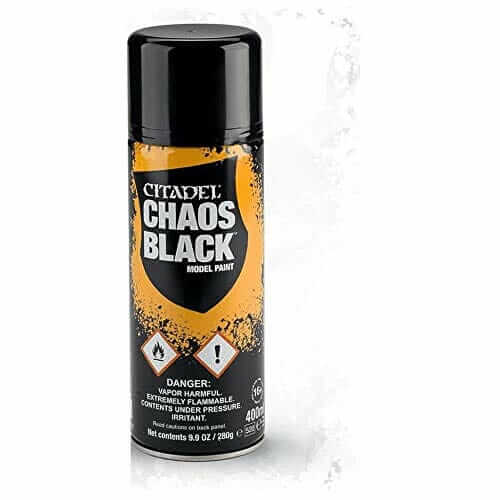 |
Citadel Model Primer | Games Workshop spray primer designed for plastic or metal. Good utility and versatile. Many colors. | Check Price |
 |
Citadel Grey Seer Contrast Spray | A light, smooth primer designed to support Citadel Contrast Paint. | Check Price |
 |
Krylon Ultraflat Primer | Versatile, cost-effective, and easy to use. | Check Price |
 |
Liquitex Neutral Gray Gesso | Brush-on acrylic gesso that adds tooth and prepares many compatible surfaces for paint. | Check Price |
 |
Army Painter Primer | An acrylic color primer that combines priming and the main base color in one spray step. | Check Price |
 |
Vallejo Surface Primer | My favorite general-purpose primer for brush or airbrush work on plastic, resin, and metal miniatures. | Check Price |
 |
Tamiya Surface Primer Spray | A fine aerosol primer for preserving panel lines, rivets, and other small model details. | Check Price |
 |
Testors Enamel Primer | An enamel modeling primer that produces a smooth undercoat when applied in thin passes. | Check Price |
 |
Badger Airbrush Primer (Stynylrez) | A cost-effective and airbrush-ready primer for miniatures and models. | Check Price |
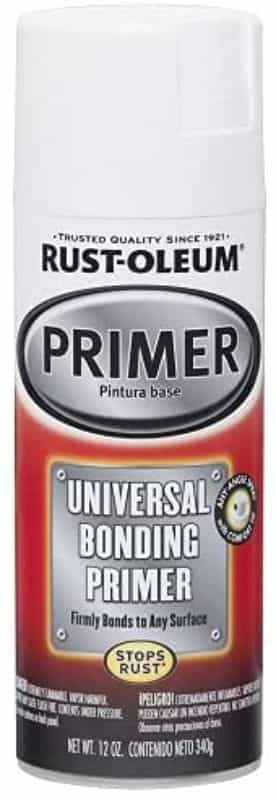 |
Rust-Oleum Automotive Primer | Useful for large models and terrain; choose a filler or high-build version when smoothing 3D-print layer lines. | Check Price |
What Is the Best Overall Primer for Miniatures?
Vallejo Surface Primer excels as a foundation layer for painting miniatures made of plastic, metal, or resin. I’ve used this primer for years, applying it with either a regular brush or airbrush. In either case, it helps paint “stick” to a model and I’ve never had an issue with peeling, cracking, or other durability issues.

Vallejo primer is also inexpensive with a single 200ml bottle lasting hundreds of miniature/model paint jobs. I highly recommend Vallejo Surface Primer for both beginners and experienced miniature painters.

AK Interactive and Badger Stynylrez primers are popular alternatives to Vallejo. Badger Stynylrez is designed for airbrush use, while AK Primer and Microfiller is supplied ready for an airbrush and uses the manufacturer’s recommended thinner when adjustment is needed. I follow each label rather than applying one thinning ratio to both products. If you don’t have an airbrush, I would suggest taking a closer look at Tamiya Surface Black and White Primer aerosol primers.

Do You Need to Prime Miniatures Before Painting?
Yes.
A primer is an undercoat you use to prepare a surface for paint. Primers create the foundation on a surface that smooths out imperfections, creates an even undertone, and helps overlying paint adhere to the surface. A compatible primer can also reduce peeling and chipping when the surface is clean and the layers are allowed to cure.
I use many brands of miniature paints for my work, e.g., Scalecolor 75, Citadel, Master Reaper Series, P3, Badger paints, Vallejo Model Air and Game Color, but only keep a few kinds of primers on-hand. In comparing different primers to paint miniatures and models, you might be wondering why you need a primer.
Well, for starters, a smooth primer coat is an essential skill to improve your miniature painting.

It doesn’t matter if you’re painting on plastic, metal, or resin miniatures, a primer coat provides a universal surface for you to work on.
One of the most visible ways that primers do this is by smoothing out the texture of a surface. Almost all primers have a matte finish when dry, which gives overlying paint a texture to stick to. A flat finish helps prevent peeling, chipping, and improves the durability of your paint job.

Finally, a primer collectively works to give you more control over how paint flows and behaves on a miniature’s surface. Whether you’re using acrylic or oil paints on a miniature, a primer works to provide you with a foundation for your best work.

Painting miniatures with Army Painter paints or other hobby acrylic paints? Use a primer first.
How Primer and Varnish Protect a Miniature Paint Job
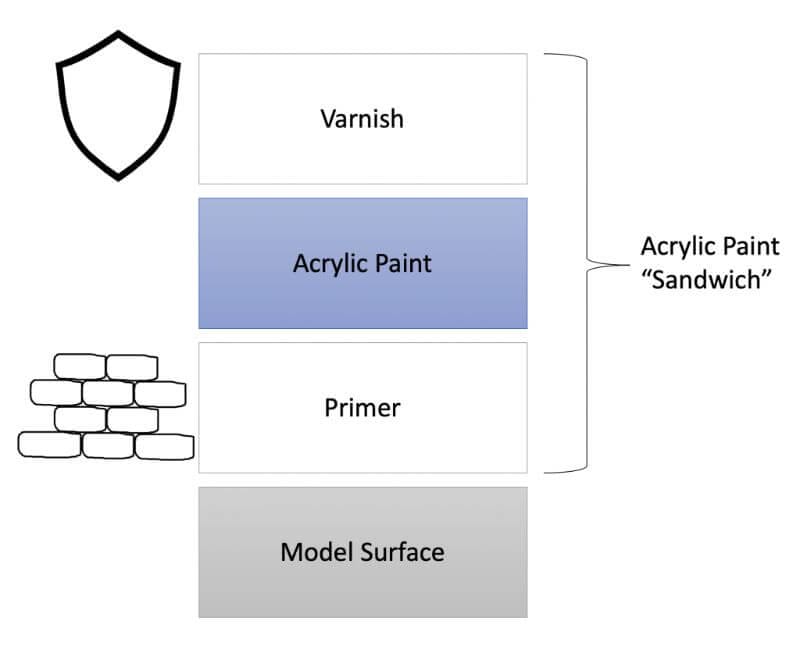
For a durable miniature paint job, I apply primer beneath the acrylic paint and varnish over the finished model. The primer improves adhesion and creates a consistent working surface. The varnish protects the completed paint from handling, abrasion, and normal tabletop use. These layers serve different jobs, but together they give the paintwork a better chance of surviving regular play.
What Is the Best Primer for Plastic Miniatures?
The best spray primers for plastic miniatures in the 28–35 mm scale are aerosol primers. Shake the can until you hear the agitator bead moving freely, then continue for at least 30–60 seconds—or longer if the label directs—so the primer is thoroughly mixed.
Note that the application tips for using primer for plastic also apply for resin miniatures. For larger miniatures, you can use almost any kind of primer, even automotive primers, as you’ll see why below.
Ultimately, the purpose of a primer is to provide a thin even surface in preparation for paint.
READ MORE: BEST HOBBY PAINT SHAKER AND MIXERS
You want to avoid obscuring details with your primer application. This means you want the first layers of the primer coat to be super thin. Each layer of primer coat you apply to a plastic miniature will slowly build up in the recesses. A thin coat will help you avoid unnecessary build up of primer.
In short, several thin coats are better than one thick coat.
You want to be careful in choosing a primer that you can apply thinly on your plastic miniatures. For smooth surfaces, a thick or thin coat of primer won’t matter as much. But for anything other than a smooth surface on a model, a thin primer layer is your goal.
A spray primer is the best choice, since spraying is the easiest way to apply thin layers over a model. Spraying also prevents bubbles from forming on the surface of your models.
Note: Spray primers are not the same as spray paints. Primers are a special kind of paint specifically made to help the finish coat of paint stick longer and resist weathering. A spray paint, on the other hand, is often just a colorizing product for painting a surface.
Once your primer is dry, the next step is laying down your base colors. If you’re new to that process, see how to basecoat miniatures after priming for a straightforward walkthrough of what comes next.
RELATED: RECOMMENDED SPRAY PRIMERS FOR PAINTING MINIATURES AND WARGAME MODELS
Use spray primer in a well-ventilated area and follow the manufacturer’s instructions. Apply light passes rather than trying to cover the model at once; a heavy wet coat can obscure detail, run, or cure unevenly. Some automotive and filler primers may also require sanding before a finish coat, so check the product label before continuing.
For example, Tamiya makes a rattle can primer for miniatures that is highly popular for professional and competitive miniature painters. Vallejo makes a great surface primer (my favorite) that you can either brush-on or use with an airbrush.
Note that there are times when you want a brush-on primer (more about this below). For example, when you have limited space for a spray booth, indoors in an enclosed space, or in a public convention where spraying might not be appropriate. Aerosol or rattle can primers also pose an issue because of the odors and potentially harmful vapors. These should be generally used outdoors (in low humidity for best results!)
What Is the Best Primer for Metal Miniatures?
Similar to primers for plastic miniatures, the best primers are those that you apply using a spray application. This provides the thinnest, most even coats on your models. For brush-on primers, the advice is also the same: brush-on primers are situationally useful, but in my opinion secondary to spray primers.

Why Metal and Resin Can Be Harder to Prime
- Metal and resin miniatures may have a greasy, mold-release substance on them that repels primer and paint from sticking.
- Metal and to a lesser extent resin models are prone to scratches and deeper bumps, because their surfaces aren’t as flexible.
1. Metal and pewter miniatures are cast in molds with lubricants (oily substance)
Additionally, the lubricant also repels glues, too (you can read more about how to resolve issues with glues and adhesives here). So, this may even be why you are having a hard time assembling pewter models. Glue doesn’t adhere well to that residue of mold-release.
The solution here is to wash your metal and resin miniatures with soap and warm water. Personally, when I have a lot of models or miniatures to wash in this manner I use an ultrasonic cleaner filled with soapy water (see my article on cool ultrasonic cleaners, which I also happen to use for cleaning my airbrushes). You should apply a primer only after washing and drying your models.
2. Paint and primer on metal miniatures tend to get scratched
This seems obvious because metal miniatures are a much harder surface. Metal and resin models don’t have as much flexibility as hard plastic models. The best primers for plastic miniatures, such as those from Games Workshop Citadel miniature lines, may not be the best for metal surfaces.
For metal miniatures, I want a primer that bonds cleanly to a degreased surface and cures fully. Aerosol and bottled primers can both work; surface preparation and product compatibility matter more than assuming one chemistry is always harder.
For metal miniatures, aerosol products such as Tamiya Surface Primer and Testors Enamel Primer can form a durable, even undercoat. They do not share the same chemistry, so I follow the thinner, ventilation, and application instructions on the specific can rather than treating every aerosol primer as interchangeable.
An Alternative to Enamel-Based Spray Primers is Gesso
Gesso is especially useful for metal or resin miniatures.
Here’s why: Gesso is a hard compound, usually plaster or glue-based, that is traditionally used on canvas, or stone and ceramic sculptures, before painting. It effectively forms a hardened surface with the model you’re working on.

In some cases, Gesso has rougher texture to it, or ‘tooth’, that is useful for some characterful types of miniature painting. If you paint models or miniatures with oil paints, you’ll see Gesso as especially useful.
Should You Use Gesso for Priming Miniatures?
Gesso is inexpensive, forms a protective surface for applying paint, and smooths out surface imperfections. Gesso comes in many forms, but they are all brush-on type primers. Many miniature painters use gesso for priming miniatures and models.
Liquitex Gray Gesso is my preferred gesso medium for priming larger models and terrain pieces. Not only is it inexpensive, it is resilient to scratches and stretches out as it dries on models, providing a very smooth and pleasant surface to work on.
Finally, a good reason to use gesso as your primer for painting miniatures is if you use oil paints. Gesso creates a more absorbent surface than typical primers, which is helpful for toning the model’s surface and allowing those first “lean” oil layers stick. Read more about painting miniatures with oil paints here.
Which Cheap Primers Work for Large Models and 3D Prints?
For cheap primer for miniatures you can use generic household or automotive primers. I’ve tried regular spray primers for painting outdoor furniture like Krylon and Rust-Oleum primers. They are less expensive and come with a lot more primer for your money.
Be warned, however, that these cheaper primers do not coat as thinly as dedicated hobby primers for modeling. Overuse can obscure fine details on your miniatures. My suggestion when using cheap primers is to start spraying with the nozzle farther from your models and apply multiple thin coats to preserve surface texture and detail.
I’ve had good results with cheaper primers for terrain pieces. Cheap spray primers are especially useful for MDF terrain, laser cut parts and terrain pieces, gaming boards, and 3D printed pieces, e.g., PLA or resin 3D printed pieces, which are larger than smaller scale models.

The nice thing about automotive primers is that they are designed specifically to smooth out imperfections on surfaces. For smoothing out the build-lines in 3D printed models, you can use a sandable 2-in-1 primer and filler. A filler primer is great for 3D prints and large models. After these primers dry, you can sand the automotive primer even out the surface in preparation for paint.
In conjunction for gap filling (see more about gap fillers here), an automotive primer can make a model or miniature resilient to damage because how “sticky” or adhesive it is to the surface.

Be Careful with Cheap Primers
A word of caution about using cheap primers that are not designed for miniature and scale modeling work. Cheaper primers, e.g., automotive or outdoor furniture primers, are formulated to cover surface fast. This means that these primers are created to spray-on in thick layers.
RELATED: TOP 3 MISTAKES WITH HOBBY PRIMERS AND HOW TO FIX THEM
A single coat of automotive or wood furniture primer, especially aerosol delivered primers, will quickly obscure fine details on a scale model or wargaming miniature.
Although I mentioned this is attribute of cheaper primers is advantageous for 3D prints (which have fine build layer lines you want to hide), or large terrain pieces; for miniatures that have small details, including high resolution resin 3D prints, I would suggest you avoid non-hobby grade primers for miniature painting.
For miniature painting, choose a primer you can control in thin coats. This helps preserve fine detail and makes it easier to stop as soon as the surface has enough coverage.
Maybe you do want to hide fine scratches, bubbles, or imperfections on your models. Other times you’ll want the finest mist of primer to keep all those beautiful facial lines and wrinkles intact on that 75mm scale resin bust.
Your call. When in doubt, thin your primer (just like you would your paints). Even the best miniature primers require some careful observation and attention to proper application.
Can You Use Colored Primers to Paint Models?
Yes! Some game companies make colored primers that you can use as your basecoat color. For example, you can use a “flesh’ colored primer if most of your model is skin. All you may want to do is use a wash or layering technique to increase the contrast. But, otherwise, a base color primer does most of the miniature painting work for you. Paint the details, add wet transfer decals, and you’re done!

READ MORE: HOW TO SPEED PAINT MINIATURES

Some spray primers from Citadel and Army Painter have colors from the most popular model paint schemes. If you’re painting a company of Warhammer 40k Space Marines in the Ultramarine Chapter, for example, there is a perfectly matched Citadel blue-colored primer you can use to prime and paint your base colors in a single spray session.
Army Painter makes a wide variety of colored primers, too. And, model companies like Vallejo or Tamiya have also been in the business of making color primers specifically formulated for their model kit products.
Are Color Primers Worth It?
Yes, but it depends.
There are two major advantages of a color primer. First, they speed up your paint job by allowing you to base your main color and primer in a single application. All you need to do after spraying your primer is add any details you want. This can be quick or meticulous. Second, a colored primer gives you a jumpstart on an even, smooth surface to work on.
For best results in miniature painting, you’ll always want a smooth coverage with your main base coat. Because you spray-on a colored primer, it’ll be a lot easier for you to achieve the perfect first coat of paint.
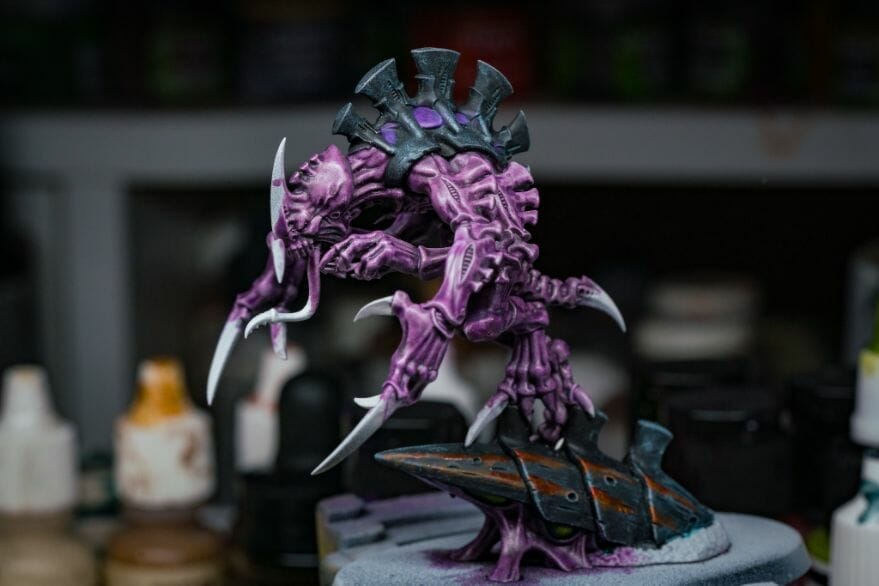
One limitation of colored primers is that they tend to cost more and commit a batch of models to one main color. If you only have a few models to paint in that color, the primer may not save enough time to justify another can.
With a colored primer, you’ll still need to paint the other elements on the model for a decent finish. This means that some of the primer color will be covered by overlying paint. This would remove much of the time-saving benefit of a colored primer.
Ultimately, you’ll want to plan ahead to see if a colored primer will help you. If you paint a lot of models with the same primary color, then using a colored primer will increase your productivity. If you’re only painting a few models, or if the miniatures don’t have a majority of the main color showing, then a colored primer will not be a good investment.
What Is the Best Primer Color for Miniatures?
Gray primer is the best overall color. Gray primer is a mix between black and white, providing you with a middle ground color tone to work on when you paint models. You don’t need to plan too much ahead about what models you’ll be painting or how many. Instead, gray gives you a versatile undertone color to paint on.
There is a reason why gray colored palettes (paper or glass) are popular with traditional painters and artists. Gray gives you the ability to discern accurate paint color on a surface while maintaining good contrast (a black primer undertone will hide details).

Include Black, White, and Gray Primer in your toolbox
I always recommend having black, white, and gray primers in your painting set. I find black and white primers crucial for various techniques. For instance, in the zenithal priming method, I first apply black primer and then add white from above (e.g., this requires two spray primers). This technique creates a natural interplay of light and shadow on miniatures, perfect for achieving high contrast with glazes.
RELATED: BEST BLACK PRIMER FOR MINIATURES

I particularly favor black primer for speed painting. It naturally fills in shadows, allowing me to concentrate on mid-tones and highlights. This is especially useful for techniques like dry brushing or airbrushing, where speed is key.
On the other hand, I use white primer for projects where detail is paramount. It highlights surface details and is excellent for achieving color saturation and contrast, particularly when I’m working with glazes or hobby brand contrast colors. As you turn a model under a hobby lamp, observe how light and shadows play across it. Applying glazes or contrast colors on white primer enhances color saturation predictably.
Ultimately, the choice of using zenithal priming or specific primer colors is a personal one. While some professionals may stick to traditional methods, I appreciate the efficiency of speed painting techniques, including dry brushing and airbrushing, and results that these quick techniques offer.
Do You Need to Thin Primers for Miniature Painting?
Most hobby surface primers, like Vallejo surface primer, do not need thinning to work well on miniatures. In fact, over-thinning can make priming more difficult or weaken the primer’s ability to adhere to a model’s surface and overlying paint.
Start by shaking the primer thoroughly and checking that dried material has not fallen into the bottle. If it does not spray smoothly, check the product instructions before thinning it. Some water-based primers tolerate a small amount of water, while others behave better with the matching thinner. I would not use one thinning rule for every primer.
When I thin Vallejo Surface Primer for an airbrush, I usually reach for Vallejo Airbrush Thinner or add a little water. Start with less than you think you need and test how it sprays. I would skip the isopropyl alcohol here. The goal is simply a primer that sprays smoothly and settles into a thin coat without covering the model’s details.
Tips for Using an Airbrush with Primers
Airbrushing primer is a quick way to apply solid, even coats. The simplest approach is an airbrush-ready product such as Badger Stynylrez or AK Interactive Primer and Microfiller. I begin with the manufacturer’s recommended pressure and adjust only after a short test spray. Here’s a quick airbrush priming video showing how this is done.
READ MORE: 6 GREAT PRIMING HACKS YOU WANT TO KNOW

With a 0.3 mm nozzle or smaller, check whether the primer manufacturer recommends a compatible thinner. Clean the airbrush nozzle after every priming session; primer dries quickly around the tip, and clearing it early means fewer clogs later.
Airbrush priming is one of my preferred methods for preparing large collections of models for a painting project. The best practice for airbrushing is to thin your paints or primers to the consistency of whole milk. You may need to add several thin layers to properly and evenly coat your models this way.

Do not assume every brush-on primer can be thinned for airbrushing. I use only a compatible thinner and ratio recommended for that specific product.
But, if you’re having trouble with using water to thin your primer, you can use an airbrush thinning medium. The one that I use to thin water-based polyurethane surface primers is made by Vallejo. The Vallejo Airbrush Thinner is super versatile, because it is also useful for thinning model paints as well, acting as a flow-improver (check it out here).

Remember, don’t apply too many layers of primer. Each layer slightly removes details from the miniatures. A good rule to follow for spraying primers is to spray in bursts with the nozzle some distance away from the model. Sweep the nozzle spray back and forth so you don’t apply primer on a single area of the model for a prolonged period of time.
Tips for Aerosol Spray Primers
You can follow the same primer application tips as airbrush primer applications.
Spray with your rattle can primer in short bursts, sweeping the nozzle back and forth over your model(s). This prevents the primer from pooling on the surface of the miniature and helps preserve details. Hold the nozzle about 6-12″ away from the miniature while you spray. You’re looking to create a primer “mist” that settles on the model.
Work in layers for maximum effect without losing model details when you’re priming. Allow each primer layer to dry before applying another layer.

I get the most predictable aerosol results around 20–25°C or 68–77°F, unless the product label specifies a different range. Temperature and humidity outside the recommended conditions can interfere with drying and leave a rough or pebbled surface.
To avoid problems with your aerosol spray primer, don’t prime models in ambient weather that feels too cold or hot for you to wear normal indoor clothing. Also, avoid high humidity conditions which can adversely affect primer from drying properly.
If you really want to continue spraying your primers in uncomfortably hot or cold weather, then the popular suggestion is to use an airbrush with a suitable surface primer. I’ve airbrush primed indoors with great success for many years.
Tips for Brush-On Primers
For brush-on primers, you just need to remember to be patient! Bubbles can form if you try to apply thick layers of brush-on primer. Use a large, flat headed brush and coat in thin layers. I use a cheap synthetic brush for priming and base coating models.
Allow each layer to dry before applying another coat. Sometimes a model might need 2-3 layers of a brush-on primer. It’s okay if you can still see the bare surface of your model under a brush-on primer.
Primer gives acrylic paint a consistent surface to grip. On plastic, metal, and resin, the goal is adhesion and an even undertone, not preventing the nonporous material from absorbing paint.
On smaller models, let each thin primer coat settle and cure before deciding whether another is necessary. A heavy coat can permanently soften fine detail; evaporation will not reliably bring that detail back.

How much primer should I apply to a miniature? A thin, even layer is enough to prepare most miniatures for paint. Primer improves adhesion, but careful surface preparation, complete curing, handling, and a final varnish also affect how well the finished paint resists chipping.
Paint can chip because of surface contamination, incomplete curing, rough handling, impacts, or an incompatible primer and paint combination. Applying too much primer creates a separate problem by filling fine surface details.
It takes a bit of skill to properly apply brush on a surface primer, which is why I suggest the best primers for miniatures are those that you can spray onto your models. Overall, take your time when you apply a brush-on surface primer.
10 Best Primers for Painting Miniatures and Models
The following are my recommended 10 best primers for painting plastic, metal, and resin miniatures. As a commissioned miniature painter for years, I’ve dabbled in all sorts of hobby media. Primers have always been an essential product I’ve had to use for every product.
Certain primers offer excellent performance but come with a steep price tag. In contrast, some are budget-friendly but require extended drying times or yield inconsistent finishes.
Below, you’ll find the primers I suggest you take a closer look because they are both reliable and won’t break the bank. Finally, it’s important to point out that while some primers come in multiple color options, I’ve specified the ideal starting color based on how well it works.

The Citadel Model Primer is fairly expensive, but it is a good choice if you’re looking for spray-ready primer for plastic miniatures. My experience with this primer for metal and resin miniatures is also very good.
Citadel Model Primer is the most reliable black-colored primer I’ve used for painting wargaming and tabletop miniatures. If you’re judicious, you can undercoat an entire space marine army with a single can.
Make sure you shake the Citadel Black primer spray can thoroughly before use. For best results try to spray this rattle can primer in relatively low humidity at room temperature (20–25°C or 68–77°F).
As an affordable alternative, I recommend Rust-Oleum Flat Black Surface Primer (shown below). The Rust-Oleum Black Primer doesn’t coat as “thinly” as Citadel model primers, so be careful to keep some distance between the nozzle and your miniature when spraying.
Note that there are many colors of Citadel Primer. As mentioned above, each has a purpose. In my opinion, the black primer is the best in terms of quality of the primer surface. It is also useful for most of us who are trying to paint a lot of miniatures in our Citadel model collection. White colored Citadel Primer can be problematic, because I’ve found in my experience that it often leads to a bumpy, powdery surface.
Pros
The Citadel Model Primer is a primer that is useful for plastic and metal miniatures. It is formulated for Games Workshop kits, but can be used on almost any surface material that miniatures and models are made of. Because of its branding, this primer is usually found in most hobby or local game stores.
Cons
It is an aerosol primer, so use it outdoors or in a well-ventilated area and follow the safety directions on the can. Store the pressurized container away from heat, sparks, and open flame.
As a spray, you’ll also find that a lot of the primer is wasted if you’re not careful to direct it at a fairly large surface area on a model. I suggest spraying more than a single model at a time to make the most use of this primer.

The Citadel Paint Contrast Spray is a primer formulation designed for use along with the Citadel Contrast Paint line. Simply, you apply this to a model as a primer coat. The white color acts as an undercoat for applying the Contrast Paint over it; speeding up the process of painting with Games Workshop model paint colors.
As a primer, it works well and provides a very smooth surface for applying overlying model paints. It’s fairly expensive for a primer, but may be valuable for the Contrast Paint Technique of “one thick coat”. As an alternative to Grey Seer, I’ve found that Vallejo Grey Surface Primer works well with Citadel Contrast Paints. You can see my full review of Vallejo Surface primers for miniatures.
Pros
All the pros of regular Citadel Primer plus the added bonus of combining with Citadel Contrast Paint application. The bright color may also be useful for painting traditionally difficult to paint colors like yellow or orange–colors that have generally poor coverage. A brighter base coat primer can help get those color saturations quicker with less effort.
Cons
It is expensive for a primer, and the aerosol requires proper ventilation. A P95 rating describes particulate filtration; vapor protection depends on the correct cartridge and complete respirator setup. If respiratory protection is needed, use a properly matched, NIOSH-approved respirator setup and follow the product label. A spray booth helps control overspray but does not replace ventilation.

The Krylon Ultraflat Primer, available in various colors, is highly versatile. Neutral gray is recommended for uncertain color choices in miniature painting.
Krylon primer is popular and works really well for both plastic and metal miniatures. It is even good on models made of wood or cardboard surfaces (e.g., MDF terrain) as it seals with a solid coat, filling and sealing off porous surfaces. You can even buy it in multiple colors.
When I first started painting miniatures, I started with primer you can find in hardware stores. Krylon primers are easy to find in local home improvement shops, and I often pick up a can to prime large projects, like my DIY wargaming terrain or large model buildings.
Because it is an indoor/outdoor primer, it is resilient to many insults from the environment. The Krylon primer can therefore provide a solid undercoat foundation for any miniature painting project. The Ultraflat version of this primer is a key feature because it provides some texture for your acrylic paint to adhere. This adds to the durability of your paint job. There are some limitations to this primer, which I cover below.
Pros
Versatile for many surfaces and resilient to environmental insults. The Ultraflat version provides durability to overlying acrylic paint jobs, by adding surface area to your paint layers. As a primer for miniatures and models, Krylon spray primer is also inexpensive! You can cover a lot of surface area for the cost of this rattle can primer.
Is this the best primer you can use for miniatures? Maybe. As you see below, there are some limitations. In general, I would highly recommend this for larger models and for MDF, laser-cut terrain (which are porous in material nature).
Cons
Although this Krylon Primer is durable, versatile for many surfaces, and inexpensive, it sprays on pretty thick. That means you can easily over spray this primer and obscure details on miniatures. It’ll happen fast if you’re not careful. So, if you use this in small miniatures (29-35mm scale) just be aware and spray from a farther distance.

Gesso is the perfect alternative to normal primers designed for miniatures. Modern acrylic gesso is an acrylic ground that adds tooth and creates a more absorbent painting surface. Artists traditionally apply it to canvas before painting, and it can also prepare wood, stone, ceramic, and some model surfaces.
Gesso seals off porous surfaces effectively, and forms a solid foundation to apply paint. In miniature and model painting, gesso is particularly useful for metal or resin because of its durability. Liquitex makes an easy-to-dispense bottle of this Gray colored gesso. Other colors are available.
Pros
Great for pewter and resin miniatures. Provides a strong, durable surface. Fairly inexpensive for the amount and how much surface area can be coated. Gesso is versatile. If you’re a traditional painter as well as miniature artist, you can use this for all sorts of projects.
Gesso can make many surfaces easier to paint with oil- or water-based media. This Liquitex gesso has a thinner consistency than paste-like alternatives, which makes it more suitable for preserving fine miniature details.
Cons
Gesso can often be thick. It is best applied with a brush in layers. This means you need to be careful when you want to preserve details on a miniature. Applying gesso can also be difficult because it is prone to making bubbles in the surface. Gesso application requires some patience as it will take a little longer to dry than other primers. I’ve often left gesso on my models to dry for up to 24 hours.

The Army Painter Primer is similar to the Citadel primer (shown above). Army Painter is a modeling company that makes a lot of different products for the miniature hobby. This primer is no exception. It is formulated for all types of miniatures, including those made of plastic and metal.
I know from my community that an Army Painter undercoat is a popular way to start any miniature painting project.
For many hobbyists, its appeal is simple: shake the can thoroughly, hold it about 6–12 inches from the model—or use the distance on the label—and spray in quick passes.
Many colors are available from Army Painter for this primer. However, the black colored primer has the best reviews. The white primer seems to cause some individuals some problems with the quality of the final surface. Some of this is due the environmental conditions in which the primer is sprayed. In general, it is best to use rattle can primers in lower humidity and normal room temperatures.
Pros
Army Painter Colour Primer comes in many colors and works as both a spray primer and the first base-color layer. It applies thinly at the proper distance. Between Army Painter and Citadel, I choose according to the color and spray behavior I want for the project.
Army Painter identifies this as an acrylic Colour Primer. It forms the primer and main base color in one pass, which makes the range useful when I want to move quickly into shading and detail work.
Cons
Like other aerosol primers, it requires good ventilation and careful storage. A rattle can also gives me less control and less usable primer per container than a bottled primer, although it is faster when I need to cover several models at once.

Vallejo Surface Primer remains my favorite for most miniature and modeling projects. I use it with a brush or airbrush, usually straight from the bottle and adjusted only when the spray test tells me it needs it. You can see the results in my full Vallejo Surface Primer review.
A single bottle has lasted me through hundreds of models. No kidding. As an airbrush-ready primer, it sprays well in thin coats, settles into an even surface on plastic and pewter, and preserves detail while softening very small imperfections.
In some cases, I’ve used this as a brush-on primer for 3D printed pieces. Using this with a brush allows me to apply thicker coats that are useful for hiding print lines in 3D prints.
Most of the models you see on this site were first primed with Vallejo Surface Primer. Vallejo makes this surface primer in many colors, but as with most primers, I prefer to default to gray.
Pros
Works well as both a brush-on or airbrush primer. Auto-smooths as it dries on any surface, including plastic and metal models. I love this stuff. It has replaced several aerosol primers in my routine because of how well it coats. A single bottle lasts a long time, and I paint a lot.
I normally use Vallejo Surface Primer straight or adjust it with a little Vallejo Airbrush Thinner. If I use water, I add only a small amount and test the spray first. Gray is my default, although the other Surface Primer colors can also make useful undercoats.
Cons
The cap dispensing system clogs easily. That’s the only problem I have with this primer: the bottle cap. Other than that, I actually can’t find a weakness in the actual primer itself.

The Tamiya Surface Primer Spray is highly prized by professional and competitive miniature painters. Tamiya fine surface primer provides a very thin mist that finely coats your models, preserving all the small details. This is especially important for gunpla models, where you need to preserve panel line and rivet details.
Some heavier primers can easily cover these details. Tamiya Fine Surface Primer lays down a fine coat suitable for plastic and metal models, and the gray version is the most versatile color for my work. Tamiya also offers other primer colors, including black and white.
Pros
This is the key primer for most miniature artists who take the hobby seriously. The quality of the final undercoat with Tamiya surface primer is top-notch. It sticks nicely to any metal or plastic surface. Details stay put and remain easy to resolve even after a few layers of this primer (shake the can vigorously for best results, and spray in a low humid environment).
The small can is convenient to store, but I do not pack pressurized aerosol primer casually with my models. Follow the product label and any applicable transport restrictions. Because I work in a basement with limited ventilation, I use aerosol primers less often than I otherwise would. I still really like the neutral gray color.
Cons
There aren’t too many cons with Tamiya’s surface primer. It’s well regarded by the miniature and modeling community. If there’s a knock to this product, it’s the premium price. It’s a small can, and priced at close to the same as the other premium modeling primers out there.
As with any aerosol, use it only where you have suitable ventilation and can follow the warnings on the can. If preserving crisp miniature detail is the priority, Tamiya Fine Surface Primer deserves serious consideration.

Testors Enamel Primer occupies a similar modeling niche to Tamiya Fine Surface Primer, but it is an enamel product and should not be treated as the same formulation. It can produce a smooth undercoat for detailed miniatures and scale models when applied in thin passes.
I consider Testors an alternative when I want a small-can modeling primer, but I judge it on its own application and safety instructions rather than assuming it behaves exactly like Tamiya.
Pros
This is a useful spray primer for compatible plastic, metal, or resin miniatures. Its enamel formulation can form a solid, smooth undercoat when the surface is prepared properly. The small can is convenient to store, but it is still a pressurized aerosol and should be transported only in accordance with the label and applicable rules.
Make sure you shake the can vigorously to mix the primer with the aerosol contents for a proper fine spray. Use the distance printed on the can and apply thin passes, allowing each layer to dry as directed before adding another.
Cons
It has a strong odor and should not be sprayed in a basement or enclosed room without appropriate ventilation. Testors Enamel Primer is a premium modeling product, but I find it dependable when I shake it thoroughly and use it within the temperature and humidity range on the label.

The Badger Airbrush Primer (Stynylrez) comes in a set of three colors (black, gray, white) and is cheaper as a bundle. It’s a cost-effective, airbrush-ready option with an acrylic-polyurethane formula, creating a tight, auto-smoothing layer on model surfaces. This means that they form a tight, non-porous and auto-smoothing layer directly on the unpainted surface of your models.
This is great, and perhaps this is one of the most under-rated, largely ignored primers on the market. I suspect the line receives less attention because it is not promoted as heavily as some larger hobby brands.
Badger is a US-based company with a great reputation for their line of airbrushes and accessories.
Pros
Airbrushing can be a cost-effective way to apply primer, and these products make thin layers easy to control. Because these are already thinned for your airbrush, you don’t need to do anything except drop them into your airbrush reservoir cup. The three-color bundle is also economical compared with buying several separate aerosol cans.
Given Badger’s reputation and the ready-to-spray consistency, I recommend Stynylrez as a strong airbrush-ready primer for miniatures. Its thin consistency can also be useful for small touch-ups with a brush.
Cons
I’m not a fan of the bottle caps on these Badger paints and primers. The caps tend to clog up, and little drops of liquid dry on the edges of the opening, which makes them hard to close. Stynylrez is less visible in some hobby shops than the biggest miniature-painting brands, so you may encounter fewer local demonstrations or recommendations.

Rust-Oleum Automotive Primer is one of the least expensive aerosol options on this list. I’ve used this automotive primer to great effect on 3D printed parts and larger terrain pieces made of MDF or plastic.
The advantage of an automotive primer is durability. Standard automotive primer can prepare a broad surface, but gap filling belongs to products specifically labeled as filler or high-build primers. For FDM prints, I choose that specific type when I want to soften visible layer lines.
Rust-Oleum automotive primers are designed to improve topcoat adhesion, and some specific formulas also provide rust protection.
For hobby work, I use a product compatible with the material in front of me—wood, cardboard, MDF, plastic, or metal—and follow that can’s stated surface list.
Pros
Super cheap aerosol primer. This is the perfect primer for MDF pieces, such as laser-cut terrain pieces. It seals and protects porous surfaces. For models and 3D prints, a filler primer can smooth minor imperfections when the label specifically identifies it as a filler or high-build formula. Some of these products can be wet- or dry-sanded after curing; follow the instructions on the can.
Because it’s a spray can, you can coat very large surfaces quickly and so this is great for larger models. It’ll work on plastic and metal equally well. My recommendation would be keep the spray can some distance away to ensure you don’t over coat a model and lose details.
Cons
You can easily lose details on small models with an automotive primer like this. It’ll easily obscure things like panel lines, rivets, and small folds in sculpts that are in the 28mm scale. I would only suggest the use of this primer on large models. As with any aerosol, there is also the need for good ventilation.
Bonus Pick — AK Interactive Primer and Microfiller

Many miniature painters recommend AK Interactive Primer and Microfiller. I keep it as a bonus pick because it is a more specialized airbrush product than the general-purpose primers in the main list.
This primer settles into an even coat and can soften very small surface imperfections. AK supplies it ready for airbrush use; if adjustment is needed, use the manufacturer’s recommended thinner rather than assuming water is compatible.
AK Interactive Primer shares the smooth, controlled application I value in Vallejo Surface Primer, although the two products use different formulations. AK has a strong odor, so I use suitable ventilation, follow the label, and control overspray with a filtered spray booth.
Pros
This is a strong airbrush primer for clean, compatible model surfaces. It applies smoothly in thin passes and creates an even foundation for miniature paint. Because AK categorizes this Primer and Microfiller separately from ordinary water-based hobby primers, I follow its specific thinner and cleanup instructions.
Cons
As with any primer with filling properties, be careful you don’t over-coat your model. It doesn’t take much primer to effectively cover your model. Because this is a more specialized airbrush product, availability can vary by region. If you can source it easily, it is a strong option for models that benefit from a smooth primer and microfiller coat.
Conclusion
I hope you found this guide and review helpful!
For most miniature painters, my best overall recommendation remains Vallejo Surface Primer. I’ve used it for years on plastic, resin, metal, and 3D-printed models, and a 200 ml bottle lasts through a remarkable number of projects. It works by brush, performs especially well through an airbrush, and gives me the thin, dependable surface I want before painting begins.
If you prefer an aerosol, Citadel Chaos Black is my reliable choice for dark schemes and tabletop armies. Tamiya Fine Surface Primer is worth considering when crisp detail matters most. You can compare more options in my spray-primer guide for miniatures. Gray remains the safest all-purpose color when you do not yet know exactly where the paint scheme will go.
Priming is easy to take lightly—it seems so simple at first, but it is the absolute key to a great paint job. Every painted miniature starts here: Apply a thin primer coat, a second perhaps, let it cure, and always begin painting from this solid foundation.
Do you have a favorite modeling primer? If I missed any favorites, please let me know!
Happy painting (and priming)!
Enjoying your visit? Join Tangible Day!
Leave a comment, or follow Tangible Day.



Tangible Day on YouTube (Miniatures and More!)

By Andrew M. Tan
Andrew is a commissioned miniature painter with more than 20 years of hands-on experience painting tabletop miniatures, photographing models, and testing hobby tools in real-world use. Read his full bio.
I happened on AK Interactive’s black and white sprays recently. I’ve found them to be the best spray primers I’ve ever encountered, and reasonably priced (just under half the cost of GW’s srays here in AU, same price as Tamiya).
https://azazelx.com/2019/05/12/review-ak-interactive-hobby-sprays-black-primer-white-primer-protective-varnish/
Ah, I will look for it. I haven’t used any AK Interactive products (they can be pricey here)
Pingback: How To Paint Guitar Picks [The Ultimate Guide] – Traveling Guitarist
Thank you for this informative Review! A great help.
Awesome! I appreciate the gracious comment 🙂
Tried Tamiya primer and it did not work well. Trying to use Acrylic paint on top of it had big issues.
Hmm weird. How’s you apply it? If it’s not mixed well before spraying or applied in humid or cold conditions, the primer may not set/cure properly.
Too bad Vallejo grey primer isn’t grey; it’s white.
It’s the lighting. Vallejo white primer is noticeably “whiter” than the grey.
I still would recommend the Mr Hobby (Gunze) Mr Surfacer above all of these primers. I’ve tried them all except for the Krylon product.
A couple of these I would recommend against, at least from a modellers point of view, since I don’t like how they sand. My experience is that the Vallejo and Badger has a tendency to leave a ”step” when sanded.
Agree. Some primers aren’t ideal for certain projects. The automotive filler/primer is a bad choice for small, miniatures/models. But it’s wonderful for large, 3D prints.
My overall favorite though is Vallejo Surface Primer. Great for almost everything in my experience 🙂