Are you ready to paint your first miniature? Maybe you just want to get started and feel like you need a clear refresher. Basecoating your miniature is the second most important step, immediately after priming your model. Basecoating miniatures is the process of applying the first solid color layer that everything else builds on. This first base layer of color is the foundation upon which all other colors sit. Because of that, how well—and how comfortably—you apply your basecoat will influence how your miniature looks at the end. A better base coat equals better final results.
In this article, I walk you through 7 simple, repeatable steps to basecoat any miniature quickly, easily, and with results that won’t leave you frustrated.
What Is Basecoating in Miniature Painting?
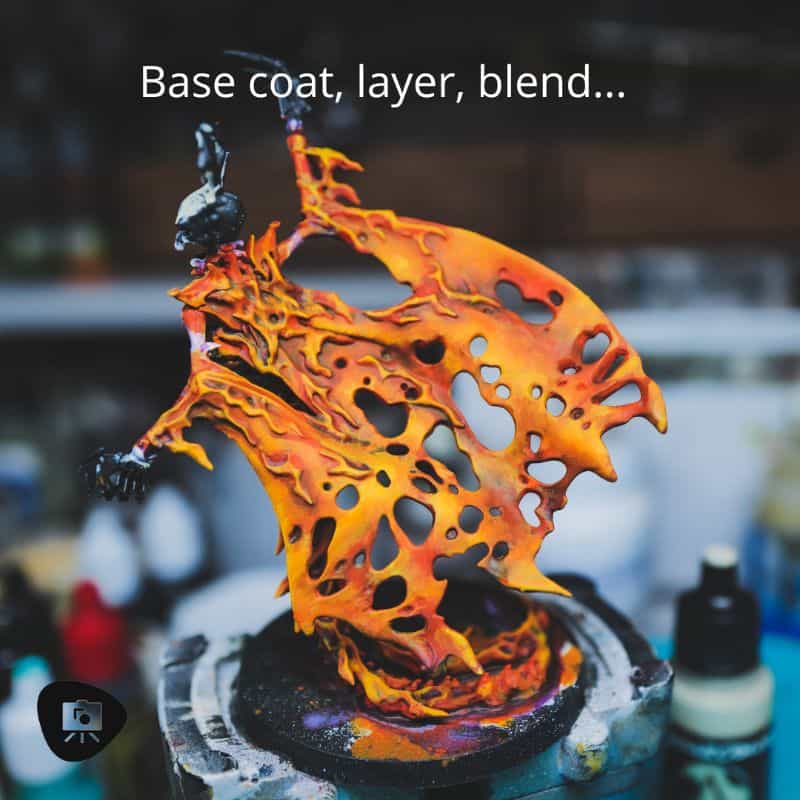
Basecoating miniatures is the process of applying the first solid layer of acrylic paint over a primed model. This layer establishes the base color and creates an even surface for shading, highlighting, and other painting techniques.
Step I. Prepare Your Basecoat Paint on a Palette
After priming your model, prepare your paint on a palette.

The first step is to place your basecoat paint of choice onto a palette. The palette itself doesn’t matter—wet or dry—so long as you have space to work and thin the paint in the next step.


The type of paint matters less than you might think, but acrylic hobby paints formulated for miniature painting tend to perform best. They offer good coverage and play well with thinning mediums, giving you the best chance at a smooth, even basecoat that avoids obscuring fine details.
Step II. Thin Your Paint Before Applying It
How thin should basecoat paint be? The exact ratio of water to paint isn’t as important as the final consistency. Aim for the thickness of melted ice cream.

With a small amount of paint on your palette, thin it with a bit of water. Although there are many thinning mediums available, I strongly recommend water for beginners. It’s cheap, simple, easy to control, and predictable.
The paint should stick to the bristles of your brush but flow easily off when you touch the brush to the miniature under light pressure. Think “runny ice cream,” not watery soup.

Don’t worry too much at this stage—you can make small adjustments as you go, as long as you avoid adding too much water.
Step III. Load Paint on Your Brush
Load your brush with enough paint for a 4-5 solid, even brushstrokes.

There should be enough paint in the bristles to make smooth, consistent strokes, but not so much that paint drips from the brush or runs uncontrollably on the model.
If paint is dripping or flooding recesses, you’ve loaded too much. If the paint feels dry or streaky immediately, you haven’t loaded enough.
Brush loading is a largely ignored skill, but it’s an art in itself—and the only way to learn it is to practice. Nothing replaces time spent painting.
Step IV. Apply the Basecoat in a Single Thin, Even Layer
By now, you’ve chosen your paint and thinned it properly.
Apply the paint using smooth, even strokes, following the direction of the surface. Start at the belly of the brush and pull away from the brush tip, maintaining a steady motion. Paint should leave a trail of color in the “wake” of the brush motion.

At this stage, you’re aiming for some (not all complete) coverage in a single pass. You may see the primer showing through—and that’s okay.
The goal is one thin, even layer that coats the miniature without clogging details. This step can feel messy, but that’s normal.

Let this first layer dry fully before moving on. Don’t disturb drying paint layers! If you do, you’ll get streaks, lumps and bumps.

Fully dried layers are the key to avoiding most painting problems you’ll encounter later.
Step V. Add a Second Coat
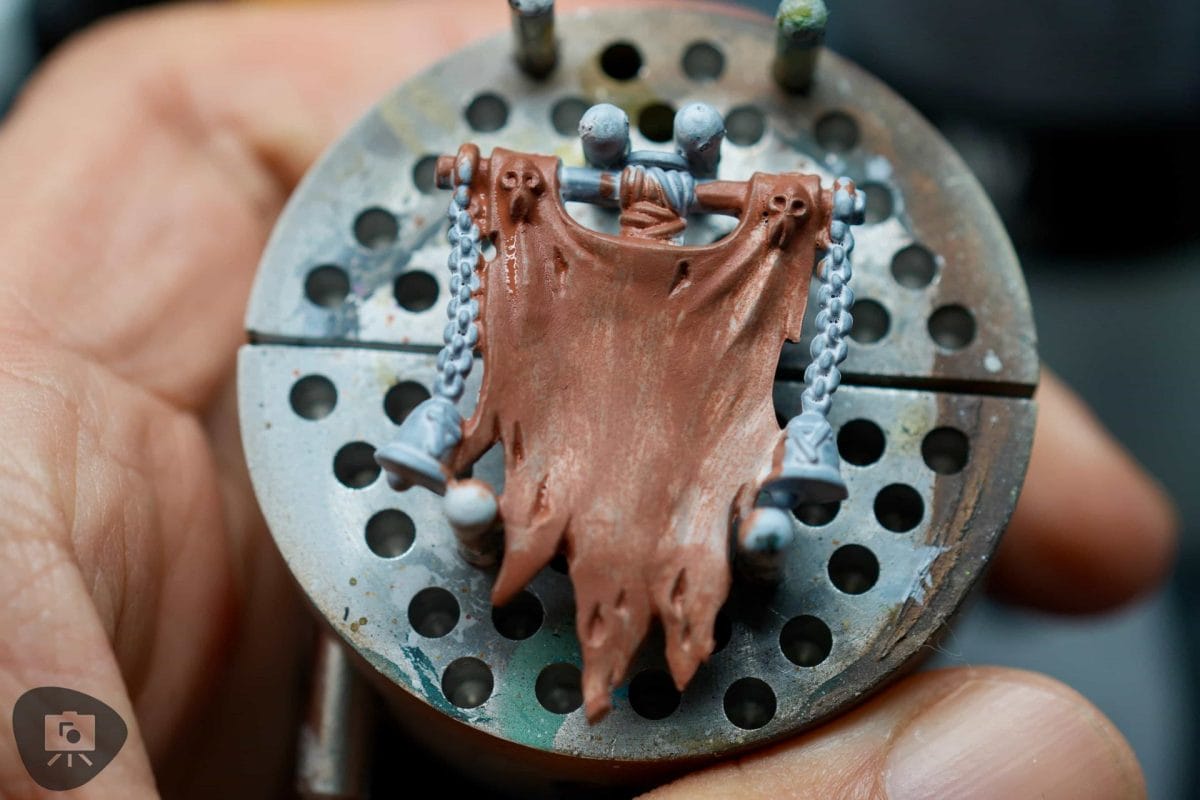
Once the first layer is completely dry, apply a second thin coat using the same approach.

Up close, you may notice that these two thin layers retain fine detail far better than one thick coat ever could. This is exactly what you want.

As the paint dries, it naturally settles and smooths out small surface inconsistencies. Don’t judge the appearance of the paint until it’s fully dry—acrylics always look worse while wet.


If needed, a third optional thin coat can be applied using the same method to finalize the basecoat.
Step VI. You’re Done
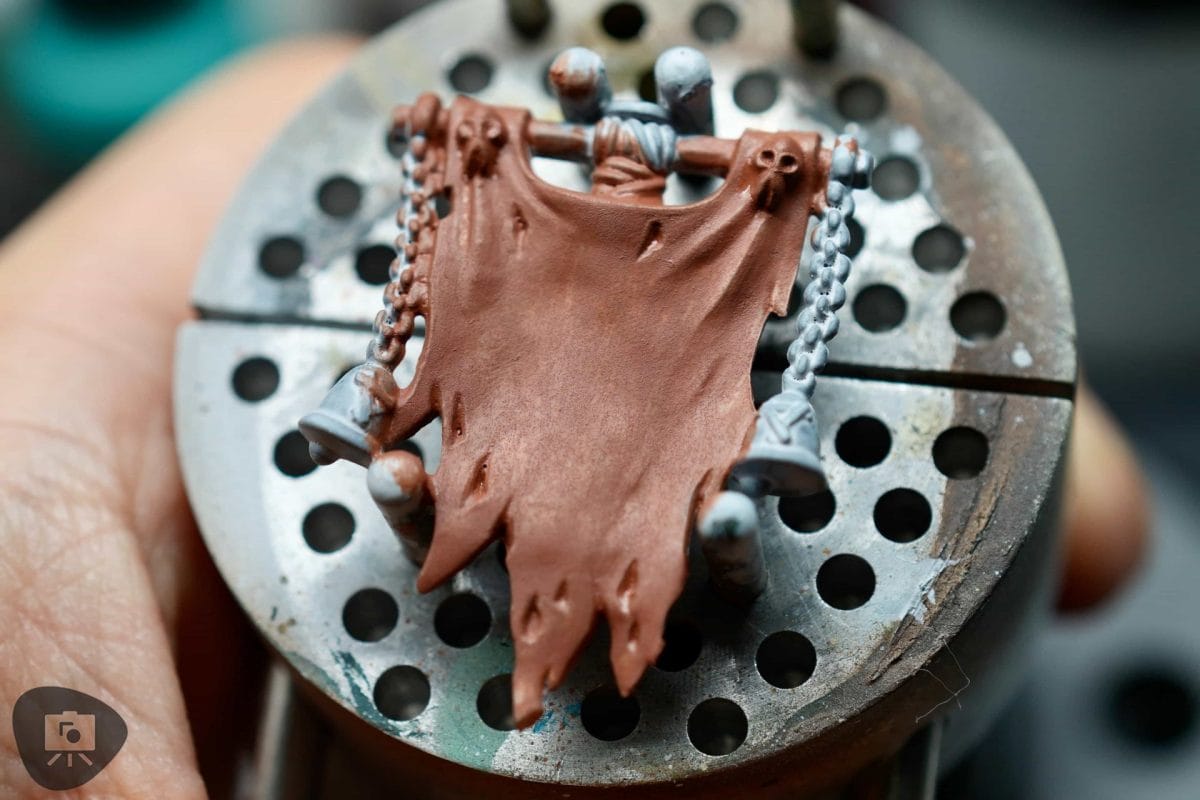
You’ll know you’re finished basecoating when you see an even layer of color with no primer showing through and no visible texture or pooling.
READ MORE: BEST LIGHTING FOR MINIATURE PHOTOGRAPHY

From here, you can move on to the next stages of miniature painting—adding contrast through shading and highlighting. Other techniques, including the use of washes, metallics, and glazes, are covered elsewhere.
Do You Need an Airbrush to Basecoat Miniatures?
This question has been debated for years, and everyone has an opinion.
My advice is simple: use whatever tool you feel most comfortable with.

I mostly prefer a regular paintbrush unless the model is very large or has wide, open surfaces that can be sprayed quickly. There is no meaningful difference in final quality between basecoating with a brush versus an airbrush. Both have their place and both work well.
For this guide, I focused on basecoating with a regular brush, because it helps you build control, confidence, and momentum early on. A regular brush gives you more feedback in your hand and keeps the process relaxed and approachable—almost meditative.


Conclusion
And that’s it—the basics of basecoating a miniature.
This is the simplest breakdown of a basecoat, no more and no less. There are variations and personal preferences, of course, but this method gives you a solid foundation you can build on.
I hope you found this helpful, actionable, and encouraging.
Until next time, happy miniature painting!
Did you enjoy this article? Do you have questions or comments? Leave me a message below.
Enjoying Your Visit? Join Tangible Day
Free newsletter with monthly updates (no spam)


Tangible Day on YouTube (Miniatures and More!)