

Last updated October 5, 2026. By Andrew M. Tan.
So, you’re looking for the best brush for painting minis? Ever feel like you’re one split hair away from tossing your model across the room? I’ve been there.
For most miniature painters, a pointed round size 1 or 2 with a sharp tip is the best place to start. I use premium sable brushes for controlled layers and details, sturdy workhorses for everyday painting, and inexpensive synthetics for metallics, glue, and other rough jobs.
Practice matters most. Thousands of hours with the tools you already own bring you there.
In this article, I share my experience playing (and experimenting) with dozens of brushes, from luxury Kolinsky sables to budget synthetics. I judge each brush by how it performs after regular use. Brushes are like shoes: you only know the fit after a few miles on your path. These are my personal top picks for painting miniatures and models.

In a Hurry? My Top 3 Picks 🏆
- Winsor & Newton Series 7, size 1 — my premium all-purpose pick for a fine point, generous paint capacity, and controlled detail work.
- da Vinci Maestro Series 10, size 1 — the closest professional alternative, with a little more spring in my hand.
- The Army Painter Regiment — my affordable everyday workhorse when I want a comfortable handle and useful paint capacity. Availability can vary.
Quick Buyer’s Guide
The variety can feel overwhelming at first, so start with the job you need the brush to do. If you want the deeper explanation of brush shapes, hair types, and size labels, start with my full guide to choosing a miniature-painting brush.
- Shapes that matter: Round brushes are your everyday workhorses. A size 1 or 2 will carry you through base coats and most details. Detail brushes (00–000) let you tackle tiny eyes, freehand patterns or script. Flat or chisel brushes create clean edge highlights. Filbert brushes — with their rounded tip — blend soft gradients. And drybrushes have short, stiff bristles for weathering and texture.
- Hair types: Kolinsky sable bristles are prized for holding a sharp point, springing back to shape, and carrying plenty of paint. This makes layering and glazing feel smooth and controlled. Synthetic brushes are tough and budget friendly; they work well for metallics, washes, and harsh cleaning, though their tips may curl sooner. Some brush lines use blended fibers for a balance of snap, capacity, and price.
- Sizes you need: Sizes vary by manufacturer, so judge the point and belly rather than the printed number alone. For many painters, a size 1 or 2 pointed round handles most general work, a smaller brush covers the rare ultra-fine detail, and an older or larger brush handles basecoating and rough jobs. Learn a few brushes well before collecting every size.
- Key qualities: Pay attention to tip retention (does it stay sharp after many rinses?), snap/spring (does it return to shape), paint capacity (how much paint the belly holds), durability, handle comfort and value.
- Care matters: Rinse your brush often while painting. At the end of a session, use brush soap to clean out paint and condition the bristles. Shape the tip with your fingers and lay it flat to dry. Avoid loading paint deep into the ferrule. With regular cleaning and careful loading, a good brush can stay useful for months. Its actual lifespan depends on the paint, pressure, cleaning routine, and how often you use it.
Buy for the job, then learn the brush you have. That usually saves more money than collecting every size.
Top 10 Brushes for Painting Miniatures
Below are my ten favorite brushes after years of painting miniatures and entire armies—Warhammer 40K, Age of Sigmar, Conquest, Warmachine/Hordes, D&D, display pieces, and everything in between.
Note that this list is not ordered from “best to worst”. It is a list of my brushes that I rely on and find valuable for my mini painting work. Links to my full user reviews are also included below.
1. Winsor & Newton Series 7 (Size 1/2) – A Luxury Experience

You’ve probably heard painters gush about the Series 7, and for good reason. When I first picked one up, I finally understood why pros rave about kolinsky sable. The brush makes you want to paint more. It is a simple tool that gives you the power to perform tasks that you have struggled with. Hobby acrylics flow smoothly, and the bristles keep a needle‑sharp point that snaps back naturally. The belly holds enough paint to cover several highlights, and the natural spring makes lines glide.

After a few sessions, I realized it saves time and frustration. The pointed round size #1 is perfect for almost any miniature painting project. The size #0 is good for the fine details, unnecessary in my opinion. Beginners can wait; if you’re serious about improving your craft, the investment pays off.
- Why This Brush: This is the brush that all other brushes are measured by. Suddenly, delicate freehand patterns and details feel less intimidating because the brush cooperates with you. You pay for what you get with the Winsor & Newton Series 7.
- Specs: Kolinsky sable, pointed round, short handle; the full Series 7 range includes sizes beyond the 0–2 brushes I use most for miniatures.
- Pros: Incredible point, generous paint capacity, natural spring, luxurious feel.
- Cons: Expensive; occasional quality control variation.
- Best uses: Glazing, layering, eyes, fine lining. When you’re painting something important and don’t want to fight your brush.
- Mindful note: Taking time to clean and store this brush properly becomes part of your ritual. It reminds you that your tools deserve care too.
Read my full Winsor & Newton Series 7 review.
2. Artis Opus S‑Series – For Smooth Layers and Glazes

When Artis Opus released their brushes, I jumped on the Kickstarter train. The S‑Series sits somewhere between the Series 7 and standard kolinsky: The bristles are slightly stiffer, giving a snappy spring ideal for layering and glazing. I love how the brush naturally stops me from overworking a spot.
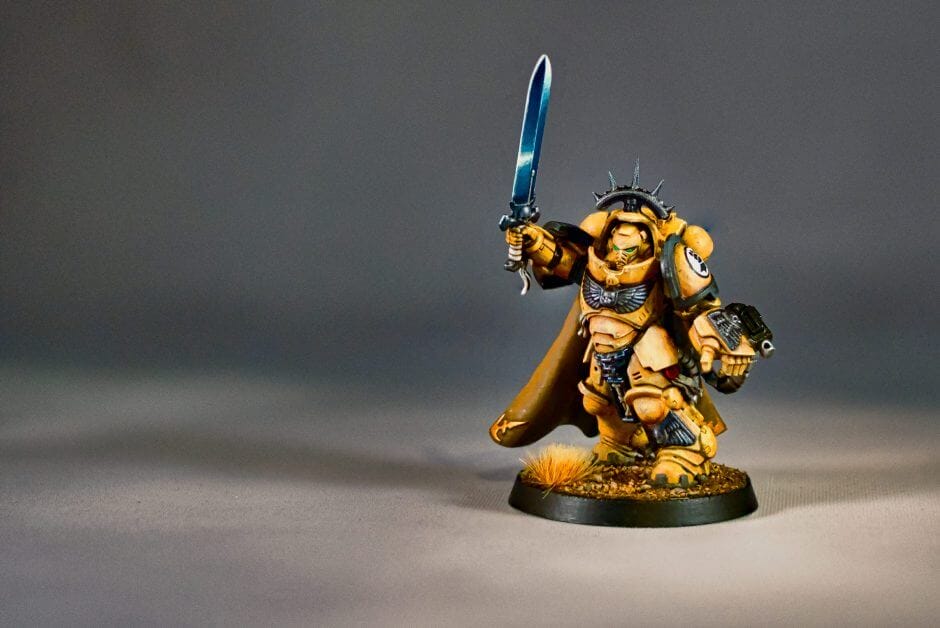
The snap acts like a gentle reminder to step back. The elegant handle feels wonderful and has a featherweight agility. The light feel may not be comfortable for everyone. I love it.
- Why This Brush: It’s a brush that encourages patience. Each stroke feels deliberate, and it works as you would expect and stays out of your way. One warning: it takes some practice because a lighter touch works best.
- Specs: Pure Kolinsky sable, pointed round, sizes 000–6, handmade in England.
- Pros: Snappy spring, fine point, premium build, ergonomic balance.
- Cons: It is a premium brush, and buying directly from Artis Opus is the most dependable way to see the current range.
- Best uses: Glazing, layered highlights, freehand patterns, blending large surfaces.
- Mindful note: If you struggle with overworking your blends, this brush’s bounce helps you trust the process and let layers dry.
Read my Artis Opus Series S brush review.
3. Army Painter Wargamer Regiment – The Everyday Workhorse
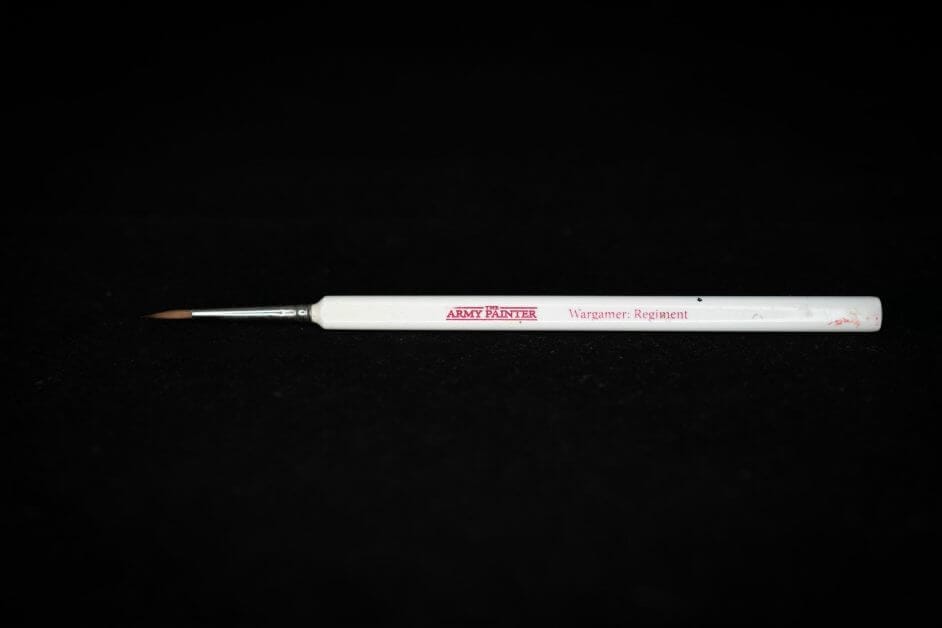
The older version of this article described the Regiment as a sable-synthetic blend. Army Painter identifies the hair as Rotmarder sable. In my use, the Wargamer Regiment gives me much of the control I want from a premium brush at a lower price. The triangular handle provides a secure grip, keeps the brush from rolling off my desk, and remains comfortable during long sessions. After a year of heavy use, mine still held a respectable point.

- Why it resonates: It bridges the gap between premium and budget. You don’t feel guilty loading it with a thicker paint or using it for sloppy washes because the Wargamer Regiment brush is durable.
- Specs: Rotmarder sable, pointed round, size 1, triangular wooden handle.
- Pros: Affordable, durable, versatile, comfortable grip; bigger tuft gives efficiency.
- Cons: Less precise than pure kolinsky; larger tip may feel bulky on tiny details.
- Best uses: Basecoats, washes, layering, everyday painting.
- Mindful note: This brush reminds you that practice matters more than expensive tools. It’s the “daily driver” that lets you paint freely without worry.
Read my full Army Painter Regiment brush review.
4. Citadel Medium Base Brush – Speed and Durability
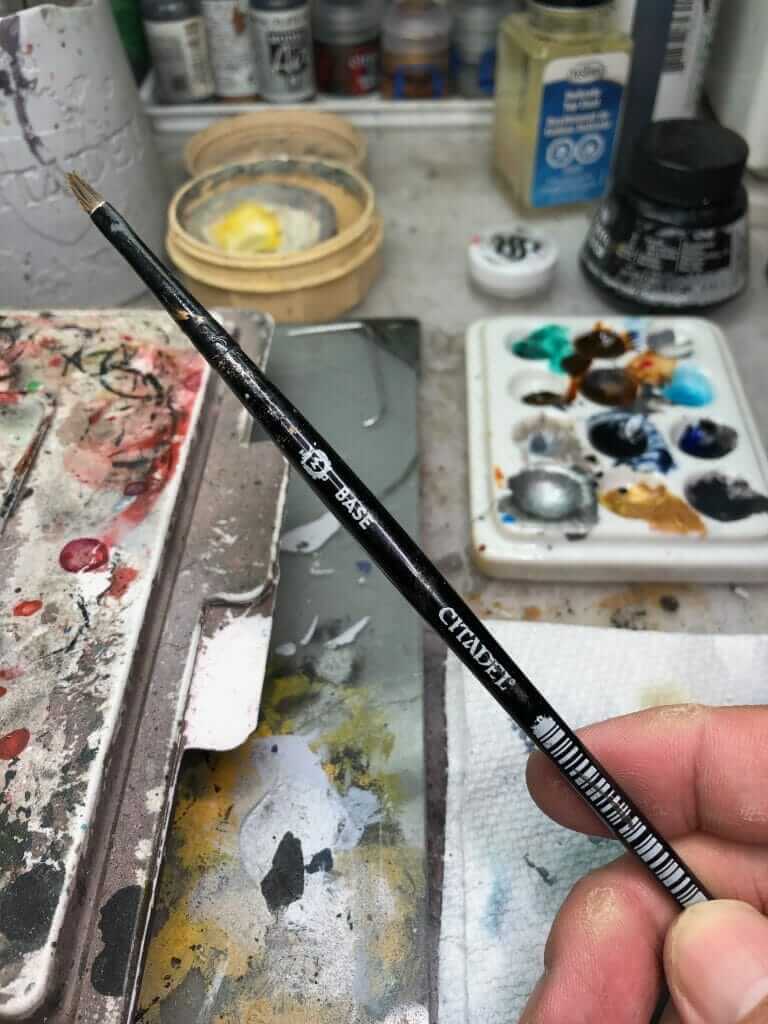
For speed painting or when I’m slapping metallic paint on a horde of models, I reach for the Citadel Medium Base. This synthetic brush has a wide tuft that covers large areas quickly while still offering enough control to sneak into nooks and crannies. The fibers handle metallics and varnishes without protest and survive vigorous cleaning. It gets the job done. If you are using it for broad first coats, my smooth basecoating tutorial shows the paint consistency and brush pressure I use.

- Why This Brush: It’s the brush you can abuse. If your schedule is tight or you have dozens of models to basecoat, you need a tool that keeps up. I love this brush for its reliability.
- Specs: Synthetic, round/flat hybrid, medium size, short handle.
- Pros: Durable, fast coverage, predictable paint release, easy to clean.
- Cons: Not for fine details. The bristles can curl with use. Careful cleaning and reshaping may help. A damaged synthetic tip does not always recover.
- Best uses: Basecoats, metallics, contrast paints, varnishes.
- Mindful note: Using a workhorse like this frees your premium brushes from unnecessary wear. It keeps you in the flow when batch painting.
Read my Citadel Medium Base brush review.
5. D’Artisan Shoppe Miniature Brush Set – A Friendly Starter Pack

During a slog of army painting, I had the opportunity to demo a new set of D’Artisan Shoppe brush set. These synthetic brushes are very inexpensive and come in handy for all sorts of miniature paint jobs.

They come in a variety of shapes and sizes. Though for most of us, I think the size #1 pointed rounds are the most versatile and useful. They’re well made and versatile; we used them for basecoats, washes and simple details. While the tips eventually curled — as synthetics do — they lasted longer than I expected. At about three dollars per brush, you can experiment without fear of wasting money.

- Why This Brush Kit: It’s perfect for experimentation. You can learn what brush sizes you like without breaking the bank.
- Specs: Synthetic, round and detail shapes, about 10 sizes, ergonomic handles.
- Pros: Low cost, wide variety, comfortable handles, accessible customer service.
- Cons: Not ideal for ultra‑fine details; bristles will curl over time.
- Best uses: Beginners, practice sessions, general painting, basecoats, washes.
- Mindful note: A beginner set like this lets you explore and play, which I think is essential when you’re still learning what creative approaches work for you.
6. Notts Hobbies Complete Drybrushing Set – Your Texture Toolkit

If the technique is new to you, start with my guide to dry brushing miniatures and models. The Notts Hobbies Drybrush set impressed me with natural bristles that strike the right balance between firmness and softness, giving smoother gradients than cheaper drybrushes. The long, round handles are comfortable and include extras like a texture palette, dampening sponge and dice bag. It feels like a complete kit.

- Why This Brush Set: It encourages you to experiment with weathering and textures without needing multiple tools. The kit invites creative play.
- Specs: Natural-hair drybrush set in three sizes, with a texture palette, dampening sponge, brush soap, and storage bag.
- Pros: Smooth drybrush gradients, durable natural bristles, comfortable handles, extra tools for versatility.
- Cons: More expensive than basic sets; limited to drybrushing tasks.
- Best uses: Drybrushing fur, rock, cloth, terrain; adding subtle highlights.
- Mindful note: Because drybrushing is forgiving, this set invites you to relax and enjoy adding weathered effects without stress.
Read my Notts Hobbies drybrush set review.
7. Da Vinci Maestro Series 10 – Premium German Kolinsky

When I first tried the Da Vinci Maestro Series 10, I realized why it’s often compared with the Winsor & Newton Series 7. Handcrafted in Germany, these brushes use top-tier Kolinsky sable and feel precise without being stiff. The point holds beautifully, the belly carries enough paint for smooth blends, and they balance well in hand for long painting sessions.

- Why This Brush: A dependable premium option with German craftsmanship, built for painters who want control and longevity.
- Specs: Selected Kolinsky red sable, pointed round, available in multiple sizes; I recommend size 1 or 2 for most miniature work.
- Pros: Excellent point, resilient bristles, smooth paint flow, durable build.
- Cons: Pricey; availability can fluctuate outside specialty art suppliers.
- Best uses: Layering, glazing, fine details, display painting.
- Mindful note: If Series 7 is the British classic, Da Vinci Maestro is the German counterpart, equally capable, slightly different feel, and worth having in your arsenal.
8. Raphaël 8404 – Premium Flow, Control, and Capacity

When I first tried the Raphaël 8404 size 2, it felt like painting with a miniature mop—in a good way. Its belly is generous for the size, so it holds plenty of paint, carries smooth glazes across larger surfaces, and retains a fine point.

The fine point handles detail work. Painters who focus on tiny highlights may find the large belly bulky. It is expensive and sometimes hard to find. The extra capacity helps with glazing and larger surfaces.
- Why This Brush: It’s luxurious and forgiving. Longer strokes and wide glazed layers become easier because you’re not constantly reloading paint.
- Specs: Kolinsky red sable, pointed round, short handle, available in multiple sizes.
- Pros: Enormous paint capacity; soft, smooth flow; fine point.
- Cons: Expensive; not ideal for the tiniest details; availability can be spotty.
- Best uses: Glazing large surfaces, blending, basecoats on larger models.
- Mindful note: If you tend to over-dip your brush, this one invites you to slow down and work with bigger, more confident strokes.
9. Army Painter Masterclass Drybrush Set – Best Drybrush Set

If the Notts set feels like a splurge, the Army Painter Masterclass Drybrush set offers good value. These dome‑shaped synthetic drybrushes are designed to catch raised edges and textures. They’re inexpensive and widely available. In my use, the bristles wear faster than those in the pricier Notts set. The Army Painter set remains a practical starting point.

- Why This Brush Bundle: It’s a low‑pressure way to try drybrushing techniques without investing in a pricier kit.
- Specs: Synthetic blend, dome shapes, three sizes.
- Pros: Cheap; easy to find; ergonomic handles.
- Cons: Bristles wear out relatively fast; limited to drybrushing tasks.
- Best uses: Drybrushing armour, cloth, terrain, quick weathering.
- Mindful note: Because they’re inexpensive, you can relax and have fun exploring weathering effects without worrying about damaging a high‑end brush.
10. Inexpensive Cosmetic and Synthetic Brushes – Rough-Job Tools

I keep inexpensive brushes for rough jobs such as painting with metallics and applying brush-on varnish to miniatures. I keep a stash of cheap cosmetic brushes on hand for pigments, glues, stippling rust, and mixing two-part epoxy. They are inexpensive and save my better brushes from rough media.

- Why These Brushes: No guilt. You can experiment with heavy pigments or sloppy mediums and toss the brush when it dies.
- Specs: Synthetic, assorted shapes and sizes.
- Pros: Ultra low cost; readily available; perfect for sacrificial tasks.
- Cons: Poor tip retention; inconsistent quality; short lifespan.
- Best uses: Metallics, weathering powders, glues, varnishes, pigments.
- Mindful note: Sometimes creativity is messy. Sacrificial brushes encourage you to play with new textures and media without fear.
Comparison Table
To make it easy to compare the brushes at a glance, here’s a concise table with their key attributes.
| Brush | Type | Shape | Sizes | Point | Snap | Capacity | Durability | Best For | Price |
|---|---|---|---|---|---|---|---|---|---|
| W& N Series 7 | Kolinsky sable | Pointed round | Multiple | Excellent | Strong | High | High | Detail, glazing | $$$ |
| Artis Opus-S | Pure Kolinsky sable | Pointed round | 000–6 | Excellent | Very strong | Medium | High | Glazing, layering | $$$ |
| AP Regiment | Rotmarder sable | Pointed round | 1 | Good | Medium | Medium | High | Everyday painting | $ |
| Citadel Medium Base | Synthetic | Hybrid | Medium | Fair | Medium | Medium | High | Speed painting | $ |
| D’Artisan Set | Synthetic | Round/detail | 10 sizes | Good | Medium | Low–Med | Medium | Beginners | $ |
| Notts Drybrush | Natural hair | Drybrush | 3 | Fair | Medium | Low | High | Drybrushing | $$ |
| Da Vinci Maestro | Kolinsky red sable | Pointed round | Multiple | Excellent | Strong | High | High | Layering, glazing, fine details | $$$ |
| Raphaël 8404 | Kolinsky red sable | Pointed round | Multiple | Excellent | Strong | Very high | High | Glazing, blending | $$$ |
| AP Masterclass | Synth blend | Dome | 3 | Fair | Medium | Low | Medium | Drybrushing | $ |
| Cheap Brushes | Synthetic | Mixed | Varies | Poor | Low | Low | Low | Harsh media | $ |
How to Choose for Your Style
Every painter has unique habits and goals. Here’s how I match brushes to common painting scenarios:
- You glaze and layer a lot: Choose a brush with a large belly and smooth flow, like the Artis Opus S or Series 7. Their kolinsky hair and snap make layering thin coats effortless.
- You’re new: Go for a sturdy, budget‑friendly brush like the AP Regiment. This is my overall favorite workhorse brush for most work with miniatures.
- You batch‑paint armies: The Citadel Medium Base gets a lot of work done. It holds up to hours of repeated work and can survive heavy cleaning. Of course, it isn’t meant for fine detail or general work. It’s best for painting larger models, quickly.
- You’re weathering, applying highlights, or texturing: Invest in a Notts Drybrush set for smooth gradients or the Army Painter Masterclass for a focused option. Pair them with a few cheap cosmetic brushes for pigments and glues.
- You paint with metallics or messy media: Protect your good brushes by using cheap cosmetic brushes and reserve your synthetic workhorses for basecoats and general painting.
Care & Longevity Tips
Caring for your brushes is a simple way to respect your craft. Here are some mindful practices:
- Rinse between colors: Swish your brush in clean water and wipe on a paper towel. This prevents paint from drying near the ferrule.
- Use brush soap: At the end of each session, deep clean your brushes with a soap like The Master’s Brush Cleaner. It dissolves residual paint and conditions the bristles. For my full cleaning, drying, storage, and brush-retirement routine, see my miniature paint-brush care tutorial.
- Load properly: Dip only the lower third of the bristles into paint. Keep paint out of the ferrule to prevent splaying.
- Reshape and dry: Gently reshape the tip with your fingers. Dry brushes flat or with the tip down so water doesn’t seep into the ferrule.
- Store with care: Use a brush roll, cap or stand. Don’t toss them loose in a drawer.
- Retire wisely: When a fine brush loses its point, demote it to basecoating or drybrushing. Don’t throw it out immediately; each brush can serve multiple roles.
Final Thoughts
Well, there you have it—my top 10 brushes for painting miniatures. After close to two decades of tabletop and commission painting, I’ve learned that every brush has a particular fit. You understand it by putting in time at the hobby desk.
Recommendations can point you in the right direction. Those ordinary sessions build the motor control and visual judgment behind better miniature painting. With art, “you gotta do the thing.”
Enjoying your visit? Join Tangible Day!
Leave a comment, or follow Tangible Day.



Tangible Day on YouTube (Miniatures and More!)

By Andrew M. Tan
Andrew is a commissioned miniature painter with more than 20 years of hands-on experience painting tabletop miniatures, photographing models, and testing hobby tools in real-world use. Read his full bio.