

Published October 10, 2026. Last updated October 10, 2026. By Andrew M. Tan.
Ceramic palettes, acrylic inks, watercolors, and a plain notebook all have useful jobs at the miniature-painting desk. These ten art supplies give you something specific to try, from a glaze to a new panel-lining technique.
I’ve covered these materials through reviews and painting projects on Tangible Day. Here’s what I’d use each one for, along with the details I’d check before buying.
There’s a special kind of discovery that happens in an art store. You pick up a bottle, a brush or palette perhaps; touch and turn it in your mind, thinking it might help with your next project. Well, is this you? It’s certainly me!
My favorite miniature painting supplies brings together the main tools I recommend from experience. This list explores materials from the wider art world, with a small project and a practical approach for each. I may change the items in this list as times go by. But for now, I hope you find this post inspirational, scratching that curious itch.
Contents [show]
In this article, I explore ten art supplies, a first project for each, and the details I’d check before buying.
Art supplies for miniature painting at a glance
| Art supply | A useful first job | Main limitation |
|---|---|---|
| Ceramic palette | Mix a small wash or glaze | Paint still dries on the surface |
| Inexpensive synthetic brushes | Spread basing glue or brush-on primer | Fine points can wear quickly |
| Artist brush soap | Clean a brush after painting | Damaged bristles may stay damaged |
| Acrylic inks | Tint a textured base | Opacity and finish vary by color |
| Glazing medium | Adjust a transparent color layer | Can change surface sheen |
| Fluid and high-flow artist acrylics | Test one color on a spare miniature | Handling differs between paints |
| Watercolor paints | Darken recessed armor panels | Water can reactivate the paint |
| Artist oil paints | Try a brown wash or blend | Longer drying and a separate workflow |
| Acrylic paint markers | Color a base rim | Large tips limit fine detail |
| A notebook | Record your next paint recipe | Useful notes need enough detail to repeat |
1. A ceramic palette for small mixtures
My favorite dry palette is the Jack Richeson Porcelain Mini Tray Palette. Its little white wells keep mixtures separate and make the color easy to see. I use it for inks, washes, and painting mediums.

Mix a small wash and try it on a textured base. You’ll soon know whether you like separate compartments or a broad mixing area.
Ceramic has weight and can break if dropped. Acrylic paint still dries on it, so choose the size around the mixtures you use.
See the dry palettes I recommend and how I use them.
2. Inexpensive synthetic brushes for the messy jobs
Glue application is an excellent career for an inexpensive brush.

I keep synthetics for basing, brush-on primer, and other jobs that wear the bristles. A flat brush spreads glue across terrain; a small round reaches around a miniature’s feet. Mark the handle of your glue brush so you can find it again.
Cheap synthetics can curl, splay, or lose their point. Give them a specific job and keep your favorite detail brush for finer work.
Read why I keep cheap synthetic brushes at the hobby desk.
3. Artist brush soap for the end of the session
Masters Brush Cleaner and Preserver is the soap I recommend in my cleaning guide. It helps remove the paint left in the bristles after the interesting work is finished.

Rinse the brush, work up a gentle lather, and rinse again. Follow the cleaner’s directions and keep the pressure light.
A hooked tip or damaged bristles may stay damaged. For stubborn dried paint, my full guide covers the separate liquid cleaner I use.
Follow my brush cleaning guide.
4. Acrylic inks for concentrated color
I like inks for glazes, recess shading, and tinting textured bases. A strong color can change the appearance of a miniature quickly, so a small brush load helps.

Daler-Rowney FW and Liquitex Acrylic Ink are ranges covered in my guide. Transparency, opacity, and finish vary by color. Check the exact acrylic product when shopping; art stores sell several kinds of ink.
Try a diluted ink over a light-colored spare base. Let it dry, then look at how much of the underlying texture and color remains visible.
Explore eight ways I use inks in miniature painting.
5. Glazing medium for transparent layers
Glazing medium helps you adjust a transparent color layer. Try warming a highlight or tinting a metallic surface.

Liquitex Glazing Medium is an example from my paint-thinning guide. Liquitex describes it as increasing transparency and gloss, with quick drying for layering. Check that finish and drying behavior against the job you have in mind.
Test a little paint and medium over a painted spare part. Judge the color and sheen once dry, and keep the brush load small enough to control.
My glazing tutorial explains the brushwork, and Liquitex’s product information explains this particular medium.
6. Fluid and high-flow artist acrylics
Artist acrylics give you more colors and formulations to explore. GOLDEN Fluid and High Flow are separate ranges; the pictured High Flow paints have an ink-like consistency.
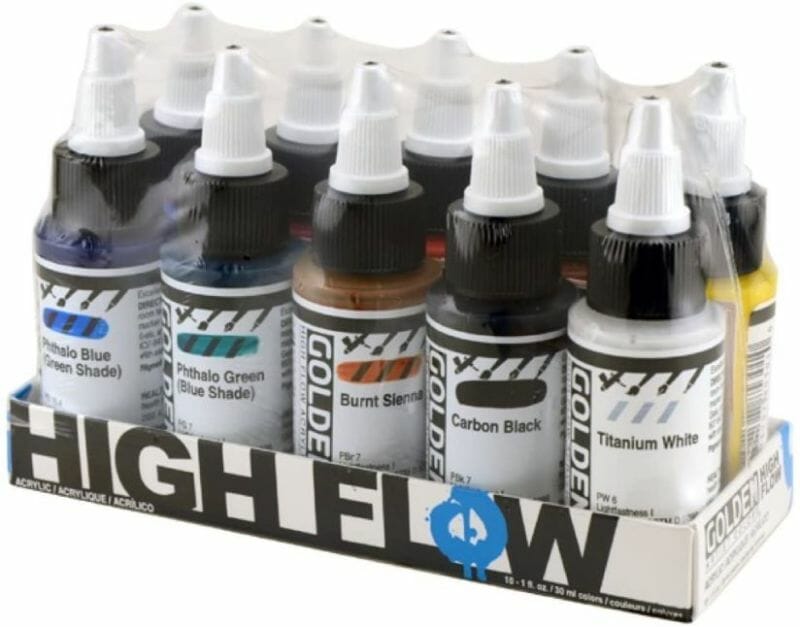
GOLDEN describes its Fluid Acrylics as highly pigmented paints suited to applications including fine detail. That makes the range a candidate to investigate. I’d treat that description as a starting point and test the color on a spare model before buying more.
Opacity and sheen vary by color and range. The linked High Flow ten-color set was unavailable at my October 10 check, so check for a restock before planning around it.
Read my guide to acrylic paints and their uses.
7. Watercolor paints for panel lines
I’ve used watercolor to darken recessed details on a Warhammer Tau Stealth Battlesuit. The Sakura Koi Pocket Field Sketch Kit is the set shown in my tutorial.

Add water, guide the color into a recess, and lift unwanted marks with a lightly damp brush. Let the underlying acrylic layers dry first. Surface finish and the amount of water both affect the result.
Watercolor can reactivate after drying. Test a compatible clear-coat step if you need to protect the finished model.
Follow my watercolor panel-lining tutorial.
8. Artist oil paints for washes and blending
Oil paints give you time to soften a transition or adjust a blend on the model. A dark brown wash on a spare painted piece is a manageable first experiment.

In my Paul Rubens review, I also explored blending directly on a miniature. Paul Rubens supplied that set for review.
Allow for longer drying, suitable brushes and thinner, and the product’s workspace and handling directions. Test compatibility with your underlying paint and clear coat.
Read my Paul Rubens oil paint review and miniature-painting test.
9. Acrylic paint markers for base rims and broad shapes
A base rim gives an acrylic marker a useful first job. You can quickly judge coverage, handling, and finish.

My Arrtx 90A review found uses for base rims, terrain, broad areas, and opaque freehand. Arrtx supplied the set for testing. I also observed small splatters while uncapping, so keep the marker away from finished work when opening it.

Tip size limits fine detail, and long-term tip wear remains a question from the review. Swatch the color and let it dry before adding another layer.
See what the Arrtx acrylic markers could handle in my tests.
10. A notebook for paint recipes and small discoveries
I keep a notebook beside the hobby supplies. It’s a good place for the mixture you’re certain you’ll remember next week.

Write the paint names, rough proportions, model, and undercoat. Add a useful result: “Too pale over black; try grey primer.” Dates help, too. A mysterious green smudge has a limited future as a reference document.
Mine includes a Rhodia notebook. Choose paper that suits your notes, and test it before adding wet paint swatches.
See how I use a notebook around my miniature painting.
Make your shortlist around the next project
Pick a job from the miniature already on your desk. A ceramic palette gives your mixtures somewhere to go. Watercolor lets you explore panel lining. A notebook keeps the recipe for the next squad member.
I like the moment when a familiar model gives you a new idea. A bottle of ink, a different brush, or a small change in how you mix a color can open up another direction for the project.
Which art supply has earned an unexpected place in your miniature-painting setup? I’d like to hear what you use it for.
Until next time, happy miniature painting!
Enjoying your visit? Join Tangible Day!
Leave a comment, or follow Tangible Day.




Tangible Day on YouTube (Miniatures and More!)

By Andrew M. Tan
Andrew is a commissioned miniature painter, photographer, and writer. He founded and edits Tangible Day, drawing on more than 20 years of hands-on hobby experience. Read his full bio.