Discovering Warhammer Through the Art of Miniature Painting
What initially drew me to Warhammer: 40,000 wasn’t the tabletop gaming aspect, or the incredibly deep lore, but was the seemingly innate artistic ability of its players. Here was a community of people diligently working on miniature masterpieces every night in their garage, or at their kitchen table, or spare room. And as an artist myself, I loved that.

How Learning Classical Painting Changed the Way I See Miniatures
I had taught myself how to paint when my dad died. Mostly it was a way to cope with his loss, but I soon found enjoyment in the anticipation of putting pigment to canvas. I started with acrylics and then, as if some wanting to enact some sort of self-flagellation, decided that oil painting didn’t look too hard and should be easy to pick up.
It was not.
But I practiced. I learned that I needed to thin the paint. I learned about color theory, and how to imagine the light on my painting to add depth and shadows, and what colors those shadows should be. 2D art is just a bunch of shapes done well to look real.

I learned human anatomy, and that hands are an absolute menace to recreate in a way that looked natural. I came to recognize that a scene in the day looks entirely different at night.
RELATED: A GUIDE TO OIL PAINTING MINIATURES

And so, in my little mud room, I practiced and perfected my technique. Totally self-taught. Totally just winging it with a little help from Google and a few books from the bookstore, I quickly found a hobby that I both enjoyed, and I was pretty good at.

From Video Game to Hobby Desk
Fast-forward a few years to the release of Space Marine 2 and holy-moly there’s a bad-ass in armor cutting through alien-bugs with a chainsaw sword. Immediately I was hooked and wanted to play more. And I did.

Each night playing through the campaign, and then the missions, and then co-op and multiplayer. I found myself quickly lost in the lore of humanity’s struggles against Orks, Drukhari, and Chaos. And I loved it.
During a Friday Night Magic event, my local game store was stocking its Warhammer section and I noticed a “Getting Started” box with a Space Marine and a Tyranid model. I figured it was pretty cheap, and if I don’t like it, well then I’m not out a whole lot of cash.

I went home and dug up some old enamel paints I had laying around and went to work. Quickly I discovered I love it. I still have that first model, and use it whenever I’m feeling discouraged in a project to remind myself of how far I’ve come.
Three Classical Art Lessons That Improve Miniature Painting
The thing I realized at that moment though, is that I’m set up a little better than the average newcomer to Warhammer. I knew I had painting skills, it was just translating those skills from two dimensions to three. So, here’s some things I’ve found translated over well, and I hope you gain some valuable insight.
Lesson #1: Your Model is Your Canvas
This sounds so obvious, but let me explain. In classical painting, if you fail to prepare your canvas, you truly set yourself up for disaster. You can ruin everything before you even begin by not taking a few easy precautions.
Canvas too tight or too loose? As the paint dries it could easily crack. Imperfections in the fabric of the canvas itself? Those imperfections could easily end up in a highly noticeable location in your finished product, diminishing your efforts and sticking out like a sore thumb.

How to prepare your surface for paint
More importantly, in oil painting a substance known as gesso is used to prepare the canvas before any paint even touches it. Gesso is essentially chalk mixed with acrylic paint to create a type of primer. Gesso is great not only for helping paint stick to the canvas, but also protecting the fabric itself. I used to apply a thick gesso then sand it down to make a smooth surface and it made life so much easier as an artist.

Simply put, this translates to us generals of the 41st millennium as “prime your models.” Seriously, it’s really mind-blowing how many models I see at the game stores around me that were clearly painted without primer. The primer gives the paint something to “stick” to. Without it, miniatures just don’t look right or correct, and those expensive miniature paints aren’t as effective as they should be.
Use a gray colored primer
One of the best surface primers you can use is gray-colored surface primer.
To take this a step further, your choice of primer color can totally warp the finished outcome of your model. Black primer can be great, as the hard to reach spots you can’t quite get to can be ignored and look like shadows on their armor or body.

But I’d highly recommend against using black to prime for a model if you intend to paint yellow or orange. Ever take a highlighter over fresh pen ink? You’d get the same result painting yellow over black primer; it’s a headache that can be hard to fix and make what you thought was a really cool yellow look green.

If you’re painting metallic or darker, deeper colors, prime with a dark color. If you are going lighter and brighter, prime with a grey or white.

Unless I’m intending to paint white as the finished result, I prefer a neutral gray primer. Grey gives you options to go dark or light with your finished result without too much trouble. As an Imperial Fists player, I’ve found Averland Sunset over grey primer is really easy to work with and provides a good result with a few thin layers.

Also of importance is ensuring any remaining artifacts from building the model are scraped and sanded. There’s been numerous times where I’ll be almost finished painting and realize I missed a spot from my clippers or notice a mold line on my model. It can be really frustrating.
So before you even prime, make sure there are no lingering, unwanted plastic bits hanging off your model, just as an artist would inspect his canvas.
Lesson #2: Varnish, Varnish, Varnish
Go into any museum and look at the art pieces. Any good gallery will have a description of the art as well as the year the piece was finished.

How in the world have paintings created in the 17th century lasted until 2026?
The not-so-secret secret is varnish. Varnish is a natural or synthetic resin dissolved in solvent. When applied to paint, it can deepen or reflect light in a way that enhances the pigment in the artwork through a process called saturation. Not only that, but varnish creates a protective layer over the paint, helping prevent cracking and protecting from the elements.

For centuries, classical painters have protected and enhanced their paintings using varnish, and the good news is you can too! Ever notice how after handling or moving your painted miniatures there may be a grey spot or a discolored spot? That’s the oils in your hands and other elements in the environment working against your beautiful paint job. Just like varnish protects the great works of Van Gogh and Peter Paul Rubens, varnish can protect your artwork as well.

Several companies make excellent varnishes for use with miniatures. I personally prefer the Army Painter Gloss and Matte varnishes. Each type offers its own benefits and downfalls.
Matt varnish may scratch a little easier, but it preserves that flat look that many miniature painters tend to go for. Gloss varnish offers a little bit thicker protection, but also will produce a noticeable shine on your models. I’ve found using each type of varnish on different parts of the model can produce a nice effect, but can be time consuming. Make sure you know what type of effect you want before you begin to varnish your models.
Lesson #3. Learn How Light Affects Your Model
One of the trickiest, most challenging parts of any type of art is mastering light. And really what artists do is, by using color, create the illusion of illumination in a piece. For example, look at any painting by Claude Monet.

Notice how with any of his landscapes, you immediately recognize what time of day the painting is recreating. Morning, midday, afternoon, evening, and night all look different because the light source (the sun) is projecting light at different angles, and Monet conveys that by use of color.
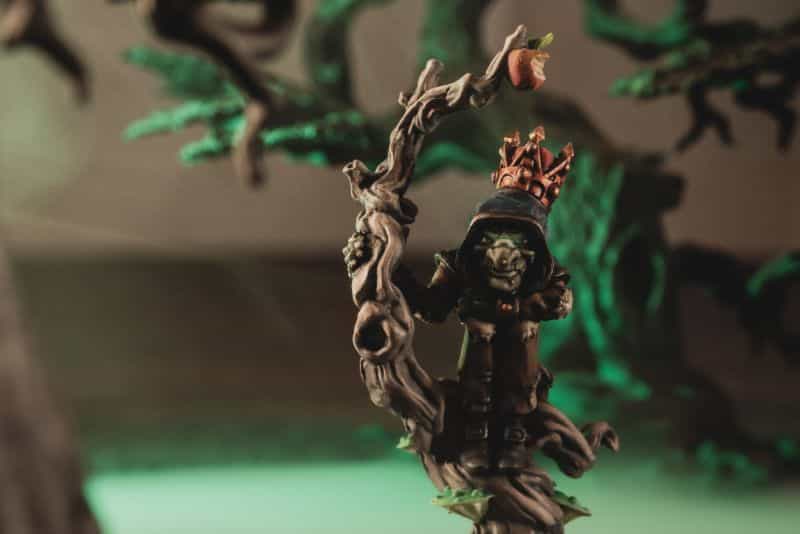
If you can master this, then you can truly upgrade your painting skills as a miniature artist.
The power of light
I’ve found a lot of light recreation, especially in Official Games Workshop publications, is done through edge-highlighting. It’s an easily reproducible result that works well with 3D models. That way from any angle you view the model, it looks like light is hitting it and reflecting in a way.
However, I find it unrealistic. Would my Jump Pack Canoness really have all the edges of her armor reflecting if she’s fighting a battle going towards the morning sun? She wouldn’t.
The most dramatic models all have their light recreated in a natural way. But in order to do this, you need to really think and be intentional with your brush work. All the best results in art, like in life, come from risk. So have confidence and practice.

The art of recreating light shining on your miniatures
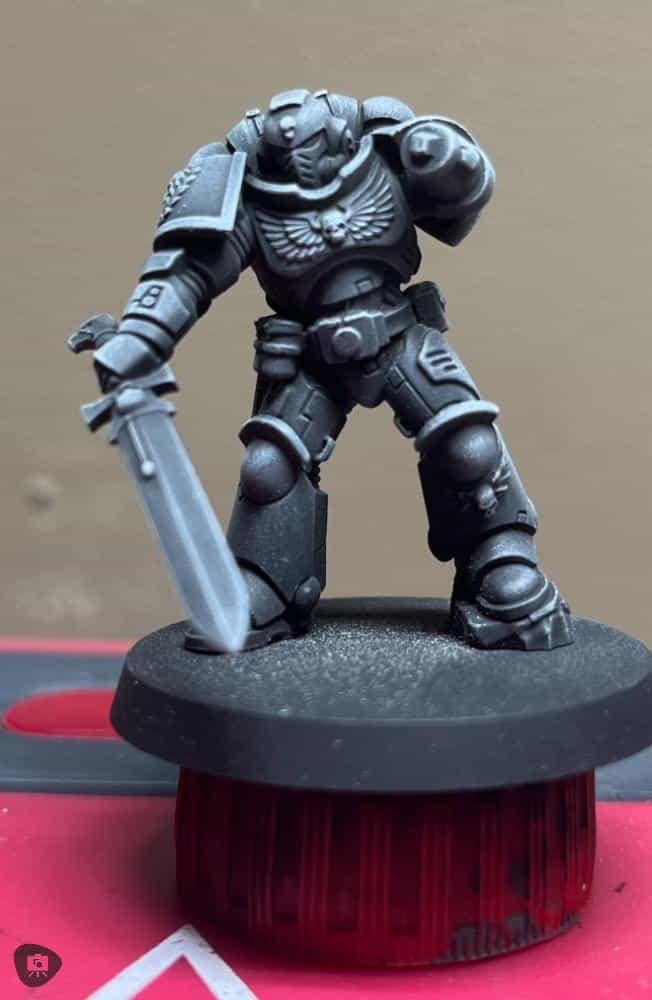
A simple exercise to do is to take any model you have primed in black and shine a flashlight on it. Start by shining that flashlight overhead. What parts of that model have a glare? What parts are still dark? Shine it from a flat angle at your model head on. Notice what parts have the glare?

Now begin to rotate your model in either direction, and you’ll begin to see that the same spots that had the glare no longer do.

You can place the flashlight anywhere and see how this works. Except the room in which Justin Timberlake filmed his 2003 pop hit “Rock Your Body” and a nuclear explosion, light is never really all encompassing. Things may be bright and illuminated, but there’s always a direct strong source of light.
How to “paint” the tonal impact of light
How then, do we create the illusion of light using color? My friend, that’s a question which has plagued artists for centuries! In order to master light, we must master tone. Tone, in artistic terms, is simply how light or dark a color appears to us.
For mini-painting purposes, we will focus on simple changes in tone. Let’s say hypothetically you’re painting an Ork. His skin color is green, but you want to add some lighting effects.
Edge highlighting green skin, or any skin really, obviously looks weird and unrealistic, and we’re moving beyond that. So, you shine your light and see that parts of his shoulders and forearms catch that glare. Those will be the spots to utilize a lighter tone.

To achieve this, simply add a little bit of white paint to your green. Not too much, or you’ll blow the tone way beyond what we want. A small shade lighter is all you want. Mix well and you’ll begin to see that base green turn slightly lighter. Now using that flashlight again, shine it on your model and remember the spots that had glare. On those spots, gently apply the lighter paint. Not a whole lot is needed, just enough to give the effect of light hitting him without washing out the overall tone of his skin color.
The inverse applies as well. To create a darker tone, utilize black instead of white. However, use caution with this, as black can tend to be an all-consuming color, quickly darkening whatever it’s mixed with if too much is used. Use small, single drops of black if you intend to go darker.

Conclusion: What Miniature Painters Can Learn from Classical Artists
Overall, the most important thing we can learn from classical artists is perseverance and practice. The more you do something, the better you will become at it. It really is that easy sometimes. It just takes some work, some drive, and an attitude of learning, not failure.
Rembrandt and da Vinci didn’t come out of the womb creating masterpieces. They had to learn, practice, and fail. And failure isn’t a bad thing. Failure is how humans discern what works from what doesn’t work. That’s the whole process. It’s what makes us better.
Those are just 3 easy tips to apply some principles from classical art to our beloved hobby. Stay tuned as more articles come out – I especially want to dive deep into the fascinating world of color theory.
I hope you enjoyed this article, and find me on Instagram at @dapaintedwaaagh. Remember to keep practicing, and keep painting.
ABOUT THE AUTHOR

Aaron Smith is a Warhammer 40K hobbyist who enjoys painting miniatures, kitbashing characters, and rolling dice with friends. When he isn’t at the hobby desk, he’s probably talking about war dollies, math rocks, and the occasional WAAAGH. Visit him on Instagram at @dapaintedwaaagh.
Enjoying Your Visit? Join Tangible Day
Free newsletter with monthly updates (no spam)


Tangible Day on YouTube (Miniatures and More!)