
Last updated September 20, 2026. By Andrew M. Tan.
What glue do you use when basing miniatures? The kind of glue you should use will depend on the material you’re using to flock or base your models. Whether you’re using sand, grass flock, resin, cork, or other material, you’ll want a strong and durable adhesive.
For sand and flock, PVA glue is a good starting point. Super glue works well for small resin or stone pieces, plastic cement joins bare styrene parts, and two-part epoxy can help with heavier pieces.
This post contains affiliate links. As an Amazon Associate and an affiliate for other retailers, I earn from qualifying purchases at no additional cost to you.
Super Glue

Why Base Miniatures?
Great, you’ve finished painting your models!
But, why are their bases bare plastic?
If you’ve gotten far enough to paint your miniatures, then you have all the skills you need to finish the base.
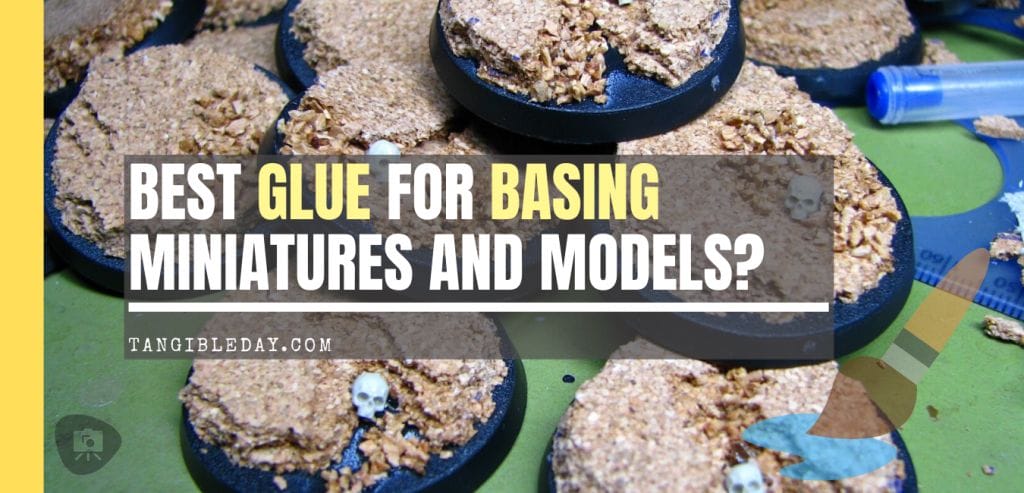
Basing models doesn’t need to be complicated. All you need are simple materials like sand or pieces of cork to create a scenic base.
And, glue!
Of course, you can really go nuts with base-making. Use sculpting materials to really take your painted miniature to the next level.
You can even whittle some basswood like I did here to make a base for your models.
Or, you can use texture pastes like Citadel technical paints to quickly add some flair to your bases. Don’t want to spend much money? Try these alternatives to Citadel texture paints.
What is the Best Glue for Basing Miniatures?
There are 4 kinds of common glues you can use to base your miniatures:
- Super Glue (or Cyanoacrylate)
- PVA Glue (or White Glue)
- Plastic Model Cement (or Plastic Glue)
- Two-Part Epoxy
Super glue, crazy glue, or cyanoacrylate, is one of the most versatile glues for basing miniatures. This glue works on many materials you might consider for adding flock, sand, or other things to your bases.
If you’re looking to glue more porous materials like wood, paper, or cork, then realize that thin super glue can soak into the material before enough remains at the joint. Thicker formulas can work well here.

Try thick, gel versions of super glue if you want to use it for basing miniatures and models. The thicker versions of the glue will help you apply it to the various materials that you may want to use on your bases.
Remember that super glue needs a little moisture to cure. The moisture already present on most surfaces is usually enough.
One reason super glue may cure slowly is a very dry environment. Too much glue or a poorly fitting joint can also delay the bond.
If you’re having problems with your super glue bonding to your basing material, you can use an accelerant, like zip kicker.
Overall, super glue is one of the best glues for basing miniatures because it is strong, fast-acting, and works across different basing materials.
Pros
- Easy to Use
- Works on many types of basing material
- Fast Curing
- Strong and durable
- Inexpensive
- Some thick formulas fill small gaps
Cons
- Bonds skin
- May cure slowly in very dry conditions
- Clogs
- May work too fast
- Thin formulas may soak into porous material, e.g., wood, cork
| Super Glue (Cyanoacrylate) |
|---|
 |
| Buy on Amazon |
| Buy on BLICK Art |
| Buy on Walmart |
PVA Glue

White PVA glue is also one of the best glues for basing your models. PVA glue is a water-based glue that is commonly used in arts & crafts.
For hobbyists, it is a great go-to for many projects that require gluing porous materials, e.g., wood, paper, cardboard.
For miniatures, PVA glue is perfect for gluing cork board for replicating the look of rock or stone.

If you are gluing EPS or insulation foam terrain to your bases, PVA white glue will work really well. Be aware that you probably won’t be able to carve through glued foam with a hot wire foam cutter very well. For making terrain out of all sorts of materials, white glue is a popular and versatile formula.
White glue generally works best with lightweight, porous basing materials. Additionally, PVA glue is more flexible after it has dried. This may or may not be useful for you for basing your models.
Check out this cool tutorial using PVA glue for basing a lava base.
For adhering heavier objects, like rocks or large pieces of resin, white glue will likely fail at some point. White glue needs good surface contact and relies on that surface area contact for its bonding strength.
Pros
- Non-toxic craft glue
- Water-thinnable while wet
- Versatile
- Easy to use
- Cleans up easily
- Great for porous or loose basing materials, e.g., cork, sand
- Inexpensive
Cons
- Takes a while to dry
- Flexible
- Peels from smooth (hydrophobic) surfaces
- Not good for heavier basing material, e.g., rocks, resin
- Ordinary white glue may soften if soaked
| PVA White Glue |
|---|
 |
| Buy on Amazon |
| Buy on BLICK Art |
| Buy on Walmart |
Plastic Model Cement

Plastic cement is a less commonly-used glue for basing models.
Most hobby plastic cements are made for bonding styrene plastic.
Even though plastic glue is great for miniature plastic kits, like those for Citadel’s Warhammer 40k or Age of Sigmar models, plastic cement doesn’t work well outside of these types of plastic.

That means that plastic model cement will not work on resin, pewter metal, or paper products for basing miniatures.
Plastic cement works through a chemical process where it softens styrene plastic and fuses those surfaces together as the solvent evaporates. Plastic cement makes a permanent bond between compatible plastics.
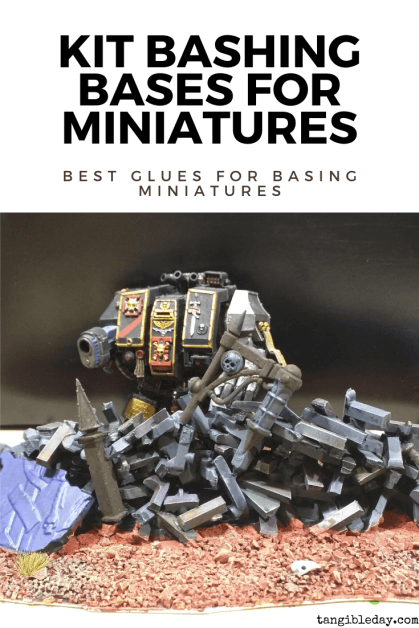
I recommend plastic cement for basing miniatures when you want to create custom features using plastic card, spare bits and sprues, or scratch-built basing features with styrene material.
Be careful with plastic cements. Many of these products release harmful fumes and vapors. Work with plastic glue in an area with good ventilation. Remember you won’t need a lot of plastic cement for it to work. Less is more!
Pros
- Best glue for styrene plastics
- Fuses compatible plastics permanently
- Works fast
- Inexpensive
Cons
- Limited to plastics only
- Harmful vapors
- Technical to apply
| Plastic Model Cement |
|---|
 |
| Buy on Amazon |
| Buy on BLICK Art |
| Buy on Walmart |
Two-Part Epoxy
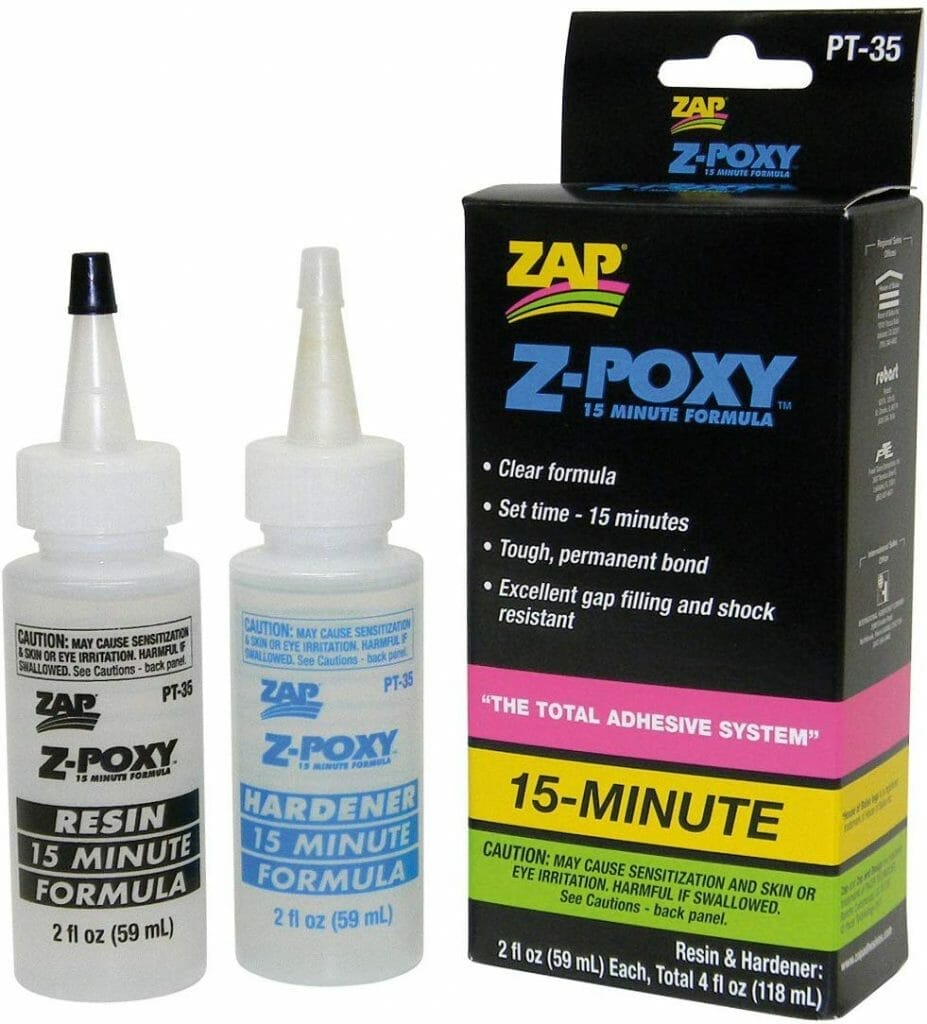
Two-part epoxies are the glues you go to when all else fails. They can form a strong bond between heavy basing pieces.
When you’re looking for a stronger bond for basing your miniatures, two-part epoxies are awesome. For heavy basing materials, like rocks, pebbles, or large pieces of resin, two-part epoxy will handle the job.

Two-part epoxies do require a bit more work to use, however. You will need to mix the two parts of the epoxy together in the correct ratio for it to cure properly.
This can work to your advantage, though, since you may have several minutes to position your basing pieces. Check the working time on the label.
If you’re trying to create water effects, use a clear resin made for that purpose and follow its pour-depth limits.
Cured epoxy can resist many solvents, depending on the formula. Check the manufacturer’s guidance before applying solvent-based products over it.
A fully cured two-part epoxy can resist many insults to your miniature base.
Do you have a really heavy and large model that you want to attach to your base? Try two-part epoxy for a solid foundation and bond.
For best results, plan out how much epoxy you will need for the amount of basing material you’re trying to glue. By planning out your need, you won’t mix up too much or too little epoxy.
Once you mix the two parts, you can’t put them back in the bottles and will have to use what you’ve mixed within its working time.
Because of the more technical aspect of two-part epoxy and the potential for waste, I recommend first using super glue for most projects that require a strong bond.
But, if you’re looking for a very strong, durable bond for your bases, you can’t go wrong with two-part epoxies.
Pros
- Very strong adhesive
- Works on many common basing materials
- Long-term durability
- More positioning time than fast-setting super glue
- Great for heavier materials, e.g., rocks, resin
Cons
- More complicated to use
- Requires proper mixing ratio to cure properly
- Harder to use in small quantities
- More expensive than other adhesive/glues
| Two-Part Epoxy |
|---|
 |
| Buy on Amazon |
| Buy on BLICK Art |
| Buy on Walmart |
Other Useful Adhesive Options for Basing Miniatures
I’ve certainly missed other options for gluing your basing material to your miniatures. But, here are two other options that I’ve used that work well.
I didn’t place them in the main list above because they are a bit situational (as you’ll see below).
Hot Glue Gun
Hot glue guns are great for arts & crafts. I’ve suggested using hot glue guns as a tool in making DIY wargaming terrain.

from: Blick Art Materials
A hot glue gun uses “glue sticks” that are melted inside the glue gun and expelled through a nozzle as a liquid. Because a glue gun uses melted glue sticks, it works really fast and gives you a lot of control over where the glue goes.
I recommend using a hot glue gun for attaching secondary basing materials, not as the main adhesive.

For example, you can use a hot glue gun to attach pebbles or plastic bits to a base. But, don’t use the hot glue gun to attach main structural basing material.
The solidified hot glue is too flexible and structurally inadequate for forming the main foundation of your model or miniature.
If you’re fine scale modeling, this means the hot glue gun works great for dioramas, but not for attaching the main model to the base.
You don’t need a fancy hot glue gun to do the job for attaching basing material to your models.
A low temperature hot glue gun will work really well. If you’re concerned about strength, you can always use any of the other glues to reinforce your bases.
Matte Medium

You may already have acrylic mediums lying around that you use to mix with your paints.
You can use matte mediums as adhesives, too. They work well for light basing materials. You can thin water-based acrylic mediums with a little water, following the label.
These acrylic mediums dry into a flexible, water-resistant film. If you do use mediums, then remember that you can reinforce your bases with other glues.
A reason not to use matte medium is that it is generally more expensive than dedicated glues/adhesives on a per volume basis.
UV Curable “Adhesives”


There are “adhesives” that cure and bond when exposed to ultraviolet (UV) light.
These adhesives are easy to apply with the supplied dispenser. The resin is also easy to work with and has an unlimited working time until exposed to the UV light.
I’ve used this resin to hold parts in place until I can add other glues (e.g., super glue, epoxy) to reinforce the bond.
From my experience, I don’t think UV curable resins are great for general basing because the cured resin can break under repeated stress. The cured resin doesn’t actually form a strong bond between a lot of different materials either.
UV curable resin adhesives are fairly expensive for what you get. I do not recommend using UV curable resin as the main glue/adhesive for basing models or miniatures.
For other general random household projects, or light-duty bonding, UV curable adhesives are great, because of their convenience.
Final Word
I hope this brief guide for miniature basing glues was useful.
There are a lot of different ways to base your models, of course, and I probably missed a few options. I only showed some of the more popular and commercially available adhesives.
If you want to skip the DIY basing route, you can buy pre-made bases like these. Just add paint!
But, if you’re using default blank plastic bases and want to add scenery, then adding basing material can make all the difference in the final look of your models.
Happy modeling!
Enjoying your visit? Join Tangible Day!
Leave a comment, or follow Tangible Day.

Tangible Day on YouTube (Miniatures and More!)

By Andrew M. Tan
Andrew is a commissioned miniature painter with more than 20 years of hands-on experience painting tabletop miniatures, photographing models, and testing hobby tools in real-world use. Read his full bio.