

Last updated July 18, 2026. By Andrew M. Tan.
A stencil can turn a flat armor panel into hex camouflage, worn metal, circuitry, or a clean insignia. On a miniature, the hard part is getting the stencil close enough to the surface to keep the edges sharp. This guide covers 11 stencil designs for miniatures and models, along with practical tips for getting clean results.
Several of these designs work well on 28–35 mm miniatures, especially vehicles, terrain, cloaks, and larger armor panels. What matters most is whether the pattern looks right on the part you’re painting.

Looking for a fast way to apply digital camouflage or hex patterns on your Gunpla, Warhammer 40k or other sci-fi tabletop miniatures? Need that extra flair on your flying ships, tanks, or RC vehicles?
If you’re a scale modeler, some of these stencils will help you reproduce a realistic camo pattern on historical replicas — the same freehand approach covered in painting OSL effects on miniatures applies here too.
Not all stencils and pre-cut patterns are useful for miniatures.
Most of the stencils you’ll find at arts & craft stores will be too big for scale miniatures and tabletop gaming models. If you want miniature stencil designs, then you’ll have to find these at more specialized hobby or art stores.
Check out 11 awesome airbrush stencils for miniatures and models.
When to use stencils for airbrushing?
There are two reasons to use stencils when you’re airbrushing:
- To create a simple pattern, logo, or image on a surface
- To outline a base layer of shape(s) that you plan to complete with freehand brush work
In the first method, you use the stencil to block out the airbrush spray to complete an image. This “stenciling” is simple, but provides opportunities to add variation.
For example, you can stencil in a layer of color with your airbrush. Then, you spray-on another color to create a gradient transition. The blended paint will form only where the stencil allows the spray to cover your surface.

In the second method, artists may use the stencil as a base outline. They will quickly paint the basic shapes using the stencil, then use this as a structured way to freehand the rest of the picture.
This is an incredibly powerful tool for miniature painters looking to paint tiny murals on their models. Many of the veteran artists who do this also make their own stencils.

Do-it-yourself (DIY) stencils allow for all sorts of amazing ways for creating unique artwork on scale miniatures and models.
What should airbrush stencils be made of?
For a stencil you’ll use again, look for plastic, Mylar, or another thin material that won’t warp when it gets wet. A flexible stencil is also easier to press against curved armor or vehicle panels.
Low-tack frisket film or vinyl works well when you need the mask to sit close to an uneven surface. If you plan to spray solvent-based paint, check that the stencil can handle it.
How to use mini-stencils to airbrush freehand designs and patterns?
The use of stencils on miniatures is a bit unique compared to regular stencil work.
The smaller size of minis and scale models dictates the need for some creative ways to prevent over-spray (i.e., airbrushing areas you don’t want to).
Check out this simple video for how to use airbrush stencils on small surfaces.

A major challenge for using stencils on miniatures is how to attach a stencil to the working surface and masking.
Here are tools to help you attach stencils to miniatures and masking off areas of your model:
Any low-tack masking tape will work to help attach your stencil to your model.
You can cut smaller pieces of tape if you need to using scissors or a hobby knife on a hobby cutting mat.
The idea here is to keep your stencil from blowing away with your airbrush spray.

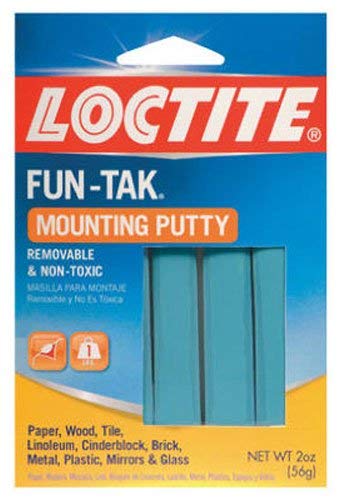
You can use sticky mounting putty to help you stick your stencil to your miniature.
The nice thing about putty is that you can shape it for whatever area you need to work on.
Both painter’s masking tape and putty will work great as “shapeable” masks over areas of your model that you don’t want to airbrush.
For the more advanced miniature painters, you can also use liquid frisket to block off areas of your model when you’re airbrushing.
Liquid frisket is a brush-on mask for spots you want to protect from spray. Many masking fluids dry into a removable latex film, though the formula can vary by brand.
Use a cheap brush and follow the instructions on the bottle. A little hand soap on the bristles can make cleanup easier, and washing the brush right away matters even more. Test the fluid on a hidden area first if you’re putting it over finished paint.
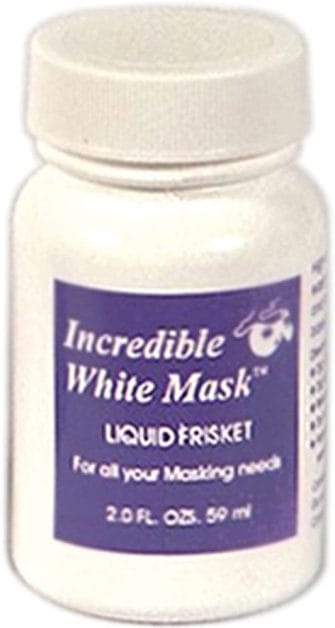
After you’re done painting, you can use your finger or a kneaded pencil eraser to remove the dried frisket.


I recommend using a dental pick or a silicone sculpting tool to help you place your stencil and push your masking tape into grooves and panel lines, to block out the airbrush spray.
What if you don’t have an airbrush or don’t want to use one?
You can use most of these stencils with a regular brush. Load a drybrush, sponge, or stippling brush with a small amount of paint, wipe most of it off on a paper towel, then dab lightly through the stencil. Hold the stencil tight against the model so paint doesn’t creep under the edges. It takes a little longer, but it works—and it gives you plenty of control on small surfaces.
Here’s another video showing how to use stencils as a base outline for more elaborate freehand design.

There are a lot of other videos on YouTube that have inspired me to try new things with my airbrush and stencils.
Continue reading for more inspiration, ideas, and awesome stencils you can try with your airbrushing mini adventure.
RELATED: COMPLETE HOBBY AIRBRUSHING GUIDE FOR PAINTING MINIATURES AND MODELS
Here are 11 awesome stencils for airbrushing miniatures and models
- Mini Skull AirSick Airbrush Stencils
- Tim Holtz Mini Stencils Hexagon Honeycomb, Bee Hive, Bubbles Designs
- Tim Holtz 9 Mini Layering Stencils
- Mini Grunge Set AirSick Airbrush Stencils
- Mini Geometric AirSick Pattern Shapes
- Flames Set AirSick Airbrush Stencil Template
- Mini Circuit Boards AirSick Airbrush Stencil Template
- Mini Animal Patterns AirSick Airbrush Stencil Template
- Lightning Storm AirSick Airbrush Stencil Art Template
- Iwata-Medea Artool Freehand Airbrush Templates, Texture Fx Mini Series
- HEXPAT Mini AirSick Airbrush Stencil Template
Quick guide to the 11 stencils
| Stencil | Works well for | Keep in mind |
|---|---|---|
| Mini Skulls | Vehicle insignia and large armor panels | Most designs will be too large for small infantry details |
| Tim Holtz Hexagon Set | Sci-fi armor, aircraft, and terrain | Works best on broad, fairly flat surfaces |
| Tim Holtz 9-Piece Set | Trying several graphic styles | Only some patterns suit miniature scale |
| Mini Grunge | Subtle wear and broken surface texture | Heavy coverage can make the pattern look stamped on |
| Geometric Shapes | Mechanical panels and layered camouflage | Repeated designs need careful alignment |
| Flames | Knights, Titans, vehicles, and display models | Curved surfaces need close stencil contact |
| Circuit Boards | Tech panels and glowing circuitry effects | Fine lines work best on flat surfaces with thin paint |
| Animal Patterns | Fantasy creatures and stylized sci-fi camouflage | These are decorative patterns, rather than historical camouflage |
| Lightning Storm | Large display surfaces and dramatic effects | The design can overpower smaller miniatures |
| Iwata Texture FX | Marble, stone, mottling, and organic texture | The effect looks best when built up in light passes |
| HEXPAT | Hex camouflage in several sizes | Test the pattern size before spraying the finished model |
Scroll on to see the 11 airbrush stencils for Warhammer 40K and other tabletop miniatures:
Mini Skull AirSick Airbrush Stencils

This is a 4 stencil set with skulls. There are negative- and positive-space stencils, which gives you a lot of options for how you airbrush these on your models.
The mini-size is great for small surfaces. Try these on vehicles, cloaks/capes, and other places skulls might fit the style you’re looking for.
Tim Holtz Mini Stencils Hexagon Honeycomb, Bee Hive, Bubbles Designs

The hexagon, honeycomb style of texturizing miniatures is one of my favorite looks on sci-fi models. The patterns work great for recreating camo or carbon-fiber looking surfaces.
The stencils are reusable, easy to clean and store. They even come with a small hole on the top to thread in a binder.
You can use these stencils with your airbrush to easily paint these patterns on your scale miniature aircraft, armor, or on terrain features like the sides of buildings and industrial facilities.
Mix and match stencils to create layered effects.
Tim Holtz 9 Mini Layering Stencils

This is a 9-piece stencil set for those looking for a ton more options with their airbrush.
These are mini-stencils that are made especially for stenciling small surfaces. There are letters, numbers, and all sorts of textured patterns for you to experiment with.

Use the diamond pattern stencils, for example, for your Harlequin and Eldar needs. Warhammer 40k players rejoice! There are some cool special effects you can apply to your models with this set.
Mini Grunge Set AirSick Airbrush Stencils
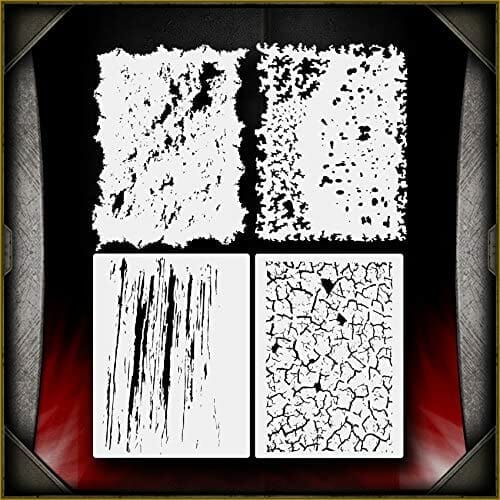
Looking for a quick way to add a rough, battle-worn texture? This set is made for that kind of work.
You get four stencils here, each with a unique textured look. Freehand airbrush these on your armored vehicles to add subtle depth to your paint job.
Color modulate in style with these random pattern stencils.
Need cracked surfaces, rust, or scratched metal? These stencils can speed up the first pass. Combine the airbrushed stencil work with a regular brush to sharpen the details afterward.
Geometric AirSick Pattern Shapes
The number of things you can do with the right stencil can feel overwhelming, so I usually keep it simple.
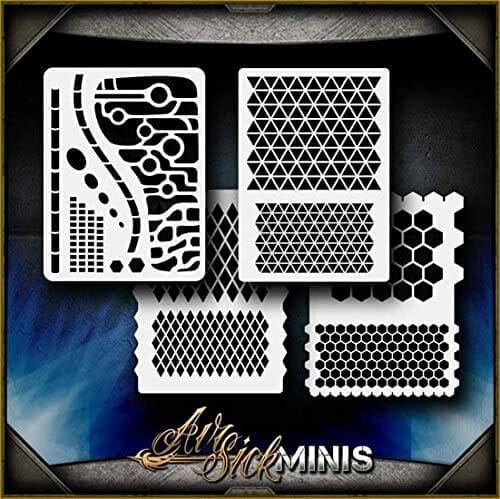
Here are simple repeated patterns that I find useful for adding a unique flair to painted miniatures.
Use these stencils with your airbrush to create more depth to your flat surfaces.
Hexagon, piping, and diamond-shaped stencils of different sizes give you the opportunity to experiment on your models.
These are reusable stencils and completely solvent proof. Come back to them year after year.
Flames Set AirSick Airbrush Stencil Template
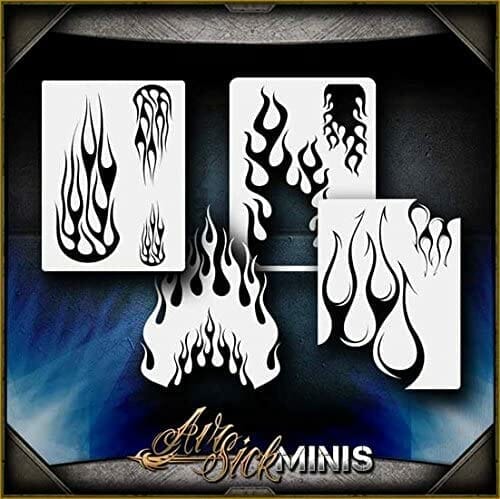
Looking to paint flame effects on your miniatures? These mini flame stencils can add that extra oomph to an Imperial Knight or Titan.
Add the fire with flame stencils. These are mini-sized flame templates for airbrushing flame effects.

Of course, there are many other stencil variations of fire that you can buy out there. These are merely a suggestion for your search.
Airbrush red, orange, yellow, and white for the classic flame look. Or, go different, and use tones of mystical green to add that magical fire.
Circuit Boards AirSick Airbrush Stencil Template
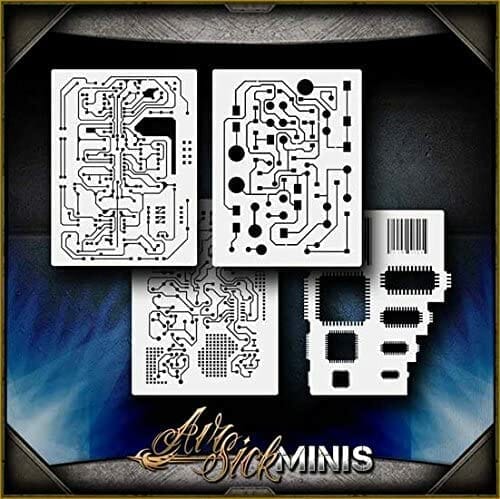
Who knew that computer circuits would be a good look? I didn’t.
I’ve seen some spectacular paint jobs with that computer-circuit look.
Use these circuit-board stencils to reproduce circuit patterns on your models.
With a few layering techniques, you could use these stencils to help you create object-source-lighting (OSL) electrical glowing effects.
Glowing circuit boards on a MechWarrior, vehicle, or ruined building panel? That could work.
Maybe you just want to decorate your army transport hard case…
Mini Animal Patterns AirSick Airbrush Stencil Template
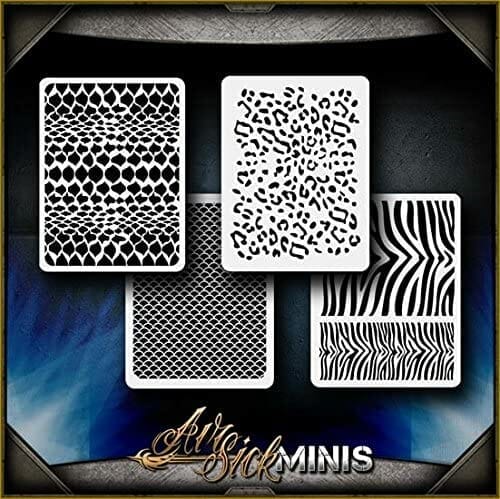
Animal patterns work well as stylized camouflage for sci-fi vehicles, fantasy creatures, and display pieces.
These are the classic animal patterns for your airbrushing needs.
The set includes wild animal patterns like zebra, giraffe or panther, reptilian (e.g., snake) and even fish scales.
Use normal paint colors, or go for more flair, and airbrush these stencils with fluorescent colors.
Lightning Storm AirSick Airbrush Stencil Art Template
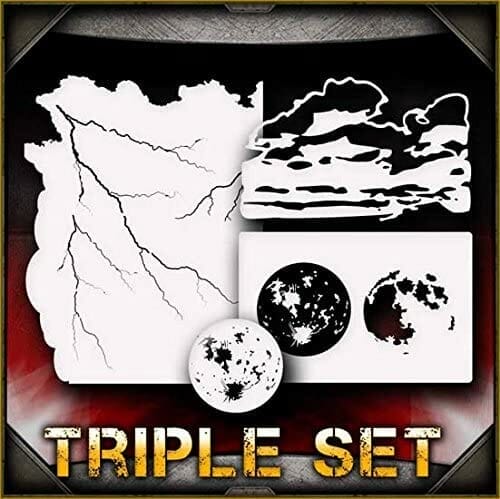
I’ve seen some amazing work done with these stencils.
Dynamic lightning effects (e.g., OSL) and planetary bodies festooned all over your models make for a unique tabletop presence.
Maybe you want to use your airbrush for more than painting models. You can use these stencils to paint murals and other artwork. Do you have a bullet journal or sketchbook? Maybe, you have a scrapbook.
Stencils like these are great tools for decorating your other hobby crafts.
Iwata-Medea Artool Freehand Airbrush Templates, Texture Fx Mini Series

I love, love, love these stencils. I’ve used these to great effect on a lot of my miniatures.
They are freehand special effect stencils that allow you to add texture to any surface. Faux marble and stonework is easy to create with these random patterns. In fact, check out a great tutorial on how to paint marble effects.

Use your airbrush to layer-in different patterns to add depth and interest to otherwise boring open surfaces on your model.
Change it up with different paint values and colors and experiment.
HEXPAT Mini AirSick Airbrush Stencil Template
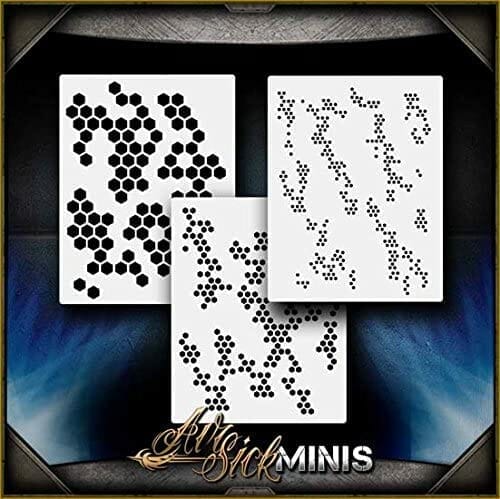
These are some of my favorite stencil designs for the kinds of models I like to paint.
Hex-pattern stencils are versatile across so many kinds of models. Infinity miniatures and Battletech models are great canvases for airbrush design work.
There’s just something extra special about adding hex camo pattern to sci-fi tabletop minis. The design adds an extra “pop” and interest to large armor plates, and mechanical parts on all sorts of other-worldly, cool-looking machines.

This set comes with three stencil sizes. They cover large, medium, and small models, from vehicles down to troops.
Check these out!
Summary
Stencils are an amazing tool for airbrushing miniatures. The number of ideas and things you paint with stencils is limitless.
Whether you’re looking for a cleaner way to paint repeated patterns on your RC cars, your wargaming models, or historical military vehicles; using an airbrush with stencils can make all the difference.
Make your own stencils or simply buy the pre-made, laser-cut ones shown in the list above. These are only the start. Many companies make airbrush stencils for painting tabletop minis, e.g., Frontline Gaming.
Come back to our page for more tabletop gaming-related hobby articles (and more!)
Enjoying your visit? Join Tangible Day!
Leave a comment, or follow Tangible Day.

Tangible Day on YouTube (Miniatures and More!)

By Andrew M. Tan
Andrew is a commissioned miniature painter with more than 20 years of hands-on experience painting tabletop miniatures, photographing models, and testing hobby tools in real-world use. Read his full bio.
Pingback: 11 Awesome Airbrush Stencils for Miniatures (Tips, Tricks) – KHUTULUS HOBBY STUDIO
Is there a good way to do Stencil work without an Airbrush? If so, would you use the same Stencils as in this article (there’s some really cool ones in this article, that I’d love to try out!).
Yes, you can certainly use stencils without an airbrush! The best way to do this is to use a drybrushing and a stippling technique. This is essentially a dabbing motion.
It’s slower, but it will work! 🙂