
The two best alternatives to Citadel Texture Paint are sanded tile grout or crackle paste medium. Compared to Citadel Texture Paint, these products serve as great replacement mediums. They are much less expensive, just as easy to use, and look great!
Read below to see my thoughts on the best replacement alternatives for Citadel Texture Paints.
Are the Citadel Texture Paints Worth It?

Are you trying to find an alternative to Agrellan Earth or Astrogranite?
Although I love what Games Workshop has produced for us hobbyists, I feel like in some cases, there are other ways get the same effect for less investment.
Maybe you’re looking to find a cheaper replacement for Stirland Mud or my favorite, Agrellan Badlands.
In general, there are two kinds of Citadel Texture Paints. Games Workshop makes these two textures in different colors, but in general, they function in just two classifications.
READ MORE: 3D PRINTING BASES FOR MODELS
The kind that cracks as it dries (crackle effect) and the kind that doesn’t (muddy/dirt).

Best Alternatives to Citadel Texture Paint for Basing Miniatures
Here’s a quick side-by-side cost and use comparison of Citadel Texture Paint versus the two best lower-cost basing alternatives.
| Product | Type | Best Use | Average Cost |
|---|---|---|---|
| Citadel Texture Paint (Astrogranite, Agrellan, Stirland) | Acrylic technical paint | Fast, all-in-one basing for dirt, mud, and cracked earth | ~$8 per 24 ml pot |
| Premixed Sanded Tile Grout | Construction texture medium | Dirt, sand, gravel, snow, and general ground texture | ~$12 for 1–2 quarts |
| Artist Crackle Paste Medium | Acrylic crackle modeling paste | Cracked earth, dried mud, broken concrete effects | ~$15–$25 for 8–16 oz |
| Product | Estimated Bases Covered | Approx. Cost Per Base* |
|---|---|---|
| Citadel Texture Paint (24 ml) | ~20 infantry bases | ~$0.32–$0.44 |
| Premixed Sanded Tile Grout (1–2 quarts) | ~300–600 bases | ~$0.007–$0.02 per base |
| Artist Crackle Paste Medium (8–16 oz) | ~150–300 bases | ~$0.05–$0.26 per base |
Bottom line: Tile grout costs ~15–50× less per base than Citadel Texture Paint, while crackle paste is still ~2–6× cheaper for cracked-earth effects.
The following two products reproduce almost the same effect as Citadel Texture Paint. They cost less, work similarly, and with a bit of wash or dry brush are perfect for basing miniatures.
1. Sand, Mud, Snow – Use sanded tile grout
2. Cracked Earth – Use crackle paste medium
In general, they will end up replicating the look of dirt, gravel, or dried cracked earth or concrete. It all depends, but these are durable materials and great medium for quickly getting the job done!
How to Make Models Look Great?
You are painting gaming miniatures from Games Workshop or Privateer Press. Or, you’re a historical tabletop wargamer with a collection of miniatures from the Civil War era. It doesn’t matter, you want your minis to look great on the table.
RELATED: PAINT FASTER WITH A DRY PALETTE!
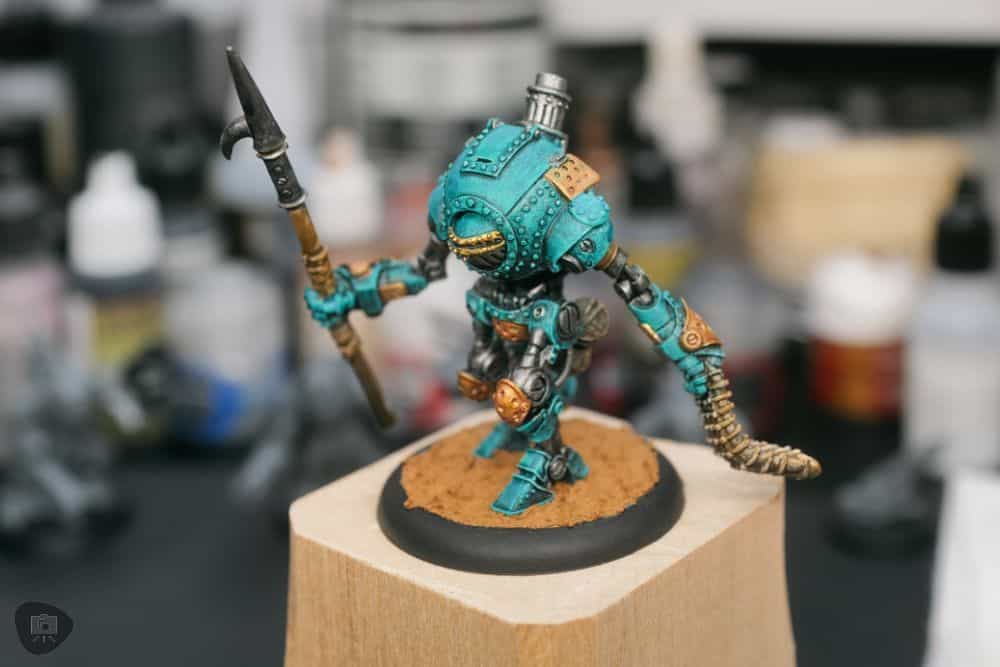
The easiest way to make a painted miniature standout is to finish the base. There are many ways to do this. Games Workshop sells Citadel Texture Paints (~8$ per pot).
They are simply awesome!
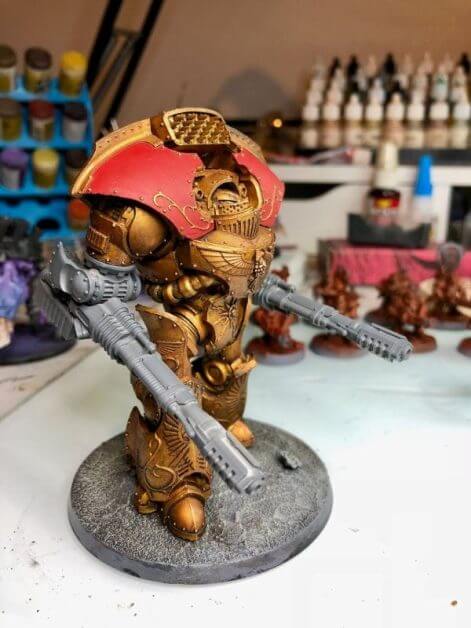

I used to buy these Citadel Texture Paints all the time. I used them to quickly texture my 40k space marines. For painting commission work, the ease and speed of application was a huge bonus—check out my guide to speed painting miniatures.
But, speed and ease-of-use comes with a cost. Each pot of Citadel Texture Paint is about $8 USD, which equates to finishing about twenty 35mm circular bases.
The math for me comes out to 40 cents per completed base, or $4 for two units for 10 infantry sized miniatures. I don’t even use much of the texture paint on each base.

This can get expensive for those who collect a lot of miniatures.
Extend Your Hobby Budget!
In an effort to save money, I’ve tried a lot of different approaches to basing models. See my post on 3D printing bases. Or, if you’re wondering about other ways to save money, here’s an article about the more reasons for focusing on using budget friendly hobby tools.
Well, I’ve decided on the perfect alternatives for Citadel Texture Paints.


Why do I think these are the best alternatives to citadel texture paint? In general, these are easy to find at any arts and crafts store or online.
They come in huge buckets or containers, and are inexpensive for what you get. Unlike the conventional workflow that you might use, glue, sand, etc., these come mixed with adhesive inside their medium.
Just slap on your plastic base, and they stick. Let dry, then paint to your pleasure.
The following are more thoughts on each of the two types of alternative mediums you can use instead of Citadel Texture Paints.
Mud/Gravel/Sand/Snow: Use Sanded Tile Grout
Any local hardware or home improvement store sells sanded tile grout. You can also get it online (here).
The cool part about premixed sanded tile grout is that it already has the adhesive mixed into it. So you don’t need glue or anything to apply it to your bases.

You might want a palette knife to smooth it on. Or you can use a plastic spoon. But a good metal palette knife will work best because the grout can be a bit thick.

Premixed sanded tile grout comes in many colors. If you don’t want to paint your bases, you can simply buy the color you like. For example, you can buy an ivory colored grout for sand bases, or a white colored grout for snow bases.
Tile grout comes in many more colors than are available than with Citadel Texture Paints.
If you’re on more of a budget (who isn’t?!), then you can buy unmixed sanded tile grout. To use this kind of tile grout, you’ll first have to mix in a bit of water. I’ve tried it, and it works.
But, I recommend simply going for the premixed sanded tile grout.
You’ll save time!
Does Tile Grout Look Good?

The neat part about sanded tile grout is that it dries fast. In less than an hour, sanded tile grout can take primer and paint.
As mentioned above, you may not need to do this at all if you’ve chosen the grout color you like. So you can quickly go from basing your models to other tasks.

There are some examples of me using premixed sanded tile grout here.
In some cases, I mixed in different colors just to give some variation.


Cracked Earth/Ground: Use Artist Crackle Paste Medium
The other type of Citadel Texture Paint effect is crack earth or ground. This is particularly easy to do with the Citadel Texture Paint. Except you need to apply it onto the base in a thick layer.
For me, this got expensive!

So, I tried to find a better alternative to replace the Citadel Texture Paint.
The best stuff I’ve found as a replacement is Golden Crackle Paste. As advertised, the medium is a simple paste that cracks when it dries.


Crackle Paste like the Citadel Texture Paint works best when applied in thick layers. When the medium dries, the surface cracks.
I noticed that for durability with using this crackle paste, it helps if you apply a thin layer of watered down PVA (white glue).

Final Thoughts
In general, the best replacement for Citadel Texture Paint is the one you think replicates the effect you’re looking for. I love experimenting with different artistic mediums.
1. Sand, Mud, or Snow – Use Sanded Tile Grout
2. Cracked Earth – Use Crackle Paste Medium
In this case, I’ve settled on these two alternatives for the overall general basing material that I use on my models. Works well — fast, easy, and inexpensive!
How do you base your models? Do you like Citadel Texture Paints? Let me know with a comment below!
Thank you for reading!
I have more thoughts and editorial articles (here).
Subscribe through email or follow us on Facebook and Instagram.
Enjoying Your Visit? Join Tangible Day
Free newsletter with monthly updates (no spam)


Tangible Day on YouTube (Miniatures and More!)

So, crackle medium. How easy does it take paint. Glue first or paint first. Can you add paint or inks to the paste before pasting onto your base. You have me Intrigued.
It takes paint really well. Apply crackle paste, let dry. Then apply thinned layer of white pva glue (link in article) over the cracked dries paste. Then paint! Easy!!
I have not tried adding inks or paint to the crackle medium before applying to the base. Give it a shot? It could speed things up!
For citadel texture paints, you end up painting afterwards anyway. I like drybrushing after doing a solid base coat myself (for either texture paints or the other mediums)
About how thick do you apply the crackle paste for the look shown above? (j bought some today) And about how long do you let it dry before painting. I’m a few hours into the drying process and cracks are still working on separating, so far they are still hairline cracks. Thanks for this post, I’m hoping for the best for a magma base.
Give it a nice 1/8 to 3/8 inch thick layer. It does take a while to dry
Oh, and when dry, cover it with a layer of watered down Pva white glue. It’ll keep it from peeling. It’s something you would do with citadels stuff too
To reproduce the cracked effect, it is possible to obtain satisfactory results by gluing and painting small pieces of eggshell.
That would work! But, it might be slower if you’re trying to reproduce the cracked effect on many bases or very large base sizes.
Pingback: Basing Sand for Miniatures (Ideas and Tips) - Tangible Day
Hey, I’ve started using TIle Grout for my snow bases, bose as rock texture and to form the bulk of the snow’s volume However, I want to paint it instead of going with the natural color.
My problem is that I’ve found just now that it’s really hard to get a coat of primer on (with a rattle can). I don’t know if it’s because it is so textured, absorbent or maybe the white just stands out under black primer…
Do you have any recommendations? Should I use Brush on primer? Not care about primeer at all because paints stick great to it (fingers crossed!)?
Aaand now I’ve found your post on priming while googling 😉
https://tangibleday.com/mistakes-to-avoid-when-priming-miniatures-solutions/
Maybe leaving the grout overwhelmingly white is fine? It still seems starkly different from the coat on the miniatures themselves. Would still appreciate your expert advice!
HA nice. Just responded to your other comment. Yes, regular hobby brand acrylic paint should stick well to tile grout even without primer. It’s not like the plastic, metal, or resin surfaces on the miniature itself. Tile grout behaves differently as you’ve noticed. I love using it.
Ah, yeah some types of tile grout “repel” spray solvents (as a means to avoid grime/soap stains in a bathroom/kitchen setting). Yes, I would try using a brush on water-based primer like Vallejo Surface Primer which has worked for me. Brush it on, instead of airbrushing over the grout since the tile grout can be porous and it would take a while for you to perceive coverage. Thank you for this comment. I’m going to update this post to mention this!
Thanks for the quick reply! Much appreciated!
For full disclosure, I’ll add that I’ve just now realized that what I had been using was UNSANDED tile grout.
I’m happy with the look but I think I’ll try the sanded variety when I’m done with the tube. Maybe that affects the priming too, though – so felt like throwing that in here.
Oh yeah, unsanded grout is smooth like concrete. 🙂 some types are also water repellent! So def try sanded too because it looks cool