As a seasoned miniature painter, I’ve learned that the journey to a stunning, eye-catching miniature starts long before the first color touches its surface. It begins with priming, an essential step that sets the stage for your painting masterpiece.
In this article, I share my personal insights, tips, and best practices for using different types of primers. As a commissioned painter, these are the key bits of information that helped me achieve consistent and professional results in my work.

KEY TAKEAWAYS
- Select the Right Primer Color:
- Black primer for speed painting and quicker paint jobs.
- White primer for better visible contrast; best for achieving higher quality results.
- Gray primer for best for versatility and the all-purpose primer color.
- Master Application Techniques:
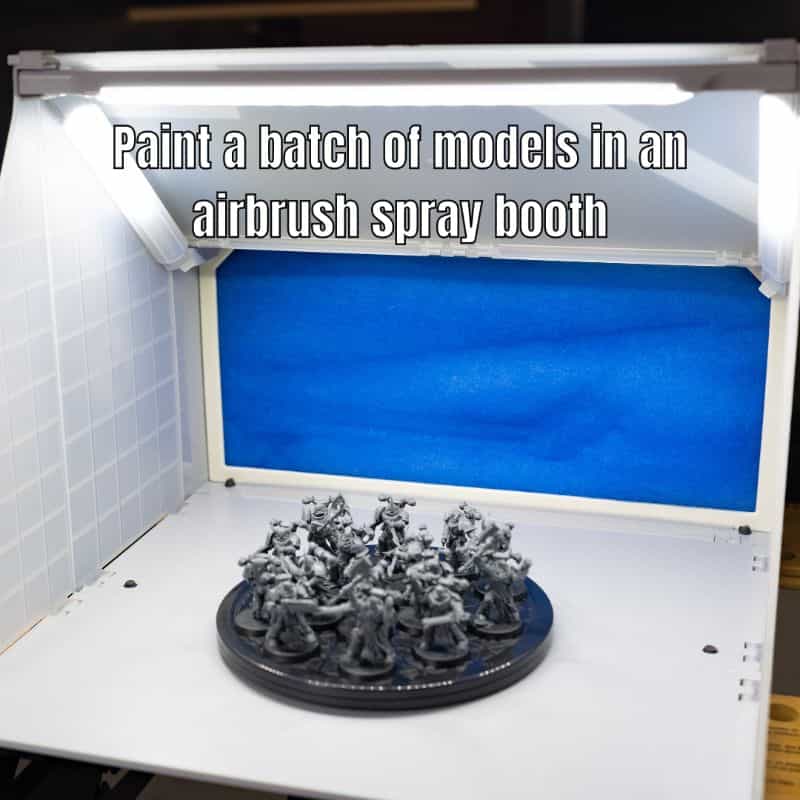
- Airbrush for even, efficient coating.
- Aerosol spray primers for quick coverage (outdoor use recommended).
- Brush-on primer for precision and detail.
- Understand Primers’ Impact:
- Choice of primer affects color vibrancy and detail visibility.
- Experiment to find the best method for each project.

Read on for my top tips for using miniature painting primers to achieve professional results.
1. My Essential Primer Collection: Black, White, and Gray
On my workbench, I always keep a set of black, white, and gray primers. I’ve found these neutral colors indispensable for various painting techniques. For example, I often use black and white primers for the zenithal priming method.
Push comes to shove, of course, when I’m painting on commission (for clients) and I know I want to paint fast. In this case, black colored primer is my go-to.

The reason for this is because black primer helps you hides mistakes or flaws on your overlying paint layers. For example, where your top base coat doesn’t cover the primer perfectly, the darker undertone conceals streaks and imperfect paint layer applications. Your overall perceived final results will look better when you paint fast and use a black primer first.
White primer on the other hand allows you to see “contrast” (e.g., shadows and light) before you apply overlying paint colors a lot easier. So, for the more technical painter, or when I’m personally in the mood to push the quality and style of my paint job, I tend to start with a white primer.
And, obviously, a neutral gray colored primer works somewhere in between. I use gray primer for most jobs where I know I need some sense of color accuracy to meet a color scheme or a vision I have for a paint job—but, I also use gray primer when want to move quickly and accurately at the same time.
A Quick Note About How I Use Primers for the Zenithal Method
Here’s how I do Zenithal priming: I start with a black primer and then add white from above to mimic natural lighting. This technique is excellent for enhancing the miniature’s details, especially when aiming for high-contrast effects using glazes.

When speed painting, particularly large collections or armies, I prefer a black primer. It helps maintain contrast by automatically filling in the shadows, allowing me to focus on mid-tones and highlights with techniques like dry brushing or airbrushing.

For projects requiring attention to detail, a white primer is my go-to. It brings out the intricate textures and features on the model, especially under good lighting. It’s also perfect for achieving vibrant color saturation when using glazes or contrast paints.

Ultimately, the choice of priming method is a matter of personal preference. It depends on the specific requirements of the painting project and your desired outcome.
2. To Thin or Not to Thin Your Primer: My Advice
In my experience, most hobby surface primers, like Vallejo, don’t need thinning. Over-thinning can actually cause problems, like reducing adhesion. I make sure my primer is well-shaken and free from debris before use. If I do need to thin it, I start with water, as most are water-based. For further thinning, I sparingly use water-soluble fluids like Isopropyl rubbing alcohol, but this is rare.

3. Using an Airbrush with Primers: My Technique
Airbrushing primer is a fast way to apply even coats on models. I often use airbrush-ready primers like Badger’s Stynylrez. I set my air pressure to about 25-30 PSI for a smooth application. If I’m using an airbrush with a smaller nozzle, like 0.3mm, I thin the primer slightly. Keeping the airbrush nozzle clean is crucial to avoid clogs, as primers are stickier than regular paints.

RELATED VIDEO: HOW TO AIRBRUSH PRIME MINIATURES
For non-airbrush-ready primers, I use water or an airbrush thinning medium. My favorite is Vallejo Airbrush Thinner. However, I always remember not to apply too many layers, as this can obscure details.
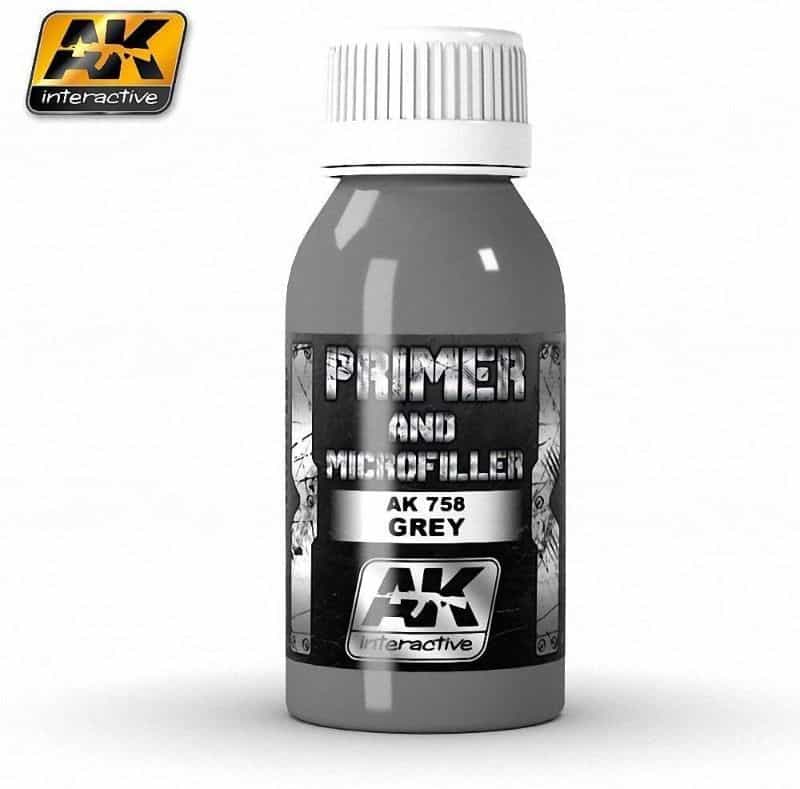
Note that if you’re using an airbrush with a nozzle size of 0.3mm or smaller, you may want to thin your primers with water or a specific thinner. Also, make sure to clean your nozzle after each use to prevent clogs, a common issue with sticky primers.
4. My Approach to Aerosol Spray Primers
For aerosol sprays, I use short bursts and keep the nozzle about 6-12 inches away from the model. This creates a fine mist that coats the miniature evenly without pooling. I always wait for each layer to dry before applying the next one.
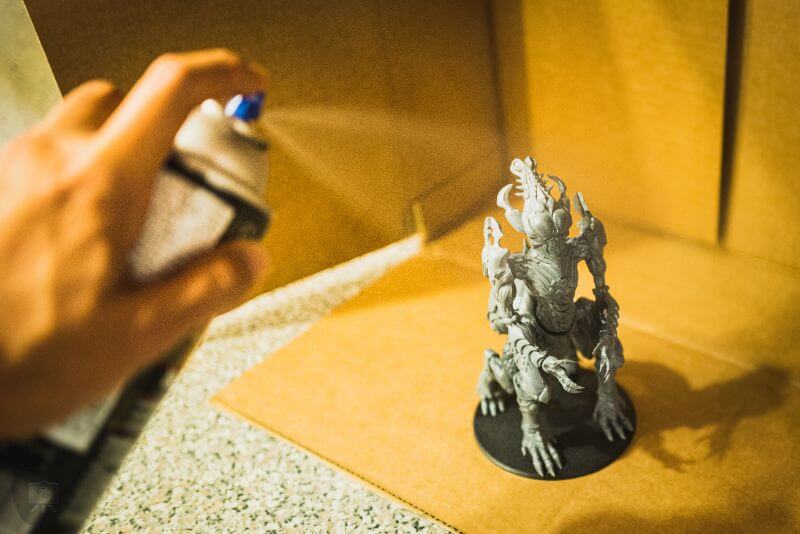
I’ve found that room temperature conditions are ideal for aerosol sprays. Extreme temperatures or humidity can affect the spray quality. In less ideal weather, I prefer to airbrush indoors.
RELATED: CAN YOU SAFELY SPRAY SURFACE PRIMERS INDOORS? YES, BUT….
5. Brush-On Primers: My Patient Approach
When using brush-on primers, patience is key. I apply thin layers with a large, flat-headed synthetic brush to avoid bubbles. Sometimes, a model might need 2-3 layers, but it’s okay if some of the model’s surface is still visible under the brush-on primer.

RELATED VIDEO: HOW TO PRIME MINIATURES WITH A BRUSH
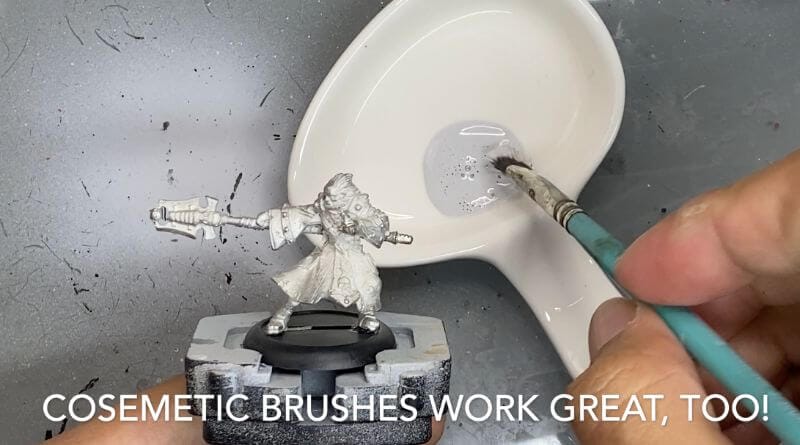
The goal is to create a surface that enhances paint adherence and smooths out imperfections. The thinner the primer layer, the better it preserves the miniature’s fine details. Over the years, I’ve learned that skillful application of brush-on primer can significantly enhance the final painting results.
Conclusion
In the world of miniature painting, priming is more than just a preparatory step; it’s an art that enhances the overall painting experience and the quality of the final piece. Through years of trial and error, I’ve gathered these tips to help you make informed choices and improve your techniques. Remember, each project is unique, and what works best can vary. Experiment with these tips and find your rhythm.
If you found these tips helpful or have your own insights to share, I’d love to hear from you! Drop a comment below or share your primed miniatures on our social media platforms.
For more guides, tips, and miniature painting tricks, keep following Tangible Day. Happy painting!
Enjoying Your Visit? Join Tangible Day
Free newsletter with monthly updates (no spam)
Tangible Day on YouTube (Miniatures and More!)