
In the captivating world of hobbies, there exists a nexus where creativity, storytelling, and nostalgia converge—a place where miniature painting, LEGO, and wargaming intersect.
In this article, guest writer Amaar Chowdhury recounts personal recollections on how miniature painting, LEGO, and wargaming have interwoven themselves.

KEY POINTS:
- From Child’s Play to Collectible Treasure: Trace LEGO’s transformation through major franchise collaborations like Star Wars.
- A Stepping Stone to Miniature Wargaming: Uncover how LEGO simplifies the leap into the elaborate realm of miniature wargaming.
- LEGO Meets Miniature Painting: Explore the intriguing blend of LEGO’s creativity with the fine art of miniature painting.
Read on to discover how LEGO’s transition from children’s toy to collectible bridges the gap between the intricate art of miniature painting and the (early) accessible world of LEGO.
Childhood Impressions of Miniature Painting and LEGO Wargaming
As a child, I had a friend whose Dad was a miniature painter. Whenever I went over to his house, there was a room locked away that he would be working in. It was this mythical chamber where I had seen glimpses of fantasy: orcs, dragons, and demons.

There were hints of science fiction in the hypermaximal spacecraft crafted from model kits, and Star Wars aliens with a half-layer of paint applied. It was a room of wonder that we were simply never to experience. Miniatures, then and even now, were painted as this intimidating, private hobby, so instead we played on the Xbox, ran around in the garden, and we built LEGO.
We didn’t know what we were doing, but we recreated our own wargames. Devoid of rules and sanction, we pitted droids against clones, Jedi against Sith. This was my first real exposure to wargaming, and it came through LEGO Star Wars.
The Synergy Between LEGO and Miniature Painting
When LEGO is brought up in conversation, most people think of the toys they played with as a kid or the juvenile tactility of placing bricks on bricks. Beyond that though, there are also the swathes of collectors obsessing over new helmet moulds or two by two plate prints.
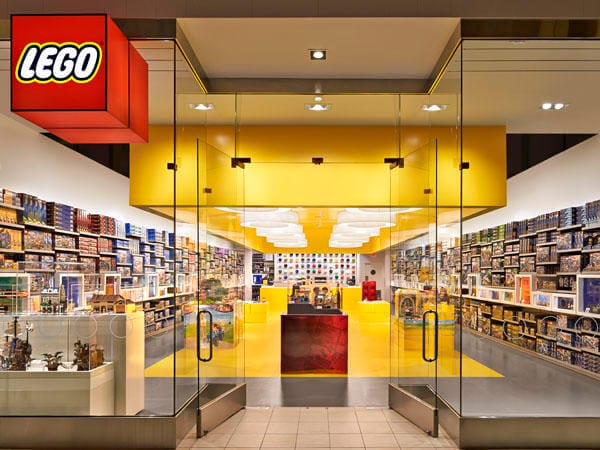
LEGO’s empire is deeply rooted in detail, respect for the source material, and letting their audience live vicariously through their models. Brand partnerships venture to each nook and cranny of pop-culture to bring franchises like Marvel, DC, Star Wars and Harry Potter into the same place, and this is one of the very reasons why LEGO and miniature painting are soul-mates that never had the chance to meet.
RELATED: BEST NON-LEGO BRICK BUILDING SETS?
To me, LEGO’s branding will always focus on appealing to children first. It began as a kids toy, and through this they established their foothold in the industry. The majority of LEGO products released over the years have had this one thing in mind: to be fun.
Some of LEGO’s own brand spin-offs have been made possible thanks to this angle: LEGO Ninjago, Creator, and City, for example. While they might not lend themselves to miniature painting and war-gaming directly, there’s a dense catalog of themes that do.
Deepening the Artistic Connection: LEGO and Miniature Painting
As we delve into the synergy between LEGO and miniature painting, it’s essential to understand the unique yet complementary artistic skills each hobby cultivates. On the surface, LEGO, with its structured brick-building approach, seems worlds apart from the freehand artistry of miniature painting. However, a closer look reveals four fascinating intersection of skills and aesthetics.
1. Spatial Awareness and Design
LEGO enthusiasts develop a keen sense of spatial awareness and structural design. Building intricate LEGO models requires an understanding of balance, proportion, and symmetry.

These are foundational concepts in miniature painting as well, where achieving the right scale and perspective is crucial for bringing tiny figures to life. The precision required to snap LEGO bricks together in complex configurations mirrors the meticulous hand-eye coordination needed in miniature brushwork.
2. Narrative Visualization
Both hobbies excel in storytelling. In miniature painting, each figure tells a story through its pose, attire, and the colors chosen by the painter. This narrative aspect is crucial in wargaming, where these miniatures play roles in a larger battlefield saga.
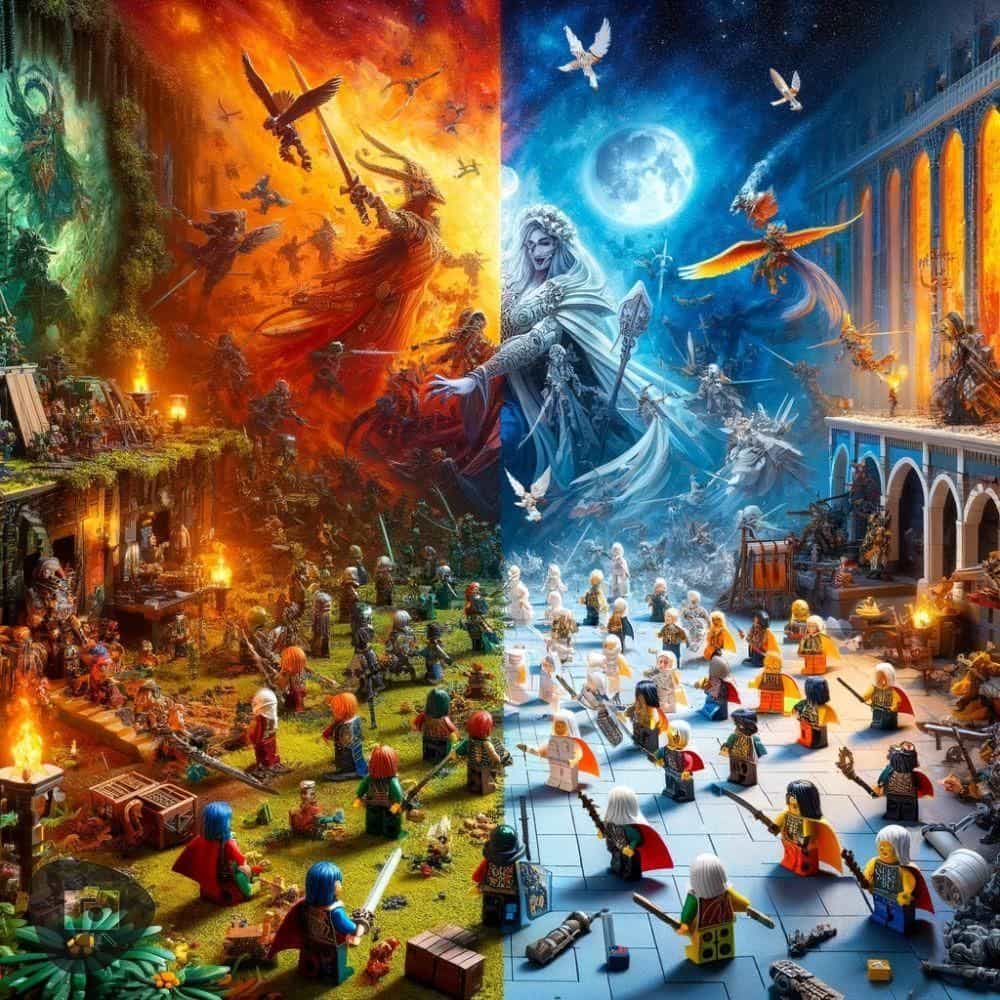
LEGO, in its essence, is about constructing scenes and settings. When combined, LEGO’s ability to create vivid backdrops and miniature painting’s focus on character detail offer a comprehensive storytelling toolkit. Hobbyists can weave intricate narratives, merging LEGO-built environments with exquisitely painted miniatures to create immersive wargaming experiences.
3. Color and Creativity
While LEGO sets come with predetermined color schemes, they encourage experimentation in combining different hues and shapes to achieve a desired look. This experimentation is akin to the color mixing and blending techniques in miniature painting.

Understanding color theory and how different colors complement or contrast each other is essential in both hobbies. A LEGO builder’s approach to color selection can inspire a miniature painter’s palette, leading to more vibrant and dynamic creations.
4. Transcending Traditional Boundaries
As LEGO enthusiasts venture into miniature painting, they bring with them a unique perspective shaped by their experience with LEGO’s modularity and creativity.

Conversely, miniature painters stepping into the world of LEGO can apply their fine-detailing skills to customize and enhance LEGO models, pushing the boundaries of what’s possible with LEGO sets.
Bridging Creative Worlds: From Artistic Synergy to Market Revolution
The synergy between LEGO and miniature painting, as illustrated through spatial design, narrative visualization, color creativity, and the transcendence of traditional hobby boundaries, sets the stage for a broader understanding of LEGO’s impact in the hobby and collectible market. This intersection of skills and aesthetics is not just a fusion of creative methods; it’s a testament to how hobbies evolve and influence each other in unexpected ways.

As we pivot from the artistic nuances of this synergy, it’s crucial to examine how these creative evolutions have played out in the broader market. A prime example is the iconic LEGO Star Wars series.
The Transformative Influence of LEGO Star Wars
LEGO Star Wars, for example, is the biggest theme out there, and the partnership effectively changed the company’s approach to their marketing (Brick Fanatics). In the nineties, LEGO sets focused on creating inoffensive cars, rebuilding architecture, and focused on nurturing creativity.
There was an emphasis on creating toys for kids, so they steered clear of any thing that parents might consider inappropriate. It backfired, and the company was fast approaching bankruptcy.

Profit margins were not high enough compared to the huge volumes of unique pieces they were producing, and there simply was not enough interest in them. Change was needed, desperately, so they switched things up. LEGO would begin to cross over into pop culture, taking on the Star Wars IP in 1999 and Harry Potter in 2001. They were both a huge success, not just for kids but for adults too (Marketing Week).
Clone Troopers were armed with blasters, the Jedi with their lightsabers, and gunships were equipped with laser cannons. No longer was LEGO just for kids, but collectors and franchise enthusiasts too (Contact Pigeon).
This is exactly where miniature painting and wargaming enters the conversation….
Balancing Creativity & Practicality: LEGO and Wargaming
The scope of wargaming is massive. There are two key aspects: the creative half and the action half. You paint miniatures, then you enact them in war and battle. For me, the reason that LEGO and wargaming have never properly gelled together is a combination of miniature painting’s creative side and LEGO’s original target audience of children.
You can easily buy LEGO minifigures in bulk, throw them on your tabletop and then populating your wargame is done, except you’ve cut out the meticulous and iterative process of painting miniatures and replaced them with blocky figures instead.
This isn’t necessarily a bad thing, either. Wargaming is time-consuming (most of the time). If it’s not the hundreds of hours spent planning and crafting your tabletop, it’s the commitment to carrying out a campaign and seeing it through from start to finish.
LEGO is not exactly a replacement for wargaming or miniature painting.
Legos are the perfect start for anyone intimidated by hand painting hundreds of minifigures. The availability of LEGO mini figures means it can heavily offset the cost of creating a unique wargame, and the versatility of its structure means that it will allow for creative possibilities that were otherwise impossible.

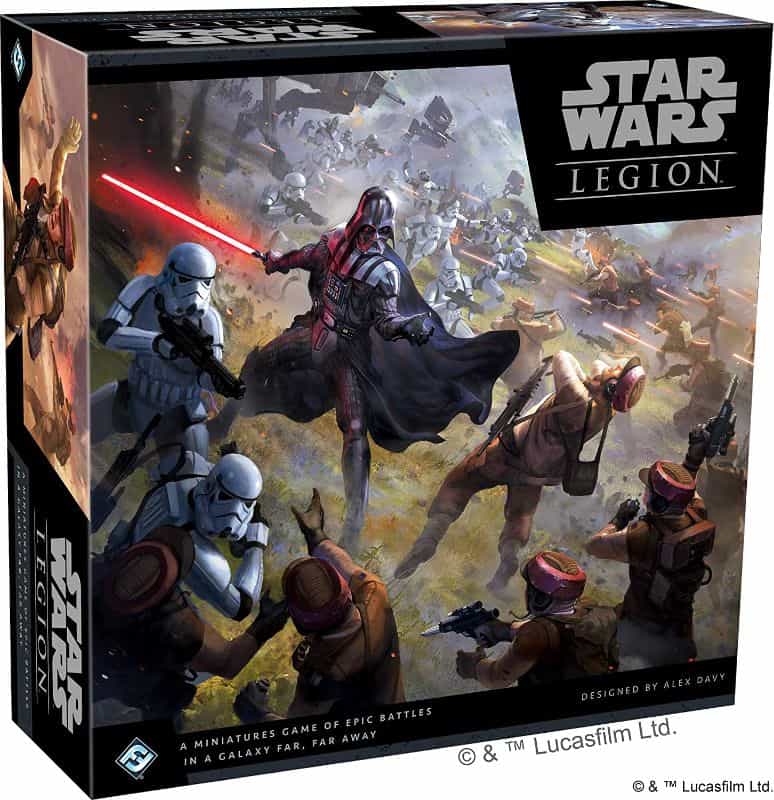
Star Wars: Legion is a popular box set of miniatures designed for tabletop wargaming. The unpainted figures are gorgeously intricate, realistic, and capture the heart of Star Wars, perfectly.

With a little bit of practice the plastic models can be painted to reflect the aftermath of war, transformed into new characters, and there’s more than enough sets to build the battlegrounds of Endor, Tatooine, and Jakku.

The scope of combining the two mediums is basically unlimited. You can weather your LEGO figures with sand to assimilate them into your textured terrains, and you can couple your model starships with LEGO sets to create dynamic battle scenes.

At least, this is how I began assimilating LEGO into wargaming. After I’d found my footing, I finally had the confidence to pick up plastic models and paintbrush, and to set the LEGO to rest for a bit.
Conclusion
LEGO will never replace miniature painting, and it can only hope to integrate into wargaming a little bit more. A combination of its simplicity and target audience renders it unsuitable in tone, but it’s a brilliant place to start fiddling around with fantasy and war narratives.
Luckily, the LEGO group releases new iterations of its licensed characters yearly, so there’s a huge back-catalogue of minifigures to be transformed into miniatures. For anyone who wants to experience wargaming without all the commitment (and most of the best bits) get started with LEGO.
ABOUT THE AUTHOR

Amaar Chowdhury is a writer from the UK. After studying literature at University, he found that he much preferred writing about video games, LEGO, and model-making over books. Now, it’s all he does. If you don’t find him building LEGO sets for his blog, Bricka, you’ll be able to find him illustrating graphic novels and painting in his home studio.
Enjoying Your Visit? Join Tangible Day
Free newsletter with monthly updates (no spam)



Tangible Day on YouTube (Miniatures and More!)

We used Lego in our pulp RPG’s. We ended up retelling the story in comic strip form using Lego too. One day I will find ‘Algy Lacy and the Curious Case of the Missing Professor’. To be fair that is the name of the comic strip and not the original adventure title. I have a whole host of Gladiators that I sometimes use you can find some of them here…https://bogenwaldblog.files.wordpress.com/2017/10/e4befe7e-39e2-426a-888d-f1f0576f5172-2226-000002c9dfd7bf57_file.jpg
Oh, those Barbarian LEGOs are cool! Wait, so you made photo comics with legos? I need to know more!
Cheers, I will try and find the comic and more photos.