

Is a cordless airbrush and compressor worth it? Yes, but only if you can live with its limitations. In my mind, trying to decide whether to get a battery powered airbrush kit is like trying to choose between a gaming laptop and desktop PC. Both can handle the job, but each comes with distinct pros and cons. A cordless airbrush, like a laptop, gives you the freedom to paint wherever you want—be it at a convention, another room in your house, or even outdoors. On the other hand, a traditional airbrush setup, with a stationary compressor, is the workhorse of the two, offering more reliability and power for serious projects.
In my experience, these choices often come down to what you value most—portability or power. In this article, I share why I decided to get a Cordless Airbrush.

Summary: TL;DR:
A cordless airbrush and compressor is a great choice if you value portability and flexibility. It’s perfect for quick tasks like base coats or painting on the go—whether at a convention or another room in your home. That said, it’s not ideal for heavy-duty projects, as battery life and performance can’t match the reliability and power of a traditional compressor. For bigger jobs or prolonged sessions, a dedicated compressor is the workhorse you’ll want. Personally, I’ve found owning both systems gives me the versatility to paint how and where I want, depending on the project.
Choose a Cordless Airbrush If:
- Portability is essential: Ideal for painting on the go, at conventions, or in different rooms of your house.
- You value simplicity: Lightweight, compact, and easy to use with minimal setup.
- Short tasks are your focus: Great for quick base coats, gradients, or small-scale projects.
- You don’t mind recharging: Battery life typically lasts 30–60 minutes per charge.
- You prefer flexibility with airbrushes: Works with different airbrushes using quick-release adapters.
Choose a Traditional Compressor If:
- Power and reliability matter: Consistent airflow, higher PSI, and better for large or demanding projects.
- You work for long periods: Can handle extended use without overheating.
- You need precision and versatility: Adjustable pressure for spraying thicker paints or detailed techniques.
- You have a dedicated workspace: Stationary setup is perfect for hobby rooms.
- Durability is a priority: Includes features like moisture traps and air tanks for stable performance.
Best of Both Worlds:
- Own both systems to combine portability and power, depending on your project needs.
READ ON TO LEARN MORE ABOUT HOW I DECIDED WHETHER TO GET A CORDLESS AIRBRUSH KIT
What Is a Cordless Airbrush System?
Picture this: a lightweight, battery-powered compressor that fits in your hand, paired with an airbrush. No tangled hoses. No bulky equipment. You’re free to move and paint wherever inspiration strikes.
For me, this is convenience. When I need to work in a different room or take my painting on the road I can do it. A cordless airbrush system is all about total flexibility.

Why You MIGHT Love a Cordless Airbrush
Now, if you’re like me and travel—heading to a convention, whatever—taking your airbrush along, and being able to prime your miniatures on the spot is amazing.

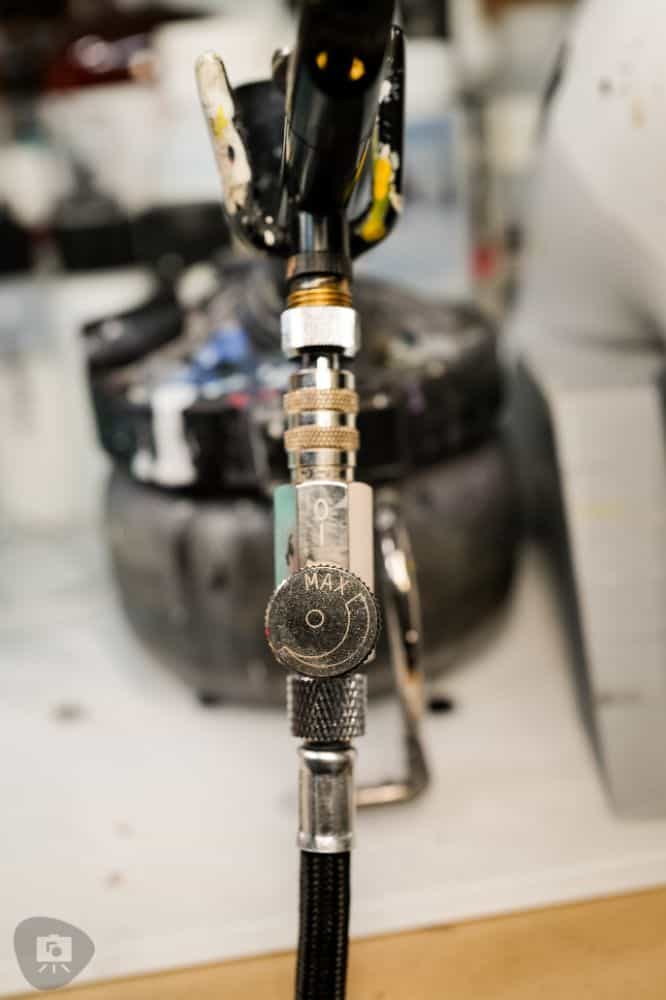
Weighing less than two pounds, it’s compact and easy to carry. You don’t need a dedicated setup, so you can paint in the kitchen, your living room, or anywhere else in your home.

In my case, I’ve found a cordless airbrush perfect for quick base coats or applying subtle gradients. A good model delivers up to 30 to 35 PSI—perfect for airbrush-ready primers like Vallejo Surface Primer. Tasks like stenciling or adding gradients become a breeze, thanks to its straightforward functionality.
Related: How to Prime Miniatures with an Airbrush (Tips and Guide)

The Downsides to Keep in Mind
But here’s where my experience reveals the limits. Cordless systems rely on battery power, which means you’ll need to recharge frequently. On a full charge, you can expect about 30-60 minutes of use. As the battery drains, airflow can weaken, affecting your painting quality.

And while portability is fantastic, don’t expect heavy-duty performance. Continuous use for more than 5-10 minutes risks overheating the motor, making it less suitable for large projects like painting terrain or vehicles.

Without built-in features like air tanks or moisture traps, reliability can also take a hit in more demanding conditions.

Why Traditional Compressors Still Shine
If you’re serious about airbrushing, a dedicated compressor might be the better choice. In my setup, I rely on a traditional compressor for larger projects or sessions that require consistent airflow. These systems provide higher air pressure ranges, letting you spray thicker paints with ease.

Want to work on a big project or use your airbrush for hours? A traditional compressor can handle it without overheating, thanks to features like air tanks and motor cooldowns.
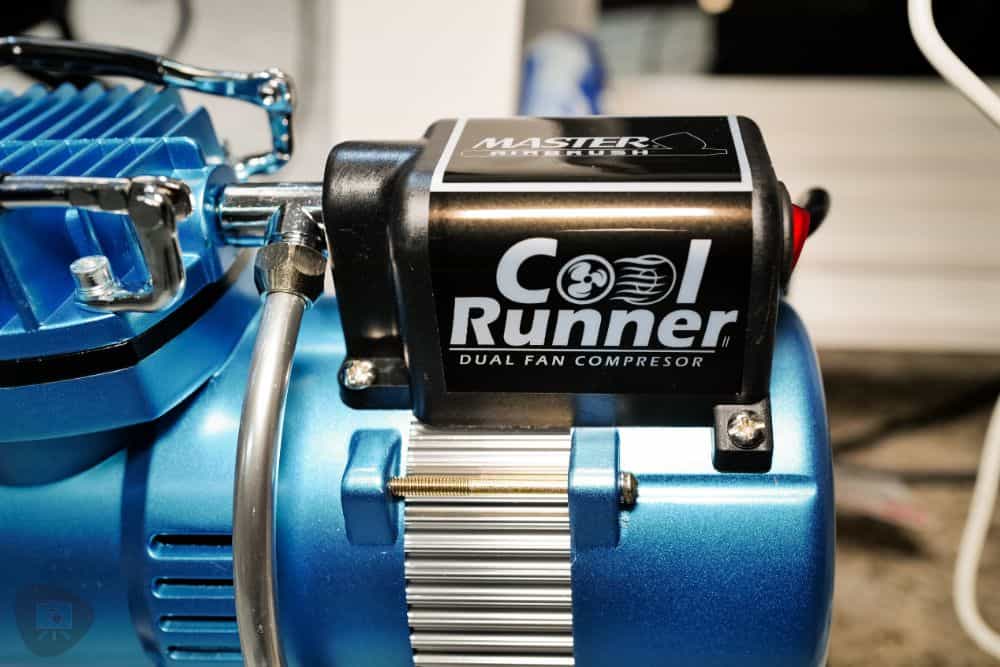
Plus, with moisture traps included, you’ll get consistent, high-quality results every time. Yes, it’s stationary, but if you have a dedicated painting space like I do, this reliability and versatility are hard to beat.
Related: Best Airbrush Compressor for Models (10 Recommendations)
Which System Fits Your Needs?
Here’s the thing: both systems have their place. If you’re on the move or just need a quick tool for small tasks, a cordless airbrush is your go-to. But if you’re setting up a dedicated hobby station or tackling large-scale projects, a traditional compressor is unbeatable.

Personally, I’ve found that owning both systems offers the best of both worlds. I use the cordless airbrush for convenience and mobility, and I rely on the dedicated compressor for more demanding or prolonged work sessions.
Related: Complete Airbrush Guide for Painting Miniatures and Models

CAN I USE ANY AIRBRUSH WITH A PORTABLE AIR COMPRESSOR?
Absolutely! You can use most airbrushes with a portable air compressor as long as the connections match up. Many portable compressors have standard fittings, but if your airbrush uses a different size or type, a quick-release adapter can make it work seamlessly. You can learn more here about the best kinds of airbrushes for painting miniatures and models.
For example, I use my battery-powered compressor with an IWATA HP-BH, my Badger Patriot 105 and Sotar 20/20, as well as my Harder & Steenbeck Infinity airbrush. A quick-release setup makes switching between these airbrushes simple and ensures they all function well with the portable compressor.

Keeping Your Tools in Top Shape
Maintaining your airbrush systems is key to their longevity. For cordless models, I always clean the paint cup after every use and make sure the battery is fully charged before storing it. Avoid prolonged use to prevent overheating.
Traditional compressors need a bit more upkeep. In my experience, checking moisture traps regularly and thoroughly cleaning your airbrush can keep it running smoothly for years.
The Cordless Airbrush That I Use
There are so many cordless, battery-powered airbrush kits out there, it is nearly impossible to say what is good or bad. On a whim, I did buy an portable airbrush kit a few years ago that has worked great for my needs.

For basic projects, e.g., priming, simple base coats, the Imyyds Portable Dual-Action Airbrush Kit with Compressor is what I’ve used when I need to be on the move, or want to work in a different room in my home without lugging the dedicated air compressor around. It’s around $60 USD online.
Here are some basic key features (which most cordless airbrushes in this price range would have):
- 32 PSI High Pressure: Achieve smooth coverage even with heavy paints, outperforming many competitors with a maximum pressure of 32 PSI.
- Dual-Action Trigger: Control paint and airflow separately for better precision. The built-in air valve ensures efficient use, extending working time by up to 30% compared with standard rechargeable airbrushes.
- Flexible Connection Options: Use the included braided air hose for greater flexibility or connect directly to the portable compressor.
- Lightweight and Portable: Compact enough to fit in your pocket or backpack, making it easy to use on the go.
- Wide Range of Applications: From model painting and cake decorating to nail art and temporary tattoos, this kit adapts to all your creative needs.
Specifications:
| Feature | Details |
|---|---|
| Voltage | 12 Volts |
| Power Source | Battery |
| Available Colors | Blue, Black, Red |
| Special Features | Lightweight, cordless, portable |
Whether you’re painting models or other hobby light duty tasks, this battery powered airbrush could probably handle it very well.


Conclusion: So, Should You Bother?
In the end, it all comes down to how you paint. Do you crave portability and convenience? Or do you need the power and reliability of a traditional setup? For many miniature painters, including myself, the ideal setup includes both: a cordless airbrush for those quick, flexible projects and a traditional compressor for everything else.
Whatever you choose, both systems have a lot to offer, and they’ll keep your painting process efficient and enjoyable. Happy airbrushing!
Enjoying Your Visit? Join Tangible Day
Free newsletter with monthly updates (no spam)


Tangible Day on YouTube (Miniatures and More!)

Is it possible to hook up these portable compressors to another airbrush (say a harder & steenbeck or a badger or an iwata, you know, the big nice brands)?
Yup. I use it with my iwata airbrush 🙂