Ever notice how some days you can paint for hours, totally locked in—while other times, you can’t focus for more than ten minutes? Your lighting might be the reason.
A good lighting setup in your hobby space doesn’t just help you see better. It can actually boost your motivation, sharpen your focus, and help you stay in the zone longer. There’s real science behind how light affects your brain—and once you understand it, you can use it to your advantage.
If you’re like me, you spend hours at your desk painting miniatures, building models, or crafting. But over time, even the best projects can start to feel draining. That’s where lighting makes a difference.
In this article, you’ll learn how proper lighting influences your mood and attention—and I’ll share easy, practical tips to get the best light into your hobby room.

TL;DR: The Relationship Between Light, Motivation, and Focus
- Bright light tells your brain to wake up. We’re wired to be more alert and focused in well-lit environments.
- Light boosts dopamine. This “feel-good” neurotransmitter plays a big role in motivation, mood, and decision-making.
- More dopamine = more drive. With the right lighting, you’re more likely to feel energized and mentally sharp.
- Light exposure also triggers noradrenaline. This chemical keeps your brain locked in and helps you concentrate.
- Noradrenaline = alertness. It’s tied to your body’s natural fight-or-flight system and helps maintain focus during detailed work.

Want better lighting in your hobby room? Start with a desk lamp that uses a daylight-spectrum bulb, or upgrade to an LED artist lamp. The right setup can make a huge difference in how focused and motivated you feel.
Read on to find the best ways to add quality lighting to your hobby work area!
How the Right Light Boosts Your Focus and Mood (Backed by Science)
Ever wonder why you feel more energized during the day? It all comes down to light—specifically, the kind of light the sun gives off.
Sunlight emits a broad spectrum of wavelengths that directly affect your brain chemistry. When you’re exposed to bright, natural light, your body responds by adjusting levels of key neurotransmitters that control mood, focus, and motivation.
Good artificial lighting can mimic some of these effects—especially when you use full-spectrum or daylight-balanced bulbs. It’s not just about visibility. It’s about giving your brain the right signals to stay engaged and alert.
Key Brain Chemicals Affected by Light
Good lighting doesn’t just help you see—it taps into your brain’s chemical systems that drive motivation, energy, and focus. Here are three major players:
- Dopamine
Often called the “reward chemical,” dopamine helps regulate motivation, mood, attention, and even movement. Bright light stimulates dopamine production, making it easier to stay engaged and feel good about the work you’re doing (source). - Noradrenaline (Norepinephrine)
This neurotransmitter kicks in during the body’s natural “fight-or-flight” response. It sharpens focus, heightens awareness, and improves your ability to concentrate. Light exposure—especially in the morning—can increase noradrenaline, giving you that dialed-in mental state (source). - Serotonin
Known for stabilizing mood, serotonin also influences sleep, digestion, wound healing, and energy levels. Natural light helps keep serotonin levels balanced, which is key for avoiding mental fatigue or creative slumps (source).
What is “blue light”?
Blue light is a high-energy wavelength emitted by the sun, LED lights, and digital screens. It plays a key role in regulating your body’s internal clock—and it’s been shown to increase alertness, improve focus, and influence mood.
RELATED: IS BLUE LIGHT HARMFUL? MAYBE


Why Your Body Clock Depends on Light (and How to Reset It)
Your brain is naturally wired to be more alert during the day—and lighting plays a big role in this. That’s thanks to your circadian rhythm, the internal clock that regulates your sleep-wake cycle, energy levels, and mood.

This rhythm is synced by your exposure to light and darkness. Bright light tells your brain it’s time to be alert. Darkness signals that it’s time to wind down. But if you’re not getting enough light during the day—especially if you work in dim spaces or on night shifts—your rhythm can fall out of sync. And when that happens, motivation, focus, and energy can take a hit.
Easy Ways to Reset Your Rhythm:
- Get morning light. Open the curtains or go for a walk early in the day.
- Use a light therapy box. These devices mimic natural sunlight and can help improve mood and attention, especially during darker months or for those stuck indoors (source).
- Avoid bright lights at night. Dimming your environment in the evening helps your body wind down properly.
Daily exposure to natural sunlight—especially early in the day—is one of the simplest ways to keep your focus, energy, and mood in balance.
What This Means for Your Hobby Room Lighting
So how does all this brain science apply to your miniature painting setup?
If you want to stay productive and focused during hobby time, a quality light source is essential. The brightness and type of light you use can affect not only how well you see, but how motivated you feel to keep going.

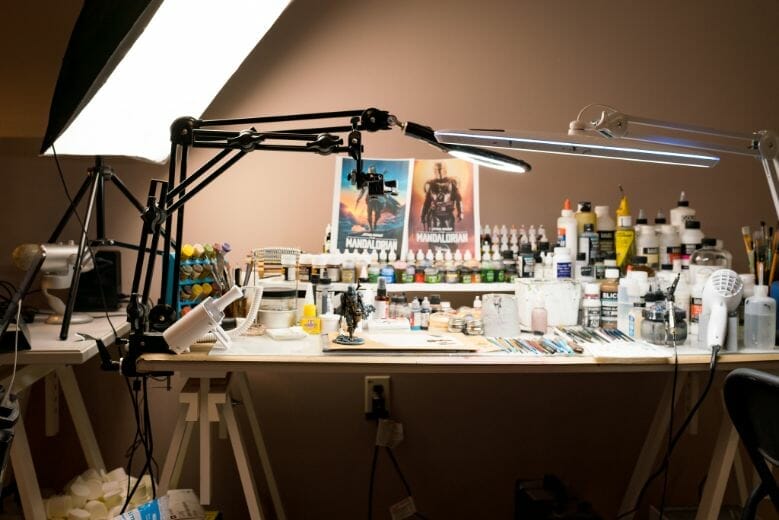
Whether it’s the ever-popular Neatfi XL or the hobby-focused Redgrass Creative R9 Desk Lamp, the goal is the same: create a bright, comfortable environment that helps you focus on the fine details without eye strain.

And don’t forget the value of natural sunlight. If your hobby space has windows, take advantage of them. Daylight helps regulate your internal clock, boosting attention and mood—making it easier to stay in the creative flow.
And if you’re like me, working in a basement or windowless room, natural sunlight isn’t always an option. In that case, a full-spectrum LED lamp or a lighting system with a daylight color temperature (around 5000–6500K) can simulate sunlight. This kind of lighting helps boost your mood, sharpen your focus, and keep your energy steady—especially during long painting sessions.
How to Light Your Hobby Room the Right Way
To stay focused and avoid fatigue while painting, use a light source that emits at least 800 to 1,000 lumens. This brightness level is ideal for seeing fine details and maintaining mental clarity during longer sessions (source).
Just as important: choose a setup that produces soft, diffused light. Harsh beams and strong shadows can strain your eyes and make it harder to stay locked in. A good desk lamp with a daylight bulb—or an LED panel with a diffuser—is usually perfect.
Want recommendations? Here’s my guide to the best lighting for miniature painters, with picks for all budgets and setups.

Task Lighting for Miniature Painting: Pros and Cons

Task lighting—focused lamps designed to spotlight a small area—can be a great tool for miniature painters. But it’s not always ideal as your primary setup. Here’s what to know:
Pros:
- Excellent for precision work and small details
- Great secondary lighting for targeted areas
- Often compact and flexible in positioning
Cons:
- Too harsh as a main light source
- Creates glare and sharp shadows
- Can cause eye strain and fatigue in longer sessions
Tip: Use task lighting to complement a larger, diffuse light source. This combo keeps your workspace bright and comfortable while giving you control when you need to zoom in.
RELATED: A PORTABLE POWERHOUSE, THE R9 SOLO TASK LAMP FROM REDGRASS CREATIVE
Best Lighting Setup for Your Hobby Room
The ideal hobby lighting setup combines brightness, diffusion, and color consistency. Whether you’re painting miniatures or assembling models, the right light helps reduce eye strain and keeps you focused longer.
Here’s what works best:
- Start with a bright, diffuse light source: Natural light from a large window is great—but if that’s not available, use an LED or desk lamp with a daylight-spectrum bulb (around 5000–6500K).
- Supplement with task lighting when needed: A focused task lamp is useful for precision work, but it shouldn’t be your only light source. Pair it with broader lighting to soften shadows and prevent fatigue.
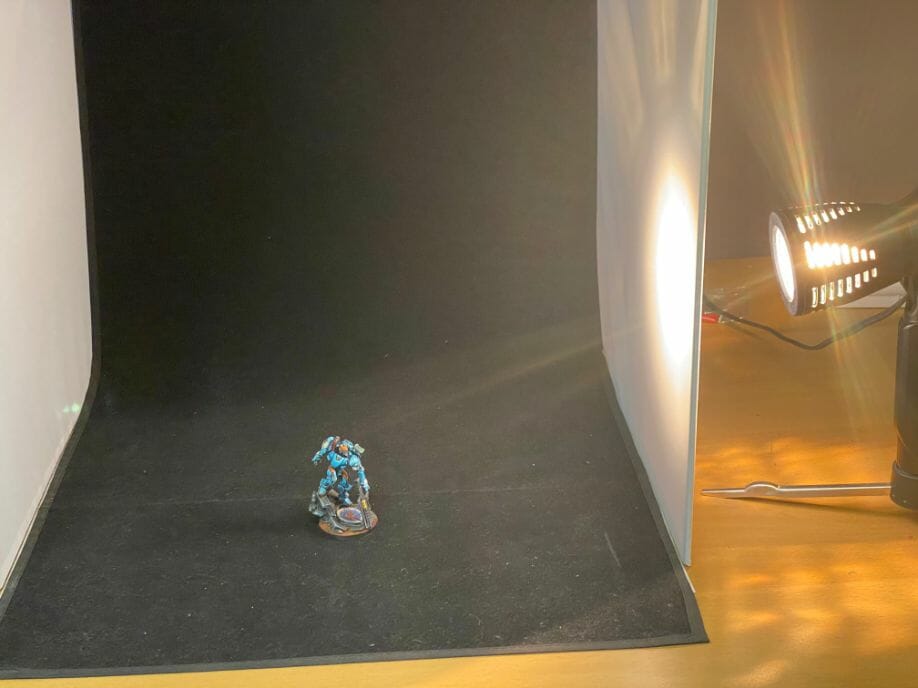
- Match color temperatures for consistency: If you’re photographing your work or concerned about color accuracy, make sure all your lights emit the same color temperature. This avoids odd color casts and helps you paint with confidence.
FINAL THOUGHTS
If you’re struggling to stay motivated or focused during your painting sessions, your lighting might be the missing piece.
Good lighting does more than just help you see—it supports your mood, energy, and creative flow. Whether you’re in a sunlit room or working in a basement, the right setup can make all the difference.
So next time you feel stuck or distracted at your hobby desk, take a moment to check your lighting. A simple change might be all you need to get back into the zone.
Do you have a favorite lamp or lighting trick? Share it in the comments—I’d love to hear how you light up your creative space.
Happy miniature painting!
Enjoying Your Visit? Join Tangible Day
Free newsletter with monthly updates (no spam)


Tangible Day on YouTube (Miniatures and More!)